Responsible travel in Uganda is not an abstract concept or a marketing label. It is a direct, measurable choice that affects the farmer who sells eggs to the local orphanage, the ranger whose salary depends on permit revenue, and the school that builds its science lab from tourism proceeds.
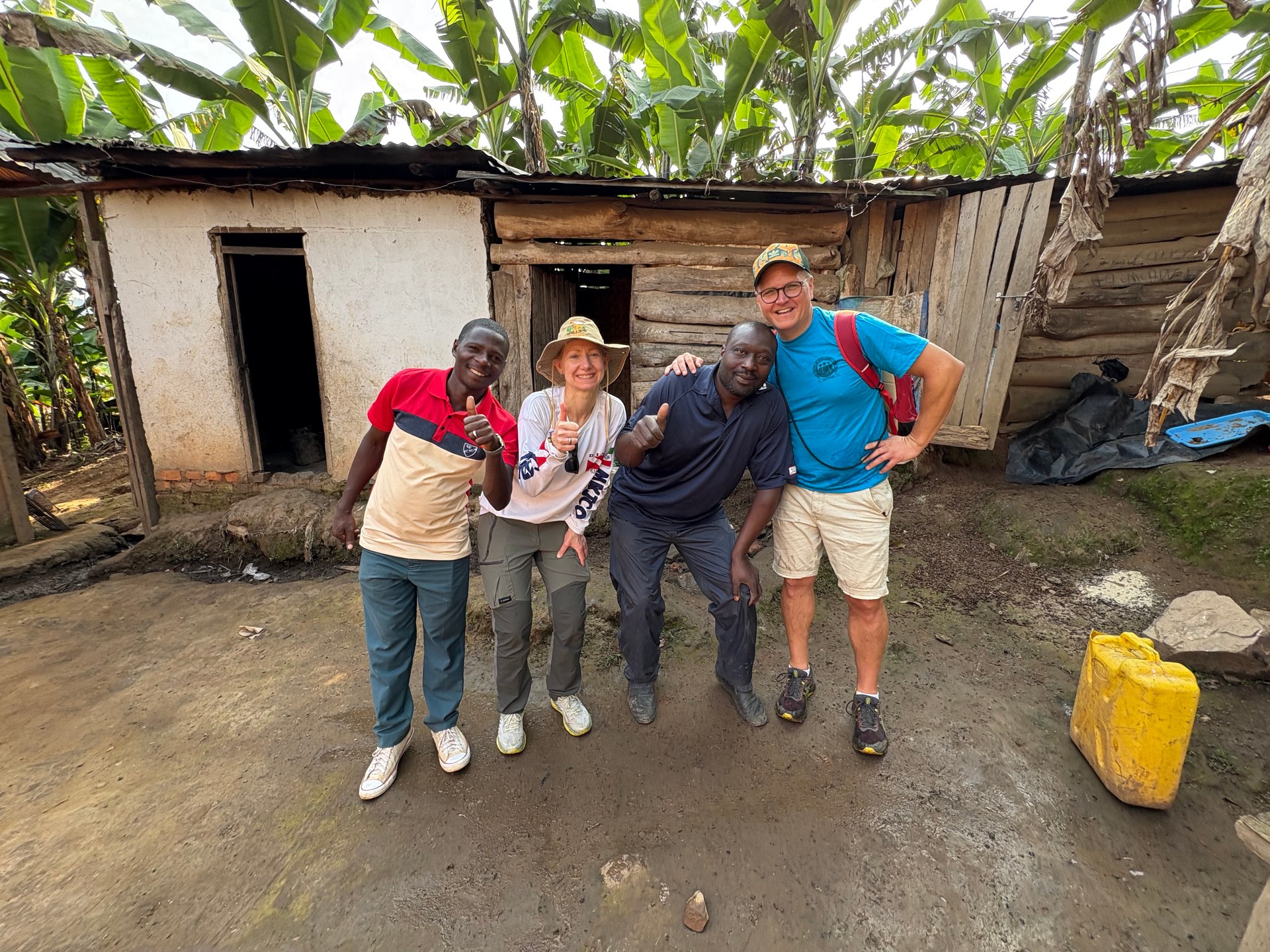
During my visit in June 2026, at GPS coordinates -0.9713, 29.6142 near Buhoma in the Bwindi region, I spent a morning at the farm of a local chicken keeper. He had built his small poultry operation from the ground up, and his relationship with Hope on the Road — a grassroots organisation working in the area — was entirely practical: they bought his chicks, he provided a reliable source of eggs and meat for the orphanage nearby. What struck me was how carefully he handled each bird, how well the animals were kept, and how this single, unglamorous transaction encapsulated the entire logic of genuine ecotourism. The tourist who books a lodge that sources locally, pays a fair community levy, and employs local staff is funding exactly this chain — whether they ever see it or not.
We had visited the chicken farmer specifically to see how the chicks were raised and how the operation functioned. Hope on the Road had purchased birds from him on multiple occasions; some were kept for eggs, others for meat to feed the children at the orphanage. The farmer ran his work with obvious pride and care — this was not subsistence farming resigned to poverty, but a small enterprise with intention. That morning, on a quiet lane outside Buhoma, was a more honest introduction to Ugandan ecotourism than any glossy itinerary.
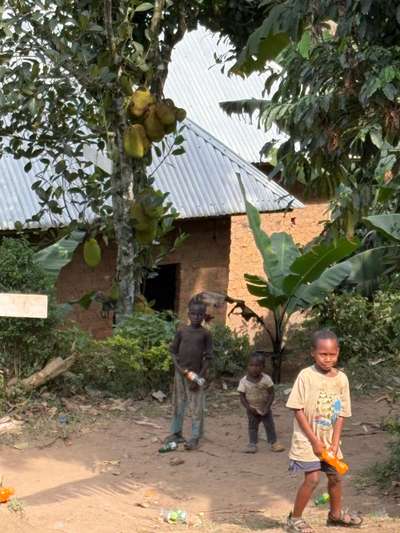
Later that same day — the photos are GPS-tagged and dated 21 June 2026 — we passed three children from the neighbourhood of the orphanage. Their clothes were worn, their posture uncertain, but they were curious. We invited them to share a meal. That straightforward act of hospitality, replicated across dozens of small interactions between visitors and communities, is what ecotourism at its most functional looks like. The broader frameworks — revenue sharing, wildlife regulations, accommodation standards — exist to make those moments possible at scale.
What Ecotourism Actually Means in Uganda
The term "ecotourism" has been used so broadly that it risks losing meaning entirely. In the Ugandan context, it refers specifically to forms of tourism that protect ecosystems, involve local communities as genuine stakeholders rather than passive backdrops, and generate measurable economic benefit that stays within the region. That last condition is the one most frequently violated by operators who import most of their goods, fly in management staff, and remit profits to overseas parent companies.
Uganda has developed a legal and institutional framework to address these gaps, anchored by the Uganda Wildlife Regulations 2022. These regulations govern the management of wildlife and wildlife products across Uganda, setting terms for who may operate near protected areas, how revenue is collected and distributed, and what obligations operators carry in relation to communities adjacent to national parks. They are not aspirational guidelines — they carry legal force.
The accommodation sector sits at the centre of this framework. According to data from the Statistical Abstract 2014 (Uganda Bureau of Statistics), accommodation facilities were surveyed across 20 districts distributed nationally, including Kampala. The most recent national census of accommodation facilities at that time had been conducted in 2011, with the next update scheduled for the 2014 housing census. While those figures are dated, they established a baseline showing that lodges — rather than hotels or budget guesthouses — carried the highest occupancy rates and faced the strongest tourist demand. That dynamic has only intensified since, with Bwindi and the gorilla-trekking circuit becoming one of East Africa's most sought-after wildlife destinations.
Choosing a lodge in Uganda is therefore never a purely aesthetic decision. The choice between a community-owned camp, a conservation-linked private lodge, and an operator with minimal local procurement is a choice about where money flows and whose livelihood is supported. The visitor who spends two nights at a lodge that pays community levies, employs Buhoma residents, and sources food from farms like the one I visited in June 2026 is making a fundamentally different kind of trip than one who books the cheapest available room with no questions asked.
Uganda Wildlife and the Regulatory Framework for Responsible Travel
Uganda Wildlife Authority (UWA) manages wildlife and wildlife products across Uganda under a regulatory structure that has been steadily strengthened over the past decade. The Uganda Wildlife Regulations 2022 represent the most current iteration of this framework, updating earlier legislation and introducing more detailed requirements for operators, guides, and visitors alike.
At the heart of UWA's approach is the revenue-sharing model. A defined percentage of the income generated by park entry fees and gorilla trekking permits flows back to communities living adjacent to national parks. For Bwindi Impenetrable National Park, this has meant real infrastructure investment over the years — school buildings, health facilities, and road improvements in communities like Buhoma, Nkuringo, and Rushaga that would otherwise have been excluded from the economic benefits of conservation.
The gorilla trekking permit is the single most significant revenue instrument. At current rates — $800 per permit for international tourists, $700 for foreign residents, and considerably less for East African citizens — a single trekking day generates substantial income. With eight gorilla groups habituated for tourism in Bwindi, and each group allowing a maximum of eight visitors per day, the theoretical daily ceiling approaches $50,000 from permit revenue alone. A portion of this returns to local communities through UWA's revenue-sharing programme.
For the traveller trying to make responsible choices, the practical implication is straightforward: booking gorilla permits through official UWA channels or licensed operators, choosing accommodation that pays the Community Tourism Levy, and engaging locally-based guides rather than guides brought in from Kampala all ensure that the revenue-sharing logic actually functions as intended.
The regulations also govern behaviour within protected areas — noise levels, trail protocols, photography rules, and distance requirements from wildlife. These are not bureaucratic inconveniences. Mountain gorillas are susceptible to human respiratory diseases, and strict distance rules (a minimum of seven metres) exist because a tourist's common cold can kill an entire habituated group. Compliance with wildlife regulations is therefore a direct conservation act, not merely a courtesy.
Beyond Bwindi, Uganda's wildlife network includes Queen Elizabeth National Park, Murchison Falls National Park, Kibale Forest National Park, Lake Mburo National Park, and Rwenzori Mountains National Park, among others. Each operates under the same UWA framework, and each offers distinct ecological experiences — from the tree-climbing lions of the Ishasha sector in Queen Elizabeth Park to the chimpanzee tracking in Kibale. The Rwenzori mountains, for instance, offer multi-day trekking routes that require careful planning, appropriate equipment, and preferably the services of local porters who earn $15 USD per day — a meaningful wage in a region with limited formal employment.
Tourism as an Economic Driver: Jobs, Revenue, and Community Development
Tourism in Uganda functions as a genuine economic engine — not simply in the sense that it produces foreign exchange, but in the more granular sense that it creates employment across a wide range of skill levels, generates local procurement chains, and draws investment into regions that would otherwise attract little capital. Understanding this economic architecture helps travellers see why their choices at the booking stage have consequences that extend far beyond their own experience.
Between 2009 and 2013, a total of 10,679 graduates from tourism-related courses were trained in Uganda, according to the Statistical Abstract 2014 compiled by the Uganda Bureau of Statistics. That figure reflects the state of the training pipeline over a decade ago; the number has grown considerably since. It also illustrates that Uganda has been deliberately building a domestic workforce for its tourism sector — tour guides, hospitality staff, wildlife rangers, accountants, logistics coordinators, and the full range of ancillary roles that a functioning tourism industry requires.
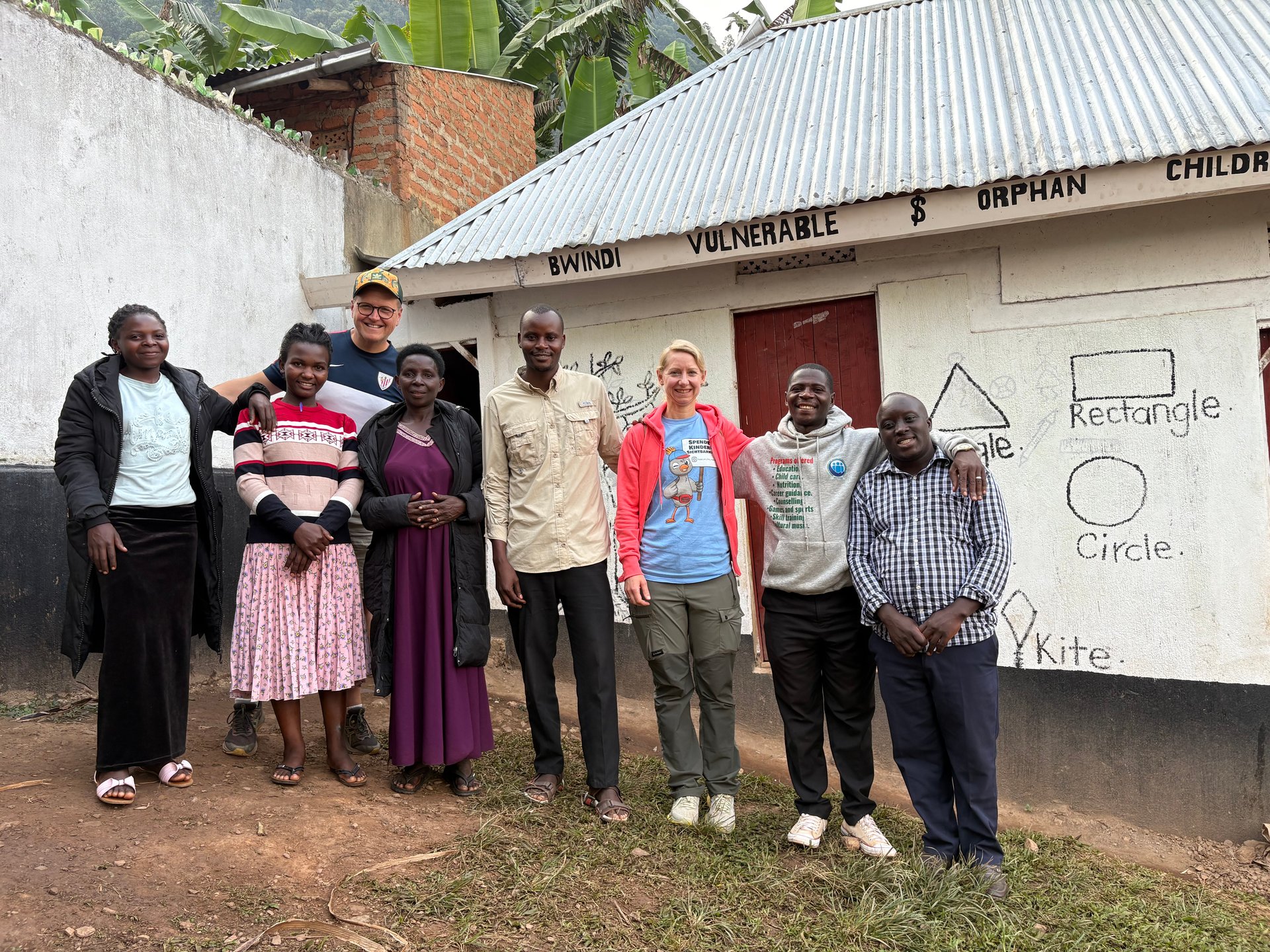
The knock-on effects are visible in communities around protected areas. In Buhoma — the northern entry point to Bwindi — the arrival of tourism changed the economic character of the village over two decades. Small guesthouses appeared. Craft cooperatives formed. Guides trained. Farmers began selling vegetables directly to lodges rather than to distant markets. None of this happened automatically; it required investment, policy support from UWA, and a critical mass of lodges operating with serious community procurement policies.
The accommodation sector is particularly important here. Lodges with the highest occupancy rates — which, per the Uganda accommodation facility survey covering 20 districts — tend to be those positioned at or near the primary wildlife circuits. Bwindi lodges consistently register strong demand because gorilla trekking permits create a captive market of motivated, high-spending visitors. The ecotourism challenge is to ensure that this demand translates into distributed local benefit rather than concentrating at the lodge ownership level.
Several operators in the Bwindi area have taken concrete steps in this direction. Community-owned lodges, in which local cooperatives hold equity stakes, provide the most direct mechanism for profit distribution. Lodge-funded bursary programmes, health insurance for staff, and contributions to school infrastructure represent secondary channels. The traveller evaluating lodges online can ask direct questions: What percentage of staff are recruited locally? Does the lodge source food from within the district? Does it contribute to the UWA community revenue pool or make additional voluntary community payments?
It is also worth understanding what ecotourism does not automatically solve. The communities adjacent to Bwindi have historically lost access to forest resources — timber, honey, medicinal plants — as a consequence of the park's protected status. Revenue sharing compensates for some of this loss, but not all. Crop raiding by buffaloes and elephants who cross park boundaries remains a genuine hardship for farming households. Genuine ecotourism acknowledges these tensions rather than erasing them from the narrative, and supports organisations working to address compensation mechanisms and human-wildlife conflict.
Microfinance and social enterprise structures provide another channel through which tourism revenue can reach communities. Stichting SYPO, a Dutch NGO operating in Uganda through its social enterprise arm SYPO Uganda Ltd., has focused on microfinance for remote communities — exactly the kind of population that lives adjacent to Bwindi's buffer zones. Graduation Programmes active in Uganda employ a four-component approach combining social protection, economic strengthening, financial inclusion, and social empowerment — a framework that pairs naturally with ecotourism's community development aspirations. The SUPREME project, a youth empowerment initiative, similarly provides skills development and entrepreneurship support in Uganda. These organisations are not tourism operators, but they operate in the same communities and serve the same population. Travellers who engage with their work — or who choose lodges that partner with such organisations — extend the impact of their visit considerably.
STEM Education and the Long-Term Logic of Conservation
One of the less-discussed dimensions of sustainable tourism in Uganda is its relationship to science and technology education. Uganda's STEM programme — Science, Technology, Engineering and Mathematics — works with school students in Kampala and increasingly in regional centres to develop innovative science projects and cultivate the next generation of Ugandan researchers, conservationists, and environmental managers.
The connection to tourism may not be immediately obvious, but it is real. Conservation in Uganda depends on a domestic scientific capacity — rangers who understand wildlife biology, park managers who can interpret population data, and policymakers who can respond to climate pressures with evidence-based decisions. That capacity is built, in the first instance, in classrooms. Tourism revenue that flows into Uganda's education budget, however indirectly, ultimately funds the human capital that keeps Bwindi's gorilla population healthy and its ecosystem intact.
The EU, through various development programmes linked to STEM education and institutional capacity building, has supported Uganda's scientific and administrative infrastructure. This external investment has been significant, but the long-term goal — which Uganda's government has stated explicitly in its national development frameworks — is a domestically-funded conservation system supported by a robust tourism economy. Every dollar spent at a legitimate ecotourism operation moves that goal incrementally forward.
For visitors, the practical implication is that supporting lodges and operators who invest in staff training, employ local graduates from Uganda's tourism courses, and contribute to community education funds is not merely a feel-good gesture. It is a structural investment in the educational pipeline on which long-term conservation depends.
[QUOTE: local guide on first impressions of working in conservation after completing tourism training in Kampala]
How to Choose Lodges and Tours That Are Genuinely Locally Embedded
The gap between lodges that use sustainability language and those that practise it is significant. From multiple visits to the Bwindi area — including visits in October 2024, January 2026, and June 2026 — certain patterns have become clear. Properties that are genuinely embedded in their communities have distinctive operational characteristics that can be identified before booking, if you know what to look for.
Local staff ratios matter more than certification labels. A lodge where 80% of staff are recruited from surrounding villages — Buhoma, Ruhija, Nkuringo, or Rushaga — distributes wages across dozens of local households. That payroll effect persists every month, regardless of visitor numbers. By contrast, a lodge where management and specialist staff are all brought in from Kampala or abroad channels a much smaller proportion of its operating costs into the local economy.
Procurement policies are equally telling. Lodges that source vegetables, poultry, dairy, and other provisions from farmers within the district create reliable income for those farmers — exactly as the chicken farmer near Buhoma relies on consistent buyers for his chicks. When Hope on the Road purchases from that farmer, and when a lodge sources eggs through the same local chain, they are both participants in a local food economy that the tourism sector can either strengthen or undermine depending on its sourcing choices.
Conservation levies and community fund contributions provide a third indicator. Some lodges pay the mandatory UWA community levy and nothing more; others make voluntary contributions to specific local infrastructure projects — school buildings, medical equipment, potable water systems. The Uganda Wildlife Regulations 2022 establish a minimum floor; what operators do above that floor reveals their actual priorities.
Transport choices also carry weight. Using a vehicle hired from a Kampala-based tour company versus hiring a locally-based driver produces meaningfully different economic outcomes. For multi-day trips in Uganda's western region, road conditions vary significantly — the route from Kabale to Kisoro is generally passable, but many routes require four-wheel-drive vehicles, particularly in the rainy season and even after heavy rainfall in drier periods. Locally-based drivers know these routes intimately and contribute their earnings directly to communities near the parks.
Travel season also affects community impact. June falls in Uganda's drier period and represents one of the better months for wildlife viewing and gorilla trekking — trails are more accessible, and the overcast skies that often accompany the long rains have generally lifted. The photographs from my June 2026 visit, taken at 06:31 and 06:36 in the morning, capture the quality of light typical of that season: clear, low, and warm before the midday heat. Visiting in peak season, when lodge occupancy is highest, maximises the economic effect of your presence on local suppliers, staff, and community revenue pools.
Practical safari companies operating in Uganda with documented local-embedding include those based in Kampala and Kigali who work with regional guide networks, contribute to UWA conservation funds, and publish transparent supply chain information. The Uganda Tourism Board maintains lists of licensed operators — a starting point for verifying credentials before booking. Independent research into a lodge's actual community relationships, beyond what is stated on a website, remains the most reliable method.
Packing choices, while secondary to accommodation decisions, carry a small additional ethical dimension. Travelling light — without large, heavy luggage — reduces porter loads on trekking routes and lowers the physical burden on local guides. On the Rwenzori trek, porters are permitted to carry a maximum of 12 kilograms per trekker; keeping your pack within that limit is a basic courtesy. Light, functional clothing in neutral tones is appropriate for most Uganda environments and far more practical than specialist gear that serves marketing purposes more than operational ones.
Key Facts: Ecotourism in Uganda at a Glance
- Regulatory basis: Uganda Wildlife Regulations 2022 govern all wildlife-related tourism activities.
- Gorilla permit (2026): USD 800 per international tourist per trek; USD 700 for foreign residents; community levy applies.
- Tourism workforce: 10,679 graduates from tourism-related courses trained in Uganda between 2009 and 2013 (source: Statistical Abstract 2014, Uganda Bureau of Statistics).
- Accommodation survey: 20 districts covered nationally, with lodges recording the highest occupancy and demand (source: Statistical Abstract 2014).
- Revenue sharing: A share of UWA permit fees flows to communities adjacent to national parks; amounts vary by park and year.
- Wildlife distance rule: Minimum 7 metres from gorillas at all times; 1-hour maximum per visit per group.
- Porter rates (Rwenzori): Approximately USD 15 per day; tip expected and appropriate at end of trek.
- Best season: June–September and December–February for drier conditions and accessible trails.
- GPS author visit: -0.9665°N, 29.6125°E — Buhoma area, June 2026, verified by 3 GPS-tagged photographs.