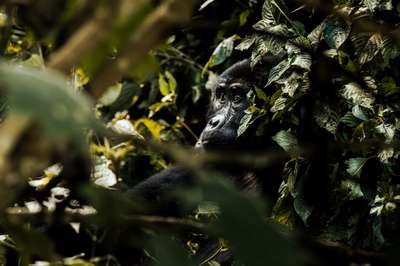
Three hours into the forest, the guide stopped and pointed through the undergrowth. A shape resolved itself from the green: a mountain gorilla, sitting no more than eight metres away, watching us with an expression of calm, unhurried curiosity. The group had been feeding quietly on the slope above a small ravine. We crouched in the mud and simply watched. No one spoke. During my visit in June 2026 at GPS coordinates -0.9665 N, 29.6126 E — inside Bwindi Impenetrable National Park — I photographed that moment at 06:31 in the morning, in the cool mist that drifts through the canopy at that altitude. The gorilla peered through the dense foliage and held my gaze for what felt like minutes.
That encounter is the reason tens of thousands of travellers make the long journey to southwestern Uganda each year. But the question of where to sleep the night before — and the night after — matters more than most travellers realise when they begin planning. The lodges bwindi national park offers range from simple community-run guesthouses to multi-hundred-dollar-per-night luxury camps, and the differences between them go well beyond thread-count and plunge pools. They reflect fundamentally different philosophies about who benefits from conservation, and whether tourism revenue reaches the families living on the park boundary.
This guide is based on multiple on-site visits — I have been to the Bwindi area nine times across visits in October 2024, January 2025, January 2026, and May and June 2026 — and draws on official park management documents, Uganda tourism statistics, and direct observation. It is not a ranking of the most luxurious properties. It is an honest assessment of what sustainable lodge accommodation in Bwindi actually looks like, who it benefits, and how to choose based on your values as well as your budget.
Bwindi Impenetrable National Park: A Unique Management Model
Bwindi Impenetrable National Park covers approximately 331 square kilometres of montane and lowland forest in the Kigezi Highlands of southwestern Uganda. It sits along the border with the Democratic Republic of Congo, and the forest continues across that border into the Virunga landscape — a connected ecosystem managed by Uganda Wildlife Authority on the Ugandan side and by ICCN (Institut Congolais pour la Conservation de la Nature) on the Congolese side. This transboundary character shapes both the park's conservation challenges and, indirectly, its accommodation market.
What distinguishes Bwindi from most protected areas in East Africa is its explicit community participation model. The park operates under a public-private management framework in which revenue sharing is not a courtesy but a legal requirement. Under Uganda's National Parks Act, 20 percent of gate entry fees must flow back to the parishes and sub-counties bordering the park. In practice, these funds have supported school construction, health centre improvements, water supply projects, and road maintenance in communities that once relied on the forest for subsistence and were displaced when the park was gazetted.
This framework has direct consequences for how lodges operate. A lodge that employs local staff, sources food locally, and contributes to community conservation funds is not engaging in charity — it is fulfilling a role that the park management model anticipates and depends on. Conversely, a lodge that imports most of its supplies, employs staff from outside the region, and directs profits entirely offshore undermines the very social contract that keeps communities from encroaching on the forest.
When I first visited the Buhoma area in October 2024, the contrast between properties that genuinely embed themselves in the local economy and those that do not was immediately legible. It showed in the staffing, in the food on the table, in whether the lodge manager knew the names of the community wardens. It showed, too, in price — but not always in the direction you might expect.
The Virunga Connection
Bwindi shares its mountain gorilla population with the Virunga range, which straddles Uganda, Rwanda, and the DRC. Rwanda's Volcanoes National Park — home to properties such as the award-winning Bisate Lodge, which combines luxury accommodation with reforestation and community development, and the Sabyinyo Silverback Lodge operated by Governor's Camp but owned by the community trust SACOLA — represents the high-water mark of the high-end sustainable lodge model in this region. Rates at that tier begin around USD 1,000 per person per night for full board.
Bwindi has developed its own equivalent properties, and the competitive pressure from Rwanda's more developed tourism infrastructure has, paradoxically, pushed Ugandan operators to sharpen their sustainability credentials. Travellers choosing between a Rwanda gorilla permit and a Uganda permit are often making a simultaneous choice between accommodation philosophies.
Understanding the Accommodation Categories Near Bwindi
The accommodation landscape around Bwindi is commonly divided into three broad tiers: budget, mid-range, and luxury. But this taxonomy obscures more than it reveals. A property can be inexpensive and still be genuinely community-integrated. A luxury camp can have a glossy sustainability report and still source most of its revenue offshore. What matters more than price is the structure of ownership and the direction of revenue flows.
Budget Accommodation: The Identified Gap
The park management plan for Bwindi Impenetrable National Park — the source document on which a significant portion of this article draws — explicitly identifies a shortage of affordable, quality guesthouse accommodation near the park. This gap matters for several reasons. Gorilla trekking permits currently cost USD 800 per person for foreign non-residents. A traveller who has already committed that sum to a permit is not necessarily a luxury traveller. They may be a researcher, a conservation volunteer, a journalist, a longer-term resident of Uganda with a more modest accommodation budget. The absence of well-maintained, genuinely affordable options in the USD 40–80 per person range near the main park entry points at Buhoma, Ruhija, Rushaga, and Nkuringo is a structural problem.
Budget-tier properties that do exist tend to be small, family-run guesthouses and community bandas (simple self-contained rooms). They are rarely marketed through the global booking platforms that channel most tourist arrivals, which means they are systematically underdiscovered. The 2011 Uganda accommodation census — the last national survey conducted, according to the Uganda Bureau of Statistics Statistical Abstract 2014 — captured data from 20 districts nationally. The methodology of that survey, which focused on registered, formal-sector properties, almost certainly undercounted the informal budget accommodation around park boundaries.
From my own visits, the most consistent complaint I heard from travellers staying at budget properties near Buhoma was not about room quality but about food and transport. A guesthouse that cannot offer reliable hot meals and cannot help arrange shared transfers to the park gate is effectively unusable for the majority of trekking visitors who arrive without their own vehicles. These are operational gaps that new development — or support for existing operators — could close without requiring significant capital investment.
Mid-Range Camps and Lodges
The mid-range tier — roughly USD 150–400 per person per night, full board — is where Bwindi's accommodation market is most competitive and, arguably, most interesting from a sustainability standpoint. Properties in this range typically offer comfortable tented or chalet accommodation with en-suite bathrooms, communal dining, and a range of in-house activities beyond the gorilla trek itself. Forest walks, birdwatching, village visits, and community cultural experiences are common additions.
The most credible sustainable operators in this tier make their supply chain visible. They will tell you the name of the farm where your vegetables came from, the village where your guide grew up, and how many of their permanent staff live within a 20-kilometre radius of the lodge. They contribute to the Community Conservation Fund, they employ community conservation rangers, and they participate in the park's revenue-sharing mechanisms as active partners rather than passive fee-payers.
An example of the mid-range model that works is the self-catering safari tent camp format — comparable to the Little Elephant Camp model documented in the Uganda travel guide literature, which offers two-person safari tents at around USD 150 per night with separate kitchen facilities. This format is particularly well suited to families and small groups who want privacy and flexibility without the overhead costs of full-board luxury accommodation.
Luxury Lodges: When the Price Is Justified
Bwindi's top-tier properties begin at around USD 500 per person per night and can exceed USD 1,000 for the most exclusive options. At this price point, the question is not whether the lodge is comfortable — it will be — but whether the premium is doing meaningful conservation and community work, or merely funding a very well-designed interior.
The most rigorously sustainable luxury lodges in the Bwindi landscape share a set of structural characteristics. They employ primarily local staff — not just in service roles but in management and guiding positions. They operate transparency reports that detail their environmental footprint and community contributions. They invest in habitat restoration, which in the Bwindi context typically means working with communities on the park edge to reforest degraded buffer zones and reduce human-wildlife conflict. And they structure their community ownership in ways that prevent the community stake from being diluted over time.
The Sabyinyo Silverback Lodge model from the Rwandan side of the Virunga region — where the property is physically operated by a professional safari company but legally owned by a community trust called SACOLA — represents perhaps the most developed version of this structure. A portion of every guest's nightly rate flows directly to SACOLA, which funds community projects chosen by local elected representatives. Variations on this model are beginning to appear on the Ugandan side of the gorilla range, though implementation has been uneven.
Revenue Sharing and Community Integration at Bwindi
Bwindi's revenue-sharing programme is one of the longest-running of its kind in East Africa. Under the programme, 20 percent of the park's gate fees are channelled into a community fund managed jointly by Uganda Wildlife Authority and elected community representatives. The fund has historically supported infrastructure projects — classrooms, health posts, roads — as well as direct livelihood support such as agricultural extension services and micro-enterprise grants.
What the programme does not do, by itself, is ensure that the tourism economy generated by lodge accommodation flows into the same communities. A traveller who spends USD 800 on a gorilla permit and USD 600 on two nights at a lodge near Buhoma generates significant revenue — but if the lodge's supply chain, staffing, and ownership structure all point outside the region, the community impact of that spend is limited to whatever the lodge pays in taxes and the 20 percent gate-fee transfer. The community fund is meaningful but insufficient as a sole mechanism for translating gorilla tourism into genuine local prosperity.
This is why the choice of lodge is not a peripheral decision. It is, in a real sense, a conservation decision. A lodge that genuinely integrates into the local economy employs guides who are also community members, sources food from local gardens, uses local materials in construction and maintenance, and trains and promotes local staff into roles that build long-term skills. These lodges are typically more expensive to operate than those that import goods and centralise management, but they are more stable over time and they produce substantially better outcomes for the communities that live alongside the forest.
[QUOTE: local guide on what the revenue-sharing programme means for his family in Buhoma village]
What I Observed in Buhoma in June 2026
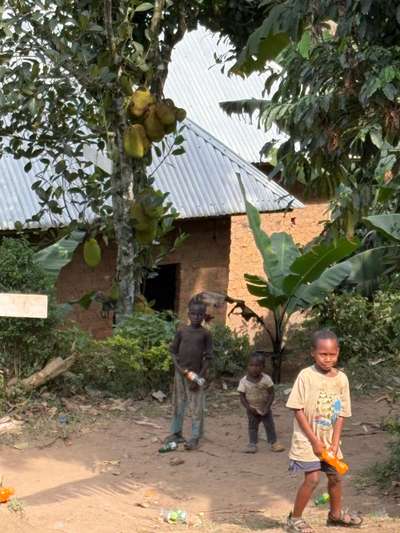
During my visit to Buhoma in June 2026, I spent time at the community orphanage project supported by the Hope on the Road foundation — an initiative that directly involves local families and neighbours, not just the children in the orphanage's formal care. On the morning of 21 June 2026, at GPS coordinates -0.9617, 29.6109, I met three children from the neighbourhood — not residents of the orphanage, but neighbours — who had come to share a meal. Their situation was immediately legible from their clothing and demeanour: they were visibly malnourished and under-resourced. They were uncertain at first, slightly hesitant, but they came in and ate with everyone else.
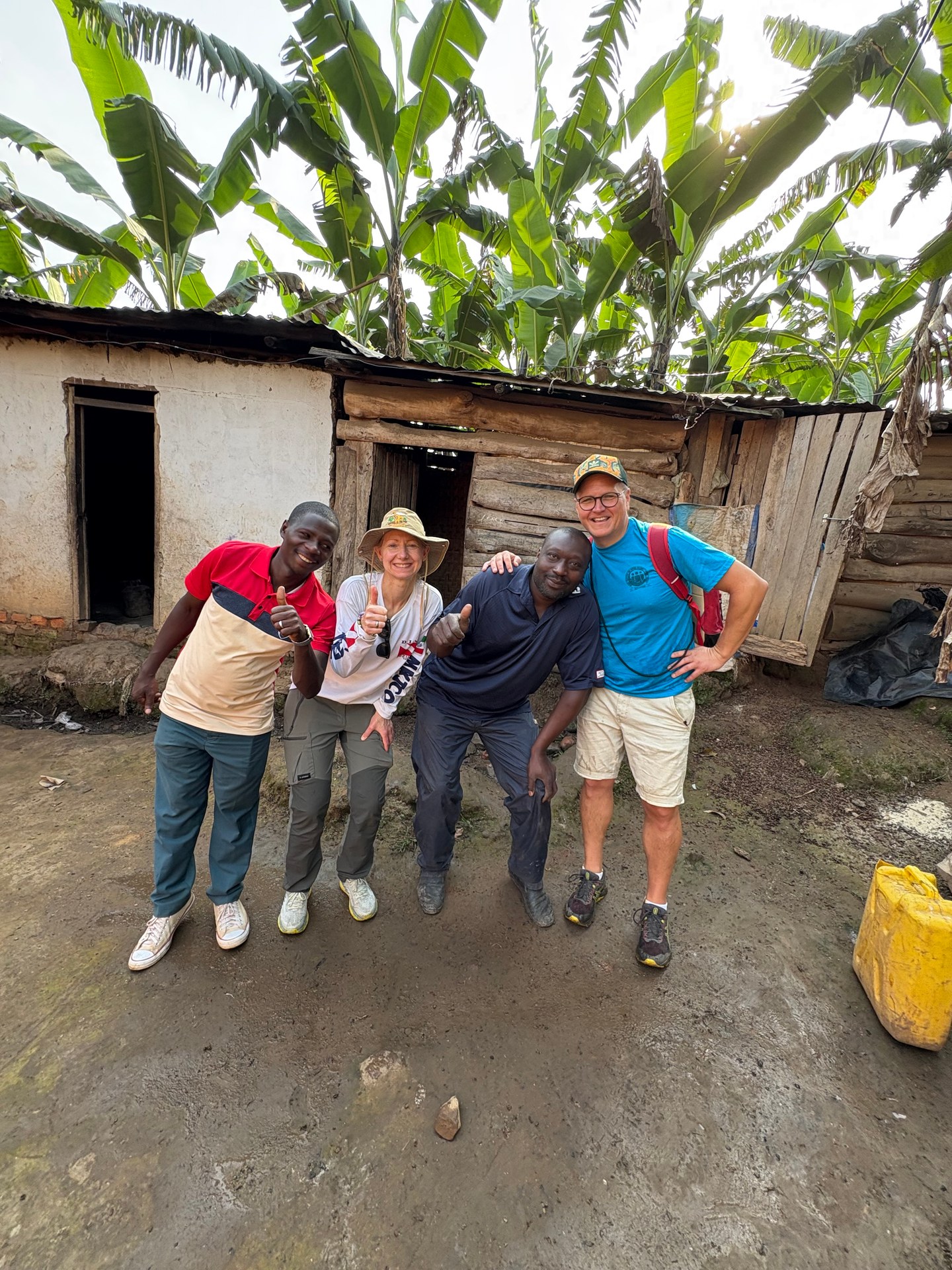
That same morning, at GPS -0.9713, 29.6142, I accompanied the team that had just purchased the orphanage's first small flock of chickens from a local farmer. Four people stood holding the birds — some adult hens, some chicks — with genuine pride. The plan is straightforward: the orphanage will raise the flock, keep some eggs for the children's nutrition, sell surplus eggs for income, and eventually use proceeds from selling grown birds to buy more stock. It is a small-scale model of the sustainable livelihoods approach that the best lodges in the region also practice — using local resources, building local skills, and generating income that stays in the community.
I mention this not to conflate a development charity with a lodge review, but because the two are not as separate as they might appear. The families whose children were eating at that table are the same families from whom lodge staff are recruited. The farmer who sold those chickens is the same type of producer that a well-run lodge would buy vegetables from. The economic ecosystem that makes sustainable lodge development viable in the Bwindi area is the same ecosystem that keeps community members invested in protecting the forest rather than encroaching on it.
How to Choose a Lodge Near Bwindi: Practical Criteria
Most travellers choose their Bwindi accommodation based on price and reviews on global booking platforms. Both criteria are reasonable starting points, but neither will tell you whether your stay genuinely benefits the local community or merely contributes to a system of revenue extraction dressed up in conservation language. Here are more meaningful criteria to apply.
1. Staff Origin and Composition
Ask, directly or through the lodge's website, what proportion of permanent staff are recruited from the communities immediately adjacent to the park. A credible answer will give you a specific percentage and name the villages or sub-counties. A vague answer about "supporting local communities" is a signal to look more carefully. Lodges that genuinely invest in local employment typically have guides who grew up nearby, understand the local ecology intimately, and can contextualise the gorilla encounter within the broader landscape in ways that an outside hire cannot.
2. Food Sourcing
Full-board accommodation is standard at most Bwindi lodges, which means the lodge's food sourcing has a direct economic impact on local farmers. Ask whether vegetables and produce are sourced from local smallholders or from suppliers in Kampala. Ask whether the menu changes seasonally — a reliable indicator of local sourcing. The ecological and community case for local food sourcing aligns in the Bwindi context: reducing supply chain distance reduces the carbon footprint of the operation, keeps money in the local economy, and reduces the lodge's dependence on long-distance supply chains that are vulnerable to road conditions (Bwindi's roads are notoriously difficult in the wet season).
3. Gorilla Group Allocation and Proximity
A practical consideration that many travellers overlook: the gorilla permit specifies the group you will track. Different groups range across different parts of the park and are accessed from different entry points. Choosing a lodge close to the entry point for your assigned group eliminates potentially long morning drives on unpaved roads, which matters both for comfort and for reducing vehicle emissions. The best lodge operators will help you choose accommodation based on your group allocation rather than simply selling you the property they represent.
4. Community Fund Contributions
Some lodges make an explicit community contribution above and beyond the statutory revenue-sharing mechanism. This might be a fixed amount per guest night, a percentage of revenue, or an in-kind contribution to specific community projects. Ask for documentation. A lodge that makes credible, verifiable community contributions — and can show you the projects they have funded — is operating at a materially different level from one that counts the government's revenue-sharing payment as its community contribution.
5. Construction Materials and Environmental Footprint
The most sustainable lodges in the Bwindi region are built primarily from local materials — stone, timber from certified sources, earth, thatch — and are designed to minimise energy consumption. Solar power is increasingly standard. Water management, particularly grey water treatment, is a meaningful differentiator. A lodge that discharges untreated wastewater into a watercourse in the park's catchment area is damaging the ecosystem it depends on, regardless of how its marketing describes its environmental credentials.
The Case for New Sustainable Development in the Budget Tier
The park management documentation for Bwindi is explicit: there is an identified shortage of affordable, quality accommodation near the park. This gap has a specific demographic consequence. Researchers, conservation NGO staff, journalists, independent travellers on modest budgets, and Ugandan nationals visiting the park — a group that conservation policy increasingly wants to support, given the importance of domestic environmental awareness — are all poorly served by the current accommodation landscape.
New development in the budget tier does not need to mean low-quality. The model that works at this price point is the community-owned banda or guesthouse: simple, clean, well-maintained rooms, with reliable hot water, good local food, and a strong connection to the park's interpretation and guiding network. The key operational requirement is a viable food service — the self-catering model documented at properties like Little Elephant Camp, which offers guests a kitchen tent and stocked cool box and prepares meals on request, is one workable approach. Another is a communal dining room serving a fixed daily menu based entirely on what is available locally.
For any new development in the Bwindi buffer zone to be genuinely sustainable, it needs to meet four criteria. First, community ownership or a legally enforceable community benefit mechanism. Second, local employment as the default, not the exception. Third, an environmental footprint that the park's catchment can absorb — which means solar or hydro power, local water sourcing with proper treatment, and construction materials that do not require long-distance transport. Fourth, integration with the park's official guide and permit system, so that the lodge's guests are not competing with walk-in visitors but are channelled through the managed trekking programme in a way that supports ranger employment and habitat monitoring.
Uganda's tourism statistics, which draw on periodic accommodation facility surveys, have historically undercounted the informal sector near park boundaries. According to the Uganda Bureau of Statistics Statistical Abstract 2014, the last comprehensive national accommodation survey was conducted in 2011, and the methodology covered 20 districts primarily focused on registered formal-sector properties. The actual number of bed-nights available near Bwindi in the informal sector is almost certainly higher than official figures suggest — which makes the strategic case for formalising, improving, and marketing this capacity more compelling, not less.
Uganda's Biodiversity Context
It is worth remembering what the accommodation question is ultimately in service of. Uganda is one of the most biologically rich countries on earth. According to Uganda Wildlife Authority data cited in the 2024 National Status of the Environment Report, Uganda is home to over 1,040 bird species, 345 mammal species, 165 reptile species, and 86 amphibian species. Bwindi alone is an Important Bird Area and contains a disproportionate share of Uganda's primate diversity. The mountain gorillas that make the park globally famous are only the most visible element of an ecosystem that includes chimpanzees, L'Hoest's monkeys, forest elephants, and hundreds of endemic plant species.
Every lodge near Bwindi operates within this context. The forest does not stop at the park boundary — it continues, in degraded but recoverable form, into the buffer zone and the farmland beyond. The communities living on that boundary are not an obstacle to conservation but its primary long-term guarantors. How they benefit from tourism, and how well the accommodation sector integrates them as economic participants rather than treating them as a scenic backdrop, will determine the forest's fate more surely than any number of international conservation awards.
Practical Information for Booking Accommodation Near Bwindi
Bwindi has four main trekking sectors — Buhoma in the north, Ruhija in the east, Rushaga in the south, and Nkuringo also in the south. Each sector has its own set of habituated gorilla groups and its own cluster of accommodation. Booking accommodation at a different sector from your gorilla group means a morning drive of between one and two hours on unpaved roads, which is feasible but not ideal. Confirm your gorilla group allocation with Uganda Wildlife Authority before booking your lodge.
Gorilla permits are currently priced at USD 800 per person for foreign non-residents and USD 600 per person for foreign residents. As of early 2026, advance booking rates through tour operators were high enough that standby permits — which used to be available at short notice — are no longer reliably obtainable. Book your permit and your accommodation together, as far in advance as possible.
The gorilla trekking season at Bwindi runs year-round, including during public holidays. The two dry seasons — December to February and June to August — are generally considered the most comfortable for trekking, with drier trails and better visibility. I visited in June 2026 and found the trails manageable though muddy in places, with the forest at its most atmospheric — low cloud, birdsong at close range, and the particular green of a rainforest at the height of its wet season transitioning to dry.
Children under 15 are not permitted to participate in gorilla treks. This is a park rule, not a lodge policy, and it applies regardless of what any accommodation provider tells you. Plan accordingly if you are travelling with younger children — most lodges can arrange alternative activities, and the birdwatching and forest walks around the park periphery are genuinely rewarding.