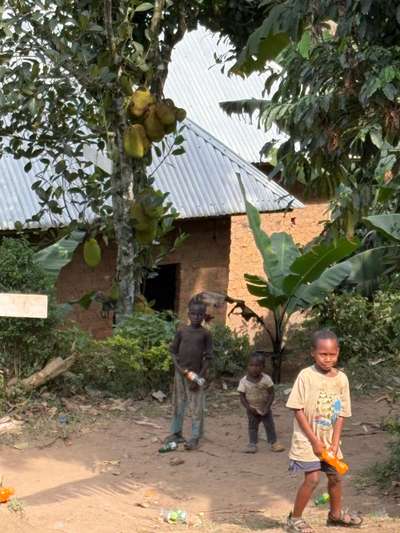
They appeared at the edge of the compound quietly, three children from the neighbourhood of the orphanage in Buhoma. They were slightly shy, hesitant in the way children become when they are unsure whether they belong somewhere. Their clothing was worn, their posture cautious. During my visit to Buhoma in June 2026, I watched them hover at the periphery of our meal, and the only thing that felt right was to invite them in immediately to eat with us. They sat down without a word, and the meal went on.
That moment — unremarkable in its simplicity, impossible to forget in its directness — says more about responsible travel in Uganda than most official policy documents. Sustainable tourism is not primarily about carbon offsets or green-certified hotels, though those matter. It is about the texture of daily contact between visitors and the people who live in the places they visit: whether that contact is extractive or reciprocal, whether it passes through or stays. My GPS-tagged photographs from that morning in Buhoma (coordinates -0.9617, 29.6109, recorded 21 June 2026 at 06:32) remain the clearest evidence I have of why this region rewards slow, attentive travel over rushed itineraries.
This guide examines what sustainable tourism in Kampala and the wider Ugandan context actually looks like in practice — not in theory. It draws on several visits to Uganda, including stays in October 2024, January 2026, May 2026, and June 2026, on official planning documents from the Kampala Capital City Authority (KCCA), on Uganda's National Status of the Environment Report 2024, and on direct observation across the country.
Kampala as a Gateway — and Why That Matters for Sustainability
Most visitors to Uganda's national parks fly into Entebbe International Airport, located approximately four kilometres outside Entebbe town, and then pass through Kampala on their way south or west. Kampala is not merely a logistical waypoint. The city's hills — seven of them, traditionally — hold a living arts scene, remarkable viewpoints, excellent markets, and a concentration of civil-society organisations doing serious work in conservation, refugee integration, and environmental governance. Travelling through Kampala without engaging with any of this is a missed opportunity, and also a pattern that does little for the communities who depend on tourism spending.
The Kampala Capital City Authority's Strategic Plan for FY2025/26–FY2029/30 places digital governance, education, and human capital development at the centre of the city's growth agenda. Tourism is treated as an economic sector that creates jobs, generates revenue, and attracts investment — but the plan is explicit that this must happen in ways consistent with the city's environmental carrying capacity. The metropolitan area encompassing Kampala, Wakiso, and Mukono already concentrates more than 32% of Uganda's manufacturing activity; adding unsustainable tourism infrastructure on top of that industrial base creates compounding environmental pressure that planners are actively trying to manage.
For the practical traveller, this translates into a simple preference: spend at least one night in Kampala rather than treating it as a transit corridor. Visit the Uganda Wildlife Authority at their offices on Plot 7, Kira Road, Kamwokya — this is where permits are administered and where you can speak directly to rangers who work in Bwindi. Pick up a copy of The Eye Magazine's "Insider's Guide to Uganda," published quarterly in a circulation of approximately 12,000 copies and available in many hotels and restaurants, according to the Reiseführer Uganda 2020. These are small choices, but they direct spending toward local institutions that fund conservation.
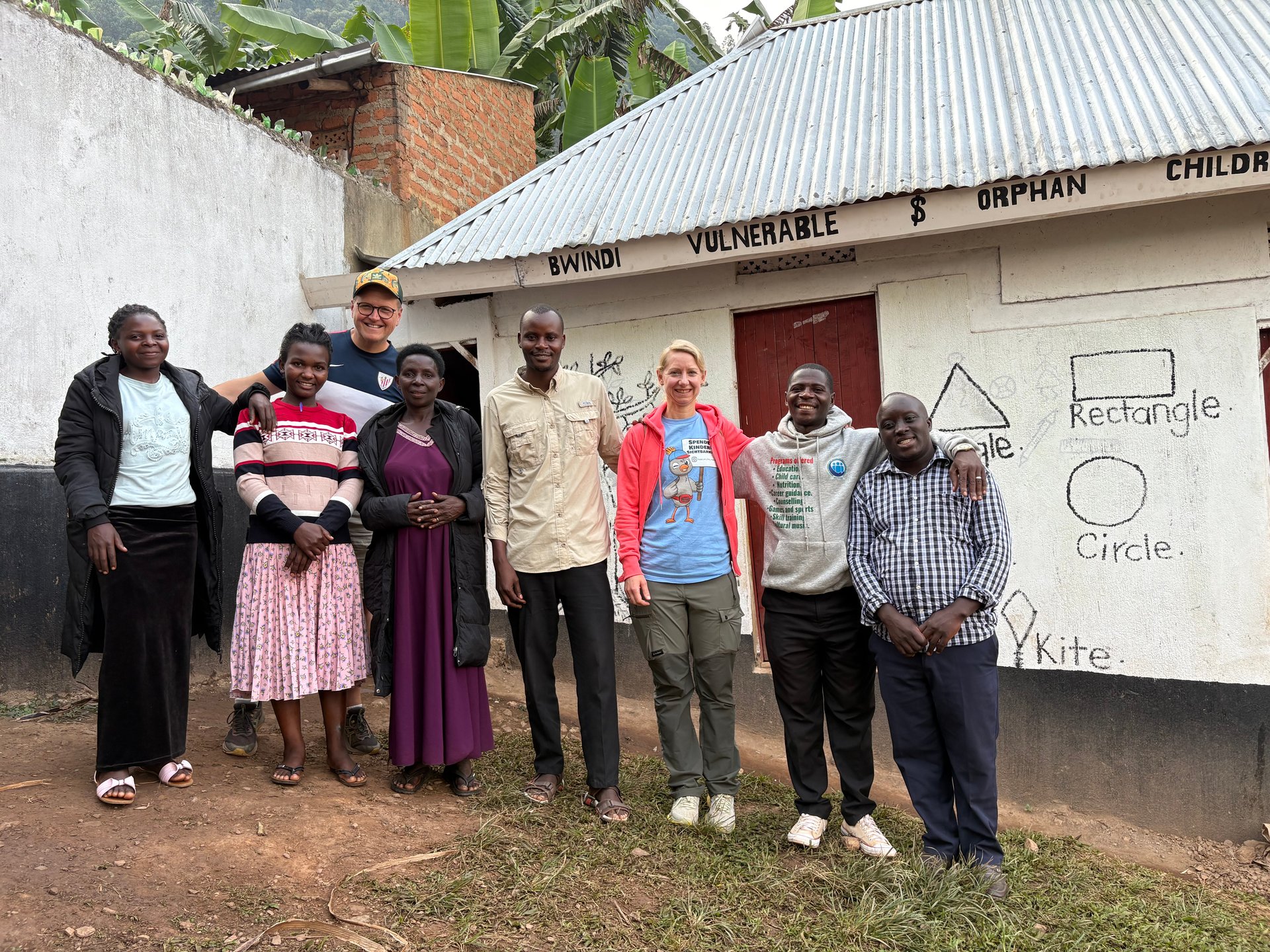
Environmental Protection in Uganda: The Legal and Practical Framework
Uganda's approach to environmental protection in tourism has moved, over the past decade, from aspiration to legislation. The National Environment Act Cap 181, together with the National Environment (Waste Management) Regulations S.I. No. 49 of 2020 and the National Environment (Audit) Regulations S.I. No. 47 of 2020, now provides a comprehensive legal framework for how tourism operations must conduct environmental audits, manage waste, and report on their ecological footprint. These are not advisory documents. They carry enforcement mechanisms.
According to Uganda's National Status of the Environment Report 2024, tourism stakeholders have been increasingly promoting responsible ecotourism that aims to minimise environmental impacts while maximising tourism benefits. This has been done primarily through eco-lodges. In parallel, environment education and sensitisation efforts have been directed at both citizens and tourists through tourism guiding, social media, training programmes, and print media. The same report notes that comprehensive environmental management strategies, including regular compliance inspections and conservation programmes, are being developed and enforced to reduce the ecological footprint of tourism activities.
What this looks like on the ground in Bwindi is a set of practices that most responsible lodges now implement as standard: no single-use plastics in guest-facing areas, composting of food waste, solar or hybrid power generation, employment preferences for staff from immediately adjacent communities, and contributions to community development funds. The degree to which these commitments are honoured varies. During multiple visits to the Bwindi region between October 2024 and June 2026, I observed both lodges that take these obligations seriously and operations that treat them as marketing language. Asking specific questions about actual employment numbers from local villages, actual waste disposal contracts, and actual energy sources at the time of booking is the single most useful thing a traveller can do.
The Wildlife Courts: A Conservation Infrastructure Often Overlooked
One dimension of Uganda's environmental governance that receives almost no attention in travel writing is its dedicated judiciary for conservation offences. The Utilities Standards and Wildlife Court in Kampala, established in 2017, was created specifically to accelerate the processing of wildlife crime cases — a response to the backlog that had allowed poaching networks to operate for years while prosecutions moved slowly through the general court system. The same year saw the establishment of the Standard and Utilities Wildlife Court, also in Kampala. The Buganda Road Court has handled cases involving Chinese nationals charged with wildlife trafficking.
These institutions matter for sustainable tourism because they are the enforcement backstop for everything else. Gorilla permits fund UWA's ranger operations. Ranger operations protect the gorilla families that tourists pay to see. That chain only holds if poaching is prosecuted effectively. When the Rwenzori House — the building in Kampala that houses the National Planning Authority — coordinates with the wildlife courts to align planning regulations with conservation outcomes, the system functions as intended. When it does not, the pressure falls back onto the lodges and the guides, who are the first people visitors encounter and the last line of defence for many conservation norms.
Practical Environmental Choices for Visitors
Beyond lodge selection, there are practical choices that compound into meaningful impact across the duration of a Ugandan itinerary. Hiring a local guide registered with the Ugandan Association of Safari Guides (UGASAF) — which has developed a Kenya-modelled examination system to ensure quality and professionalism among safari guides, according to the Reiseführer Uganda 2020 — keeps more revenue within the country's formal economy. Using public or shared transport between Kampala and Entebbe (where distances are short and traffic comparatively manageable, making bicycle exploration practical according to the same source) reduces the private vehicle pollution load on the city. Visiting the Uganda Wildlife Education Centre in Entebbe adds direct financial support to the institution responsible for wildlife rehabilitation.
Community-Based Tourism and the Urban Refugee Economy
Uganda's approach to community-based tourism has its institutional roots in the Uganda Community Tourism Association (UCOTA), founded in 1998. UCOTA's model — directing visitor spending toward locally owned enterprises rather than internationally headquartered operators — has influenced how many lodges and tour companies in the Bwindi region structure their community benefit programmes. The Reiseführer Uganda 2020 notes that Uganda increasingly emphasises its cultural attractiveness alongside wildlife tourism, and that community-based tourism under UCOTA's framework is central to that positioning.
In Kampala, community-based economic participation has taken on an additional dimension through the city's significant refugee population. The ReBUiLD Programme — operating in Kampala and working closely with local partners including the Platform for Vendors (PLAVU) — facilitates refugee integration and community engagement through local partnerships. PLAVU functions as a partner organisation for refugee entrepreneurship and integration, connecting displaced business owners with Kampala's commercial networks. The East Africa Medical Center in Kabalagala, established in 2018, serves both refugees and Ugandan nationals with dental, maternal, laboratory, and specialised services — an example of the kind of institution that community-oriented visitors can support directly.
Mary Edward, a South Sudanese refugee entrepreneur, operates Muhaba Pastries Store in Kampala. Her business is one of many examples of how the refugee economy in Uganda functions not as a humanitarian aid dependency but as an active commercial ecosystem. Spending at businesses like Muhaba Pastries — a straightforward choice for any visitor spending time in Kampala — connects tourist spending directly to one of the most economically marginalised communities in the city. [QUOTE: local guide on first impressions of Kampala's refugee-run businesses]
The host communities in and around Kampala — the local Ugandan households that researchers use as a comparison group when studying refugee settlement conditions — have, according to ReBUiLD research, generally greater economic stability and food security than refugee households. That asymmetry is relevant to how sustainable tourism is designed: programmes that channel visitor spending toward both host and refugee community businesses reduce the economic friction that can otherwise generate resentment between the two groups.
Uganda in a Global Context: What the Numbers Say
Uganda's tourism sector sits within a global industry that has, over the past three decades, faced increasing scrutiny over its environmental and social externalities. The global population and the scale of international travel have grown simultaneously, creating pressure on ecosystems — like Bwindi Impenetrable Forest — that were never designed to absorb mass visitor flows. Uganda's long-term planning has explicitly considered this tension: the Reiseführer Uganda 2020 notes that the country's long-range plans aim for quality tourism that, where necessary, involves limiting visitor numbers in national parks. That approach is already visible in Bwindi, where gorilla permits are capped per family group per day.
Uganda's accommodation sector has historically been underrepresented in national data. According to the Statistical Abstract 2014, the last national accommodation facilities census was conducted in 2011, with the next update scheduled for the 2014 housing census. The same source notes that the accommodation facility survey covered 20 districts distributed nationally, including Kampala. The gap between the 2011 census and the actual state of Uganda's accommodation sector in 2026 is enormous — particularly given the rapid growth of lodge infrastructure in the Bwindi region and the expansion of eco-lodge development across the southwest.
What this data gap means in practice is that travellers cannot rely on centralised directories to identify which lodges genuinely meet sustainable criteria and which are using the language without the practice. The Uganda Wildlife Authority (ugandawildlife.org) and the Uganda Tourism Board's presence at Entebbe International Airport and the Garden City Shopping Centre in Kampala (noted in the Reiseführer Uganda 2020) remain the most reliable starting points for verified information about park-adjacent accommodation.
How Methodology Shapes What We Know: The Role of CAPI
One of the less visible but consequential aspects of sustainable tourism planning is how data about tourism's impacts is actually collected. Computer-Assisted Personal Interviewing (CAPI) — a method for data collection in which interviewers use digital devices rather than paper to record responses in the field — has become the standard methodology for Uganda's larger socioeconomic surveys, including those that track accommodation, employment, and environmental compliance in tourism-adjacent communities. CAPI reduces transcription errors, allows for real-time data validation, and makes large-scale surveys logistically feasible across Uganda's diverse and geographically dispersed settlement patterns.
For the traveller, this is background information rather than a practical consideration. But it matters for a reason: when you read statistics about Uganda's tourism employment or environmental compliance rates, those numbers were collected by real people walking into communities with digital interview tools. The KCCA Strategic Plan FY2025/26–FY2029/30 draws on data collected through exactly these kinds of survey methodologies. The numbers that inform Kampala's planning decisions — including decisions about how many hotels should be permitted in which zones, how waste management requirements apply to tourist facilities, and where community benefit obligations attach — rest on this empirical foundation.
Understanding that sustainable tourism planning is data-driven, and that the data has gaps, is a form of responsible literacy for the engaged traveller. It means asking questions rather than assuming certifications tell the full story. It means supporting operators who are transparent about their community relationships, their staffing ratios from local villages, and their actual energy consumption — rather than those who display eco-lodge branding without the substance behind it.
Gorilla Trekking: The Clearest Case for Conservation Through Tourism
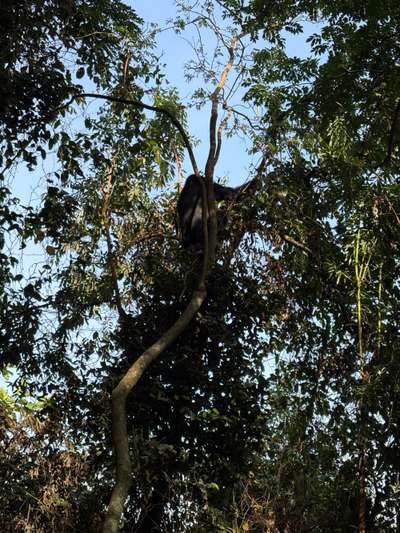
When I visited Bwindi in January 2026 and June 2026, I spent time tracking gorillas on both occasions. During the January visit, after about an hour of walking we encountered the first gorilla family. The first individual we saw was sitting high in a tree, methodically pulling leaves and eating them. The forest was quiet in that particular way that only happens when something large and unhurried is nearby.
The encounter is worth describing not because it is exceptional — it is exactly what most gorilla treks deliver — but because it illustrates the mechanism by which sustainable tourism actually works. That gorilla is alive, and that family is intact, because a portion of every $800 foreign non-resident gorilla permit (or $600 for foreign residents) flows back to Uganda Wildlife Authority, which funds the rangers who prevent poaching, which maintains the habitat that allows the population to grow. The Bwindi Impenetrable Forest National Park, at the extreme southwest of Uganda, contains some of the last mountain gorillas in the world. The Mgahinga Gorilla National Park, also in the southwest, holds additional families. Together, they are the strongest single argument that exists for tourism as a conservation mechanism — because the revenue from visitors funds the protection of the forest at a level that no external grant programme has reliably matched.
This does not mean the system is without problems. The permit fees have historically favoured foreign visitors over domestic ones, creating an uncomfortable dynamic in a country where most citizens cannot afford to see the wildlife that officially belongs to them. The community revenue sharing that channels a portion of park fees to villages immediately bordering Bwindi has improved relations between conservation authorities and local communities — but the precise percentages and distribution mechanisms are subjects of ongoing negotiation. Staying at lodges that employ staff from Buhoma, Ruhija, Nkuringo, or Rushaga — the four main gorilla trekking sectors — rather than importing staff from Kampala, is one of the most direct ways a visitor can contribute to the sustainability of the local economy around which all of this depends.
Uganda's tourism sector, according to the Reiseführer Uganda 2020, has benefited from targeted safety improvements, increased promotion of the country's attractions, and vocational training programmes in tourism professions run through state-funded schools. The country offers a remarkably intimate tourism experience compared to its East African neighbours: group sizes on wildlife routes remain small, the atmosphere is comparatively relaxed, and the pressure of mass tourism — which has reshaped the visitor experience in Kenya's Masai Mara and Tanzania's Serengeti — has not yet arrived in Bwindi in the same form. Preserving that quality is both a commercial interest for Uganda's tourism industry and an environmental interest for everyone who cares about what the Bwindi forest contains.
Practical Recommendations for Sustainable Travel in Kampala and Uganda
The following recommendations are grounded in direct experience across multiple visits between October 2024 and June 2026, and in the official frameworks described above. They are intended for travellers who want to visit Uganda in ways that leave the country better rather than simply depleted.
Before Arrival
Book gorilla permits through UWA directly or through a licensed Ugandan tour operator rather than an international booking platform. A larger share of the permit fee stays in-country. Check that your accommodation holds relevant environmental compliance documentation under the National Environment Act Cap 181. Ask specifically about local employment rates — a genuinely community-integrated lodge should be able to give you a number for what percentage of its staff come from villages within 10 kilometres.
In Kampala
Allow at least one full day in the city rather than treating it as a transit hub. The Owino Market remains one of the most vivid experiences of Kampala's commercial life. The Namirembe Cathedral offers exceptional views over the capital. The Design Hub in Kampala's industrial district shows contemporary Ugandan art in a setting that connects it to the city's economic history. Stanbic Bank Uganda Limited and Standard Chartered Bank Uganda Limited both operate in the city and provide reliable currency exchange for visitors who need local shillings before heading upcountry.
In Bwindi and the Southwest
June is a good month to visit — the weather during my June 2026 trip was manageable, trails were passable, and wildlife activity was high. January is also a viable time; the January 2026 gorilla encounter described above happened in clear conditions. October can be wet and the trails more demanding. Whatever the season, carry your own reusable water container. Respect the one-hour rule for gorilla family visits — it exists for the animals' welfare, not as an arbitrary restriction. Stay at community lodges where a direct economic link between your accommodation spending and local household income can be demonstrated.
The children we ate with in Buhoma in June 2026 did not need a formalised community benefit fund to reach them. They needed proximity and a willingness to include rather than observe. That is the irreducible minimum of what sustainable travel actually means — and it costs nothing except the decision to make it.