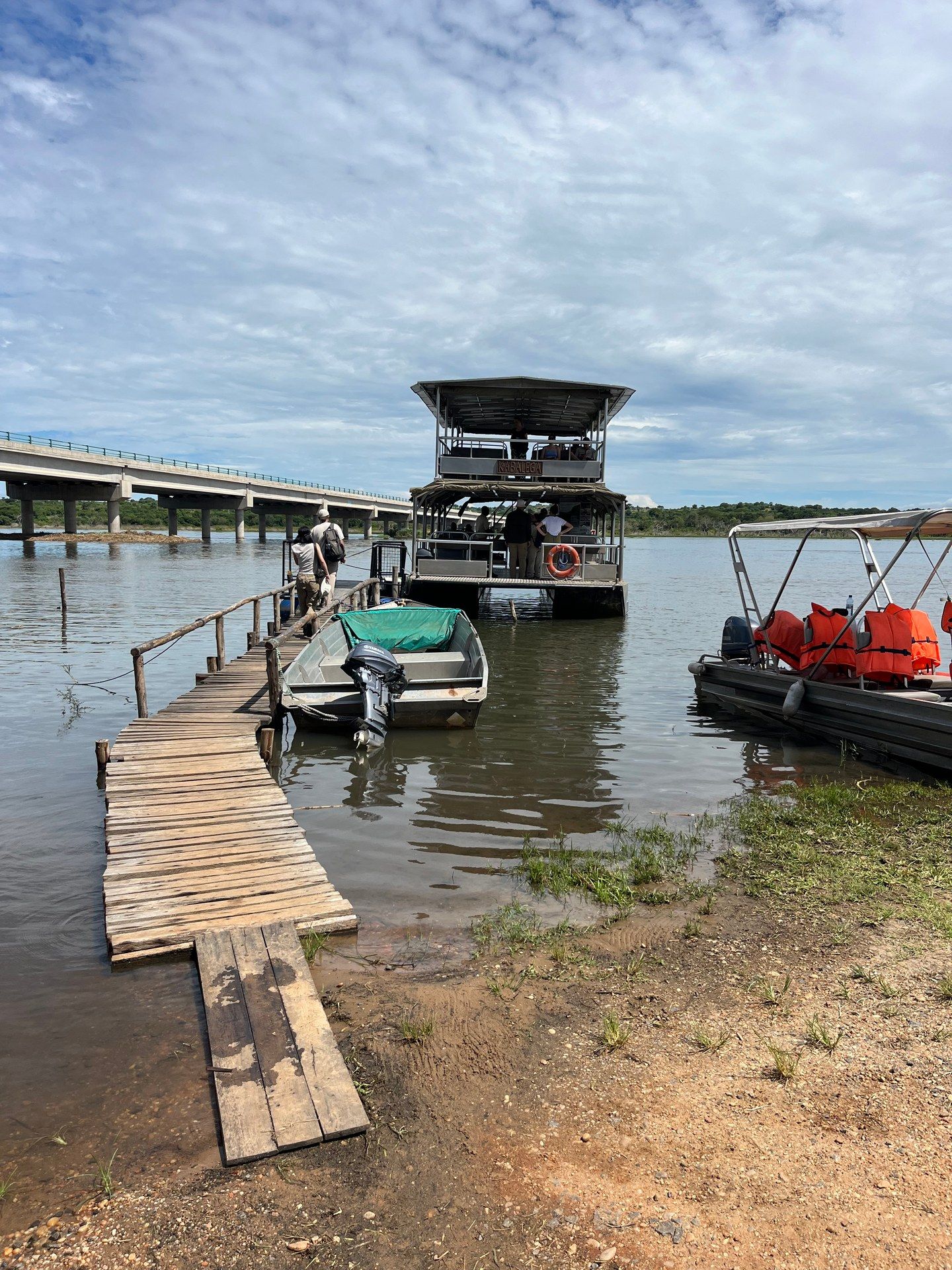
The elephant appeared at a comfortable distance from the safari jeep, moving through the open savannah grass of Murchison Falls National Park with the unhurried pace of an animal that has nothing to prove. When it stopped and turned to look at the vehicle — ears half-raised, trunk at rest — the collective silence in the jeep was involuntary. We were very close. The herd was visible further off, spread across the grassland in the mid-morning October light. That single animal, pausing for a moment before continuing its own business, was the kind of encounter that makes a game drive worthwhile independent of anything else the morning might have produced.
That October 2024 visit to Murchison Falls was part of a wider circuit of western Uganda that included the Victoria Nile boat safari — 14 passengers on a flat-bottomed boat with life jackets and a canvas roof, watching Nile crocodiles bank at the water's edge from what felt like a reasonable distance and turned out, by the crocodiles' dimensions, to be not quite as generous as expected. The waterfall at the circuit's end, where the entire volume of the Nile compresses through a seven-metre-wide gorge in the rock before dropping into the pool below, is one of the loudest natural phenomena I have encountered anywhere in East Africa. The GPS-tagged photographs from that trip — eight photos across three days, location confirmed at approximately 2.285°N, 31.510°E near the Murchison Falls game-drive corridor — are as close to irrefutable proof of presence as a camera can provide.
Western Uganda is not one destination — it is several ecosystems and lodging environments within a roughly ten-hour driving radius of each other. Murchison Falls in the north, the Ndali-Kasenda Crater Lakes near Fort Portal in the middle, and Bwindi Impenetrable National Park in the south can all be part of the same itinerary if the routing is handled correctly. This guide focuses on the crater lakes cluster: three lodges, three different character profiles, one volcanic landscape — and what distinguishes each for a traveller deciding where to spend two or three nights in the Fort Portal area.
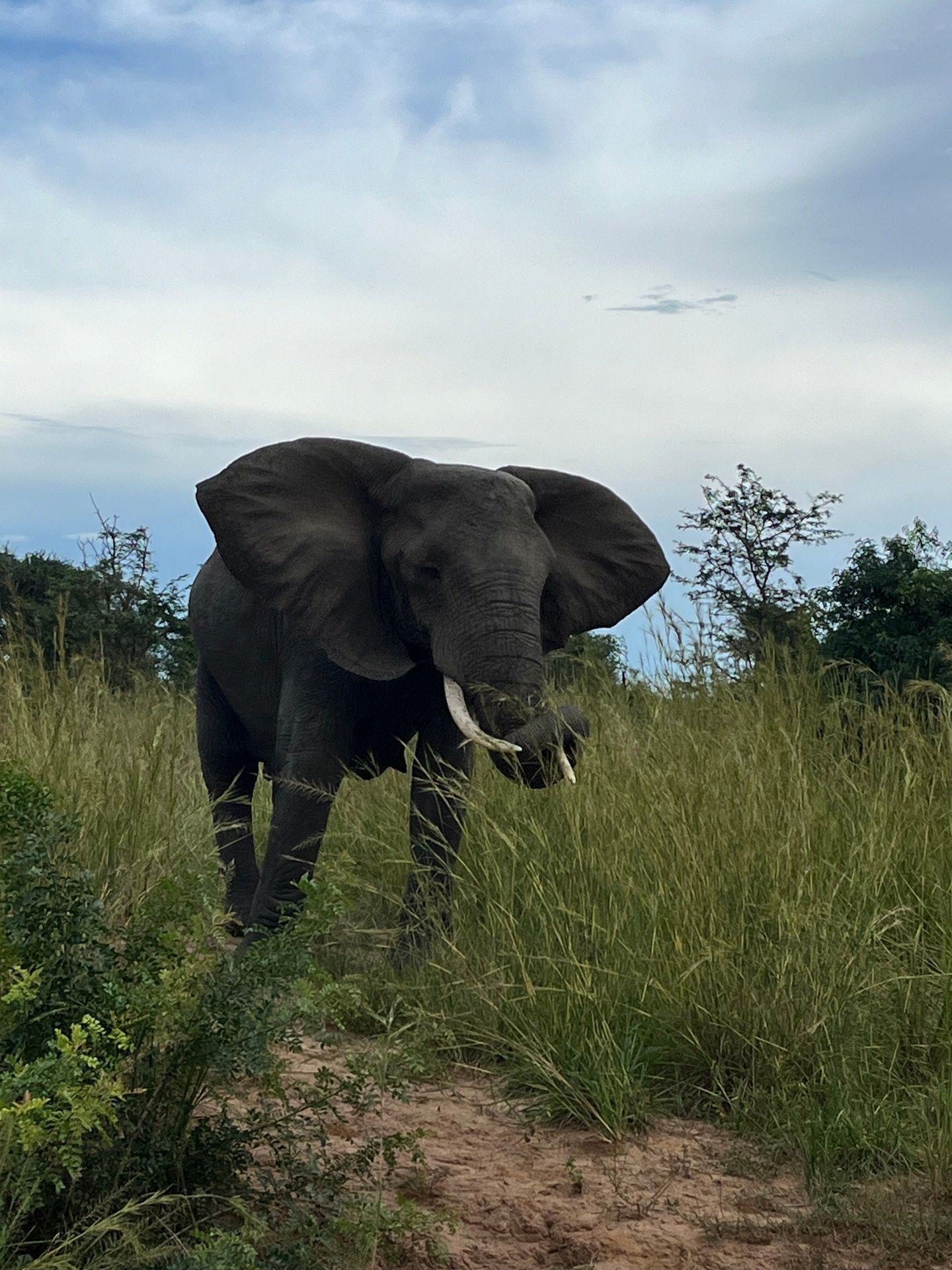
The Ndali-Kasenda Crater Lakes — Forty Volcanic Lakes Near Fort Portal
The Ndali-Kasenda Crater Lakes are a concentration of more than 40 volcanic crater lakes distributed across the rolling hills south-east of Fort Portal in Kabarole District, western Uganda. They are the product of the same geological activity that built the Rwenzori Mountains to the west and the Virunga volcanic chain to the south — a landscape shaped by the African Rift Valley's ongoing movement. Each lake sits in the bowl of an extinct crater, separated from its neighbours by ridgelines and cultivated hillsides. The differences in depth, mineral content and drainage create lakes of varying colours — some a deep blue, others a murkier green — and varying ecologies.
Fort Portal itself, approximately 35 kilometres from the lake cluster, is the regional capital of Kabarole District and the practical hub for resupply, onward travel and orientation. It is a pleasant mid-sized Ugandan town with functional infrastructure, a local market, and a connecting road network that spans south towards Kasese and the Queen Elizabeth National Park, north towards Hoima and Murchison Falls, and east towards Kampala on a journey of approximately four to five hours on largely tarmacked road. The Rwenzori Mountains — the "Mountains of the Moon," snowcapped year-round on their highest peaks despite sitting on the equator — are visible on clear mornings from several points on the crater lake ridge.
The lodges in the Ndali-Kasenda crater lakes area occupy positions of genuine scenic distinction. Unlike accommodation in a valley or on a flat plain, lodge placement on a crater rim puts the landscape at eye level in every direction: the lake below, the ridges across the water, and the larger horizon of hills, tea plantations and, on the clearest days, the Rwenzori peaks. This is the consistent selling proposition of all three properties in this guide — the view is architectural. It frames every meal, every morning on a terrace, every afternoon when the light changes the lake's colour.
The region's birdlife is a significant supplementary draw. The crater lakes area sits within a convergence zone for forest and savannah species and is accessible to birders who find the more remote areas of Bwindi or the Rwenzoris logistically demanding. The Uganda Wildlife Authority does not manage the crater lakes area as a formal national park — it is a cultural and natural landscape with a complex mix of private land, community farms, and small forest patches — which gives the lodges here a different relationship with the surrounding environment than lodges inside a protected-area boundary.
Ndali Lodge — Tea Farm History on Lake Nyinambuga
Ndali Lodge sits on the rim of Lake Nyinambuga and is, of the three crater lakes properties covered here, the one with the deepest documented history. The property began as a tea farm established by British settlers in the 1920s — a colonial agricultural enterprise on the highland hillside, taking advantage of the altitude, rainfall and temperature conditions that are ideal for tea cultivation. The British connection in its earliest form was commercial and extractive in the way most colonial agricultural enterprises were; what distinguishes the current incarnation of Ndali Lodge is that the conversion from working farm to eco lodge has preserved rather than erased that material history.
Tea still grows on the hillsides around Ndali Lodge. The plantation is not merely decorative — it is a functioning part of the property's landscape identity, giving the grounds a character that is visually unlike any other lodge in Uganda. Arriving at Ndali means arriving through tea, and that context changes what you are looking at. The relationship between the colonial agricultural history of the crater lakes area and its current existence as a nature-and-lodge destination is not simple, and Ndali Lodge's physical presence in a maintained tea landscape is a version of that complexity made visible.
The lodge positions itself as a romantic destination — small, intimate, with the kind of quiet that a property of this scale and setting can credibly offer. Lake Nyinambuga is a significant crater lake within the Ndali-Kasenda cluster; views from the lodge rim across the water would, on a clear day, extend to the surrounding ridgelines and tea-covered hillsides. The eco credentials arise both from the nature of the setting and from the operational choices available to a small property in this environment.
The British Roots and Their Contemporary Meaning
The "British roots since 1920" framing that the lodge uses is worth unpacking for travellers who are thinking carefully about what kind of place they are visiting. The original farm was part of the colonial agricultural economy of what was then the Uganda Protectorate — an economy that extracted value from the land and from the labour of the people who worked it, under conditions that were governed by the colonial administration rather than by the workers' own interests. That history does not disappear because the property has been converted into a lodge. What distinguishes a lodge with historical literacy from one without it is whether the property engages with that context honestly. Ndali Lodge's current owners — who acquired and converted the property — are, by the lodge's positioning, committed to the eco and ethical tourism dimensions that are, in effect, a different set of values from those of the original enterprise.
Papaya Lake Lodge — Polish Hospitality on Lake Lyantonde
Papaya Lake Lodge opened on Lake Lyantonde in 2015, making it the newest of the three crater lakes properties in this guide by opening date. Its Polish ownership gives it a character that is immediately different from the colonial-British atmosphere of Ndali Lodge and the structured eco-design approach of Crater Safari Lodge. Polish hospitality has a specific register — attentive, direct, with food taken seriously — and in a lodge context at this price point, that translates to a guest experience that is likely to feel personal rather than institutionalised.
The presence of a restaurant and pool distinguishes Papaya Lake Lodge from some of the more remote or ascetic crater lakes properties. A pool on the rim of a crater lake in western Uganda is not a standard amenity — it is a deliberate positioning choice that targets a guest who values a structured resort-style comfort alongside the wildlife and landscape setting. The restaurant will, at a property of this size and seriousness, be serving food that reflects both local ingredients and European technique — the combination that a Polish owner with fine-dining sensibility would naturally gravitate toward.
Lake Lyantonde is one of the larger and more accessible of the Ndali-Kasenda crater lakes, and the lodge's position on its rim provides the same panoramic quality that characterises the best placements in this landscape. The 2015 opening date means the lodge has approximately eleven years of operational experience behind it — enough time for the gardens and landscaping to have matured, for the staff to have developed the routine fluency that makes a small lodge work smoothly, and for the owners to have refined the offering based on guest feedback. A lodge that has traded for a decade in a competitive niche market and remained open through the disruptions of 2020–2022 has, at minimum, demonstrated that the product has genuine market relevance.
Who is Papaya Lake Lodge for? It is most naturally the choice for a traveller who wants the crater lakes landscape with reliable comfort — consistent food quality, a pool for the warm afternoons, and an owner who is physically present and personally invested in the experience. It is less suited to a traveller seeking deep eco-immersion or a historical narrative rooted in the site.
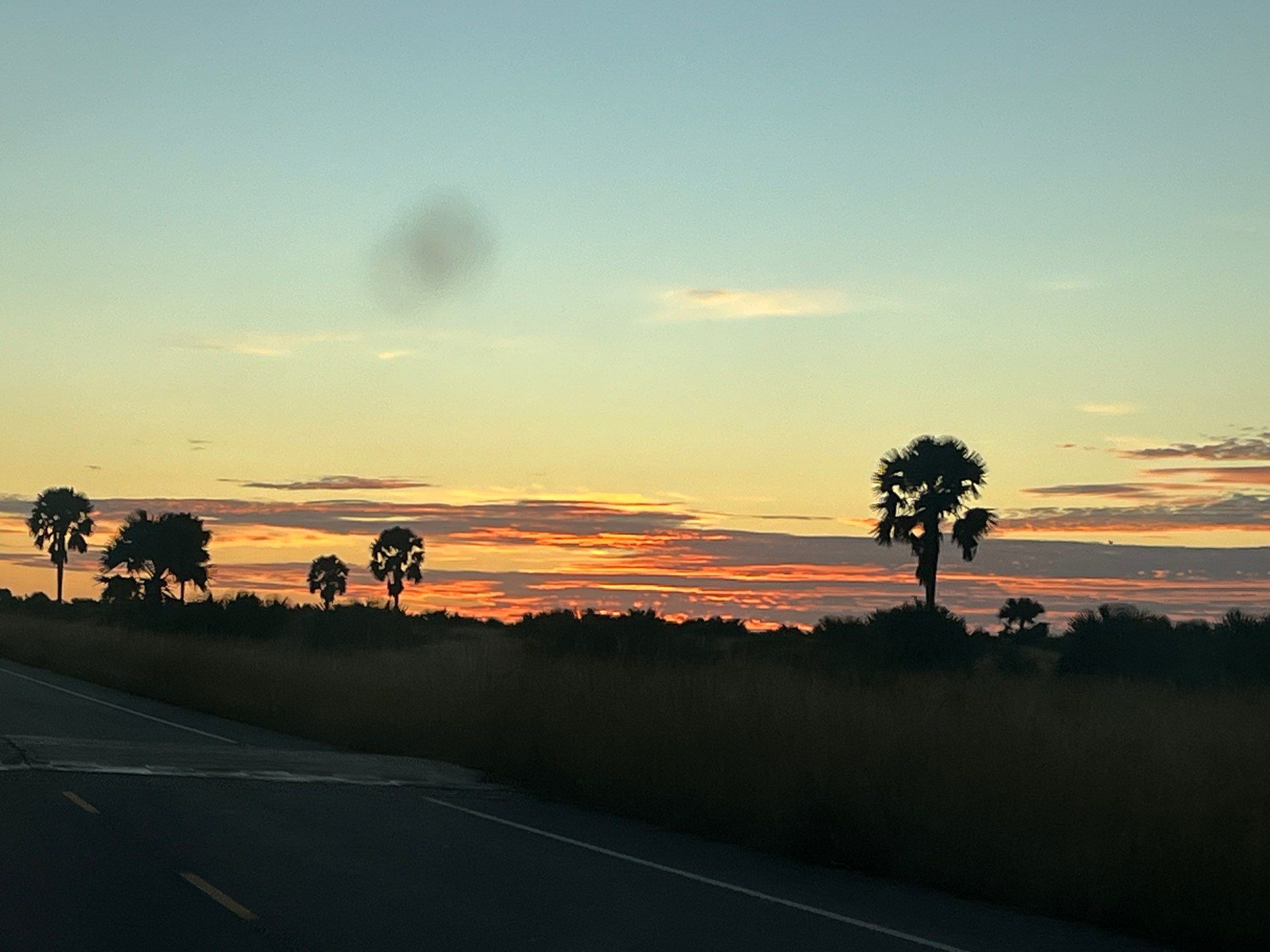
Crater Safari Lodge — Nine Eco Cottages on Lake Nyinabulitwa
Crater Safari Lodge was opened in 2013 by Crystal Lodges on the rim of Lake Nyinabulitwa. Its nine deluxe cottages make it the smallest of the three properties by accommodation count — a deliberate scale decision that keeps the guest population low and the environmental footprint proportionate to the setting. The eco-lodge label, when applied rigorously rather than cosmetically, means something specific: construction methods that minimise site disturbance, operational systems that manage water, waste and energy with genuine discipline, and sourcing practices that favour local suppliers.
Lake Nyinabulitwa is one of the deeper crater lakes in the Ndali-Kasenda cluster. Deep crater lakes tend to be the most visually dramatic — the bowl geometry intensifies the sense of containment, and the water has a clarity and depth of colour that shallower lakes lack. A cottage on the rim above Nyinabulitwa would have a view across water into the crater walls on the opposite side, with nothing but the lake filling the foreground below the terrace. That specific geometry — contained by crater walls rather than open to a broader valley — gives Crater Safari Lodge a slightly more intense sense of enclosure than a property on a larger, more open lake might offer.
Crystal Lodges, the operating company behind Crater Safari Lodge, has been active in western Uganda's premium accommodation market long enough to have developed operational systems appropriate to the environment. The 2013 opening date means the lodge has more than a decade of experience managing guests at this specific location — a significant practical advantage in a landscape where rainfall, humidity and the specific demands of crater-lake maintenance create operational challenges that newer properties spend years learning.
The Nine-Cottage Model and What It Means in Practice
Nine cottages is a carefully chosen capacity for a lodge in this price bracket. Fewer than eight would give the lodge the intimacy of a private house but insufficient revenue to sustain the staffing and infrastructure that a premium property requires. More than twelve would push the guest density above the threshold at which a crater lake rim feels exclusive rather than busy. Nine sits in the middle: enough for the lodge to run professionally, few enough for the guest experience to feel personal. It also means that a family or small group travelling together can reasonably book the lodge at close to full capacity, which is a different kind of experience from staying at a property where you are one of several unrelated parties.
Planning a Crater Lakes Stay — Routing, Timing and the Wider Western Uganda Circuit
The Ndali-Kasenda Crater Lakes are not a standalone destination for most international travellers — they sit within a larger western Uganda itinerary that requires decisions about how much time to allocate to each component. The most common circuit combines Murchison Falls National Park in the north (two to three days for the game drive and boat safari), the crater lakes near Fort Portal (two nights at minimum, more if you want to explore the surrounding hills, tea estates and primate-tracking opportunities in the nearby Kibale Forest), and Bwindi Impenetrable National Park in the south (minimum two nights around the gorilla trek). That circuit runs seven to nine days and covers three ecosystems — savannah, montane volcanic lakes and equatorial rainforest — in a single itinerary.
The road from the crater lakes to Bwindi runs south through Kasese and Kabale, a full-day drive of approximately six to seven hours. The road from the crater lakes to Kampala is approximately five hours on a reasonably maintained highway. From Fort Portal, the approach road through the Ndali area transitions from tarmac to unpaved track for the final kilometres to the lodge cluster; road conditions vary seasonally and are worth checking before arrival.
Season matters differently at the crater lakes than it does at Bwindi. The volcanic lake landscape is not dependent on a single wildlife activity for its value — the views, the birding, the cultural walks and the lake-based activities operate year-round. The dry seasons (June to September and December to February) reduce mud on approach roads and improve visibility on the ridges. The wet seasons bring heavier vegetation, more birdlife activity and a lushness to the tea estates that is genuinely striking. Travelling in October 2024 through Murchison Falls and the approaches to western Uganda, the landscape after recent rain was deep green and the light had the quality that comes from intermittent cloud and sudden clearings — different from the dry-season gold of the savannah in August, but equally worthwhile.
Kibale Forest National Park, approximately one hour from the crater lakes, is the logical complement to a stay in the Ndali-Kasenda area. Kibale has the highest density of primates of any protected area in East Africa and is the best location in Uganda for chimpanzee tracking — a permit-based activity that parallels the gorilla trekking system at Bwindi. A crater lakes lodge combined with chimpanzee tracking in Kibale and then an onward drive south to Bwindi for gorilla trekking gives a three-park itinerary that covers the full range of Uganda's primate-based wildlife tourism in a logistically coherent route.
| Ndali Lodge | Papaya Lake Lodge | Crater Safari Lodge | |
|---|---|---|---|
| Lake | Nyinambuga | Lyantonde | Nyinabulitwa |
| Opened | Farm est. 1920s; lodge era | 2015 | 2013 |
| Ownership | British roots, eco-converted | Polish family | Crystal Lodges |
| Capacity | Not published | Not published | 9 deluxe cottages |
| Key Feature | Historic tea estate setting | Pool + restaurant | Eco design; deep crater lake |
| Character | Romantic, historical | Comfortable, personal | Nature-focused, intimate |
| Best For | Couples; history-minded travellers | Families; comfort-seekers | Eco travellers; small groups |
| Pricing | On request | On request | On request |
Prices must be confirmed directly with each lodge — 2020 guide prices are no longer reliable. All three properties have been operational for more than a decade; current rates are subject to review.
All three crater lakes lodges will have their busiest periods during the high seasons — June to September and December to early January — when Ugandan safari tourism is at its peak and both Bwindi gorilla trekking permits and accommodation across the circuit are in high demand. Booking these properties well in advance during those months is not optional. In the shoulder and low seasons, the same properties may have more flexible availability, but the assumption that a property of this character and profile will have last-minute rooms available should not be made without calling ahead. Lodges at the Ndali-Kasenda cluster are running at high occupancy rates consistent with the broader Uganda lodge market precisely because they offer something that cannot be replicated at a lower price point or in a different location.
Frequently Asked Questions
What are the crater lakes near Fort Portal, Uganda?
+
The Ndali-Kasenda Crater Lakes are more than 40 volcanic crater lakes located south-east of Fort Portal in Kabarole District, western Uganda. They were formed by volcanic activity connected to the East African Rift Valley system. Three of the most accessible for lodge stays are Lake Nyinambuga (Ndali Lodge), Lake Lyantonde (Papaya Lake Lodge) and Lake Nyinabulitwa (Crater Safari Lodge). Fort Portal is the closest town, approximately 30–60 minutes from the lake cluster depending on the specific lodge.
What is special about Ndali Lodge?
+
Ndali Lodge sits on Lake Nyinambuga on a property originally developed as a tea farm by British settlers in the 1920s. Tea still grows on the hillsides around the lodge. The conversion from working farm to eco lodge has preserved the agricultural landscape as part of the property's character — arriving at Ndali means arriving through tea. It is one of the most historically distinctive lodge settings in western Uganda and positions itself as a romantic, small-scale eco property.
When did Papaya Lake Lodge open and who runs it?
+
Papaya Lake Lodge opened on Lake Lyantonde in 2015 and is owned by a Polish family. It has a restaurant and pool — amenities that distinguish it from the more naturalistic crater lakes properties. Its European ownership gives it a hospitality character that is personal and direct. It is well suited to travellers who want the crater lakes setting with reliable food quality and resort-style comfort.
How many cottages does Crater Safari Lodge have?
+
Crater Safari Lodge on Lake Nyinabulitwa was opened in 2013 by Crystal Lodges and has nine deluxe cottages. The nine-cottage scale keeps the guest population low and the eco-lodge character intact — small enough for genuine quiet, large enough to operate with professional staffing. It is well suited to travellers who want eco-led accommodation in a genuinely intimate crater lake setting.
Can you combine a crater lakes stay with Bwindi gorilla trekking?
+
Yes — the Ndali-Kasenda Crater Lakes are approximately five to six hours from Bwindi's Buhoma sector gate by road via Kasese and Kabale. The standard western Uganda circuit runs Kampala–Murchison Falls (two to three days)–Fort Portal/Crater Lakes (two nights)–Kibale Forest–Bwindi (two nights for gorilla trekking) and returns either to Kampala directly or via Kabale and Lake Bunyonyi. That circuit takes seven to ten days depending on the amount of time allocated to each component and is logistically coherent as a single overland route.