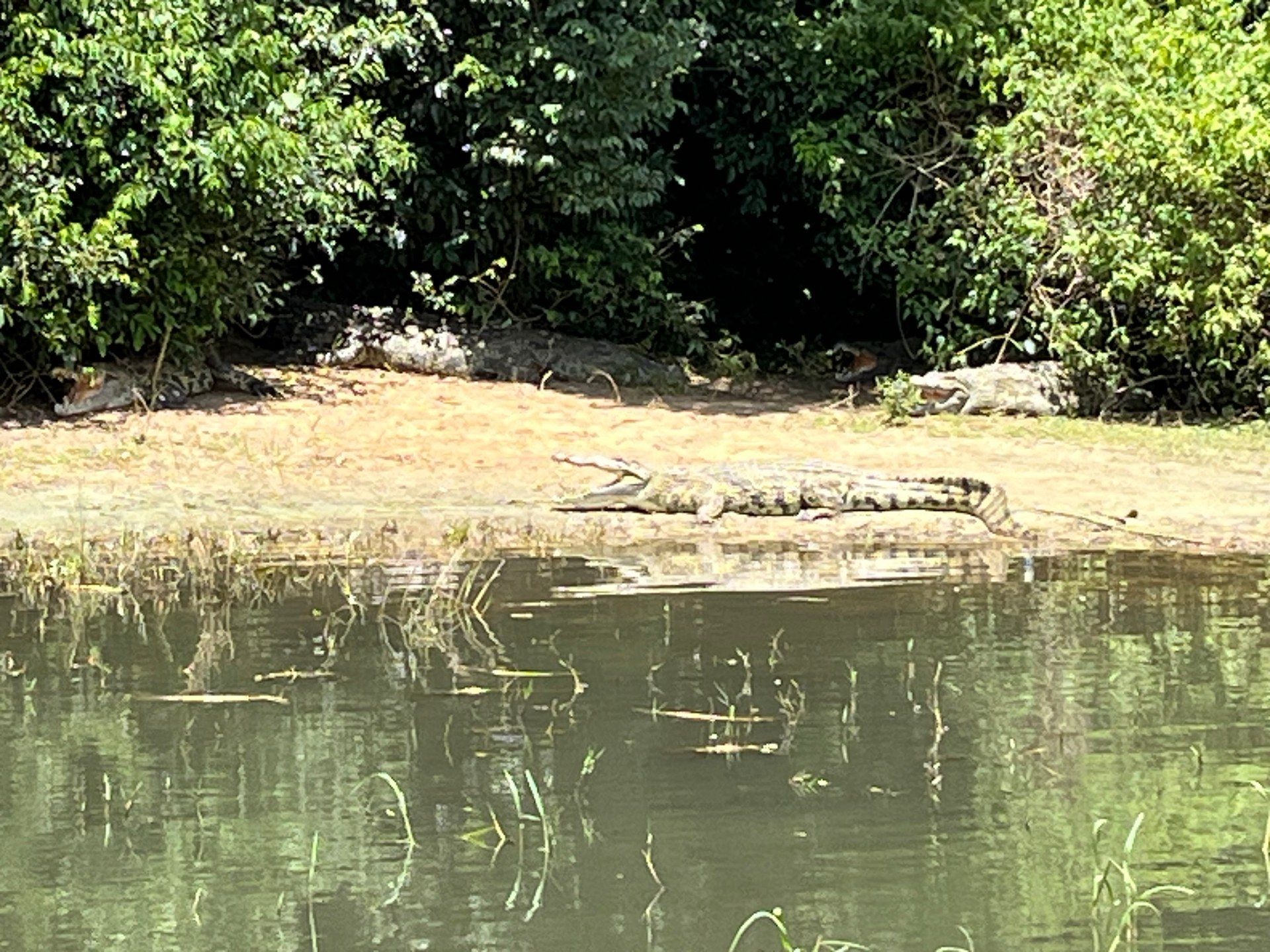
On the road from Butiru heading north-west towards Murchison Falls National Park, our vehicle slowed behind a minibus that had acquired a cargo roughly double its own height. Mattresses, rolled foam, household goods — the whole load lashed to the roof in a construction that would have alarmed any road safety inspector, but which evidently represented a perfectly functional logistics solution for the driver. The surrounding passengers showed no concern. This is, as our guide put it simply, typical Uganda: a country that finds practical answers to large problems using what is immediately available, and does so with complete composure. That October 2024 journey set the tone for everything that followed in the park.
What follows in the park is, by most measures, some of the finest wildlife viewing in East Africa. Murchison Falls National Park covers a vast sweep of savannah, woodland, and riverine forest in Uganda's north-west, bisected by the Victoria Nile as it forces itself through a seven-metre gap in a rock shelf — the narrowest point of the world's longest river — before plunging into a churning pool below. The boat safari that follows the Nile upstream from Paraa to the base of those falls is one of the most wildlife-dense experiences the country offers. This guide covers what to expect on the water, what the dawn game drive delivers, how the park fits into a broader Uganda itinerary, and everything practical you need to plan the visit.
The Victoria Nile: Why This Stretch of River Is Different
The section of the Victoria Nile that flows through Murchison Falls National Park carries water from Lake Victoria northward towards Lake Albert before it continues into South Sudan and eventually Egypt. Within the park, the river serves as a natural boundary between the savannah ecosystems of the north bank and the denser forest and woodland on the south. The majority of large wildlife concentrates on the northern side — the elephants, giraffes, lions, and buffalo that make the game drive compelling — while the riverbanks themselves host the species most visible from the boat.
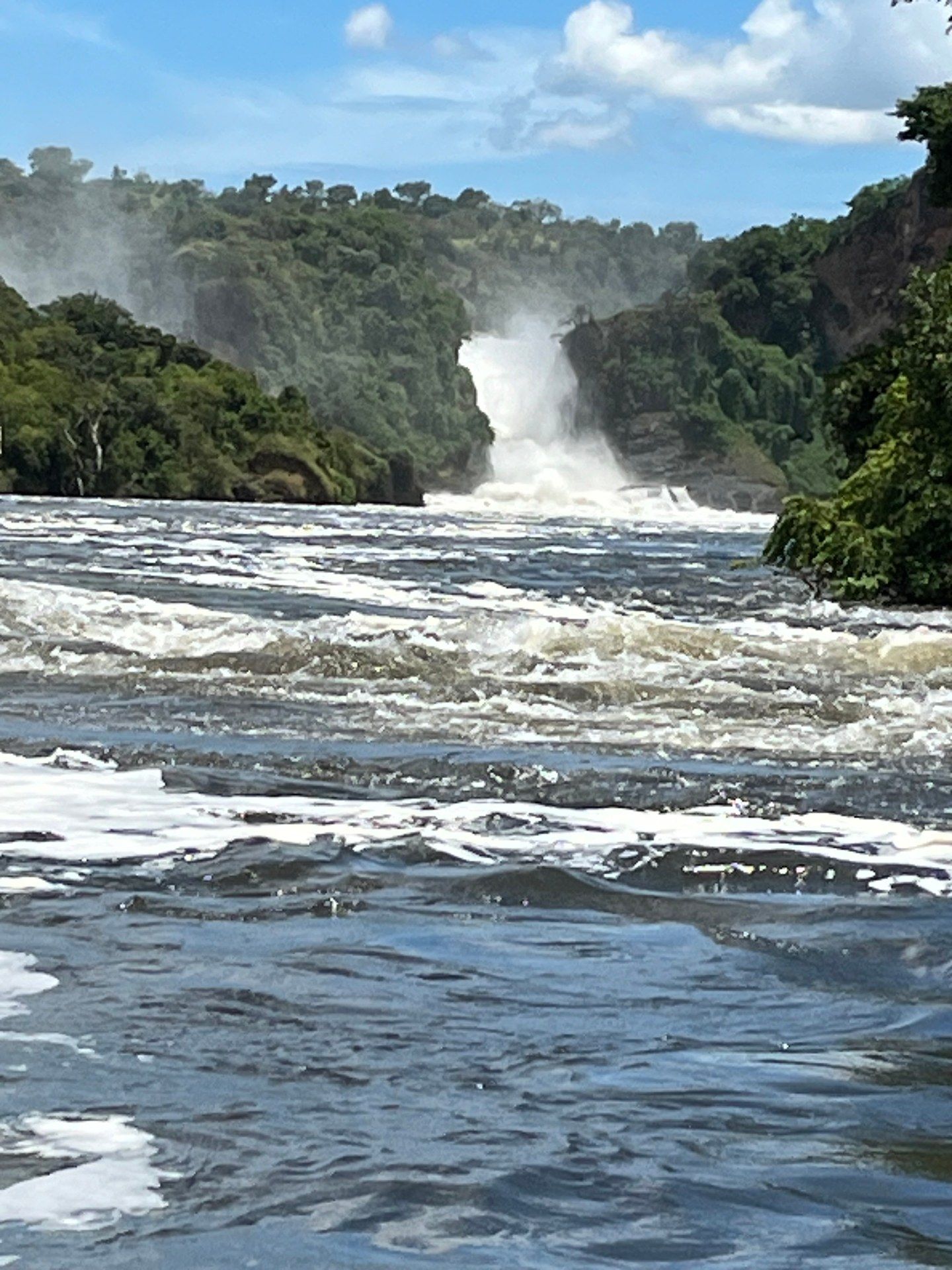
The Victoria Nile's character changes dramatically as it approaches the falls. The broad, calm channel where the Paraa ferry crosses — where hippopotamus groups lounge in the shallows with the indifference of animals that have never been seriously threatened — gives way to faster water as the banks narrow. By the time the boat reaches the base of the falls, the noise is considerable. The water comes down from a seven-metre gap in the rock shelf with a force that creates a permanent mist and a roar audible several hundred metres away. During our October 2024 visit, the spray reached the boat even at the prescribed viewing distance.
The Falls Themselves
The gorge through which the Nile forces itself at Murchison Falls is among Uganda's most photographed natural sites, and the photographs, for once, do not exaggerate. The compression of a river this wide into a gap this narrow produces a kinetic spectacle: the water is white throughout and the sound is continuous. Climbing to the top of the falls after the boat trip — a trail of roughly forty-five minutes from the base — allows you to stand at the edge and look down at the same channel from above. The perspective from the top is entirely different from the boat view: you understand the rock structure, the angle of the gorge, and why the Nile, having squeezed through here, spreads out so quickly into the wide pool below.
On the Boat: Crocodiles, Elephants, and What the River Shows You
The boat safari departs from the Paraa jetty, typically around eight in the morning, and heads upstream. Within the first twenty minutes, the river normally produces its first hippopotamus groups. Uganda's hippo population is substantial, and the Victoria Nile in Murchison is one of the densest concentrations in the country. From the water, they appear as rounded grey shapes in the shallows — occasionally yawning to reveal the full width of their jaws — and the boat maintains a respectful distance while still placing you considerably closer than any game drive vehicle could.
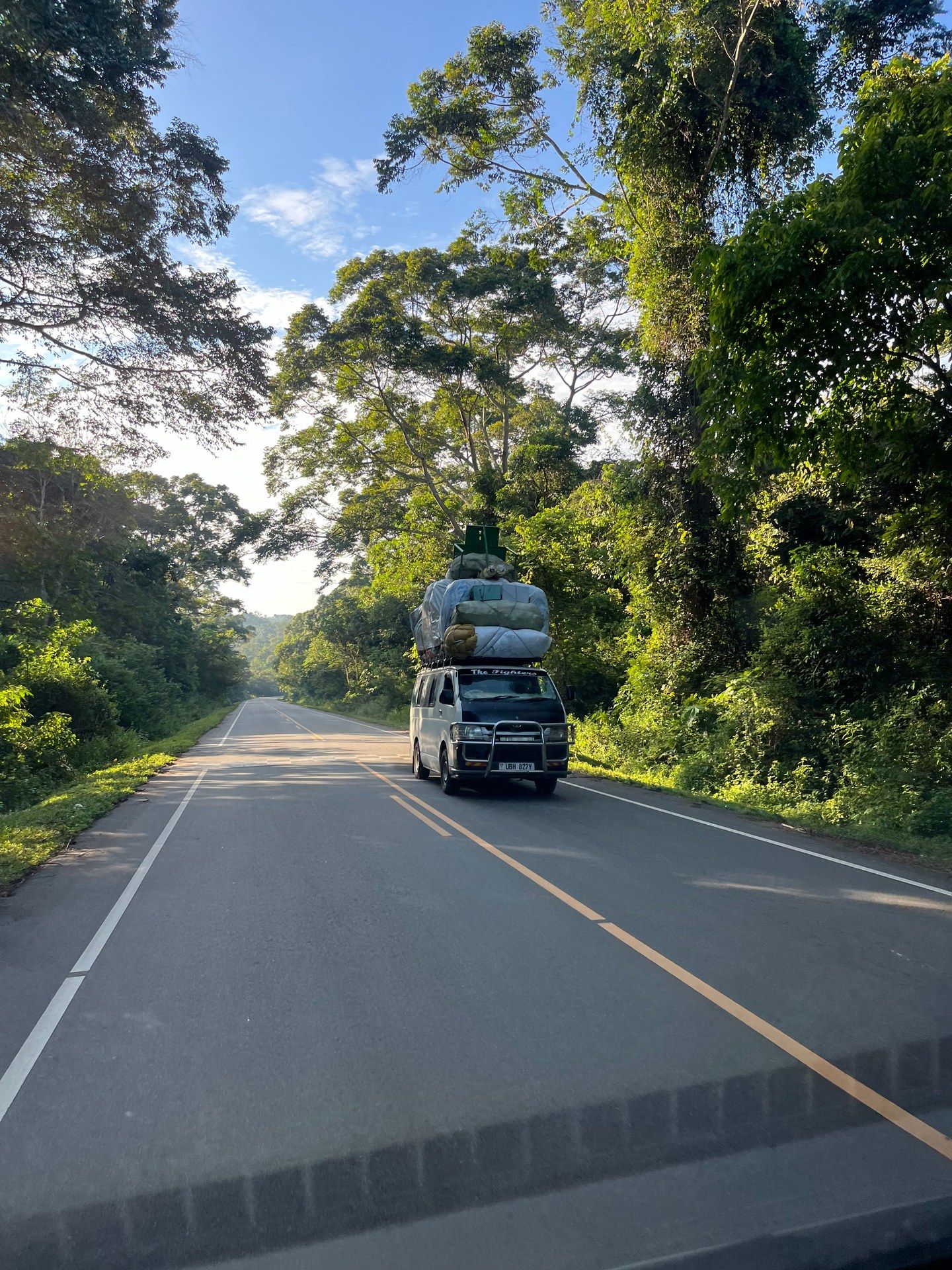
The Nile crocodiles on this stretch are among the largest in East Africa. During our October 2024 trip, we sighted several from the boat at varying distances. Even at a hundred metres, the scale of a fully grown Nile crocodile is immediately apparent: the length, the thickness of the body along the bank, and the speed with which they enter the water when disturbed. One individual we observed lay motionless at the waterline for twenty minutes before sliding into the river with a movement that was — given the animal's bulk — surprisingly fluid. The crocodiles here are not tame; the boat crew are attentive about where passengers position themselves.
Elephants come to the riverbank in the morning and late afternoon to drink, and spotting one from the boat rather than from a vehicle gives a different quality of encounter. On one section of bank during our visit, a single large bull elephant stood at the water's edge apparently unconcerned by the boat drifting past at close range. The low angle from the water makes the animal's size more legible than it is from a vehicle at the same distance. We were close enough to see the detail of the skin and the movement of the trunk.
The birding on the Victoria Nile is exceptional. The shoebill stork — one of Africa's most sought-after birds, found in very few places outside Uganda and South Sudan — is regularly seen on the papyrus margins of the river within the park. The African fish eagle, pied kingfisher, goliath heron, and various bee-eaters are visible with consistency. For dedicated birders, the boat trip alone justifies the journey to Murchison Falls; Uganda's bird list exceeds 1,070 recorded species, and the Nile corridor accounts for a disproportionate share of the most distinctive species.
The Dawn Game Drive: Savannah Before Sunrise
Game drives in Murchison Falls National Park begin before dawn, and the reason is simple: the early morning light of the African savannah at first sunrise is unlike anything that comes later in the day. We left the lodge before five o'clock on the first morning of our October 2024 visit, driving in darkness across the north bank towards the open grassland where the large herds concentrate. By the time the sun crested the horizon — its light arriving in bands of deep orange through the acacia silhouettes — the savannah had already started producing movement: a small herd of Rothschild's giraffe to the east, buffalo closer to the treeline, and further out, the dark shapes of elephants moving through the long grass.
On our game drive, we came upon a large bull elephant alone in open grassland. The vehicle stopped and the engine cut. The elephant continued grazing at roughly thirty metres, pulling grass with its trunk in steady unhurried strokes while the herd — visible as a cluster perhaps two hundred metres further out — moved slowly in the same direction. The combination of scale, proximity, and silence makes these moments different from almost any other wildlife experience Uganda offers. Murchison's elephant population is one of the park's defining features, and the north bank grassland is where they are most visible.
Murchison Falls National Park also holds one of the few remaining populations of Rothschild's giraffe in Uganda — a subspecies significantly rarer than the more widespread Masai giraffe, and distinguished by the paler colour of its lower legs. Uganda Wildlife Authority has been involved in conservation work for this subspecies, and sightings in the park's northern sector are relatively consistent during morning game drives. Lions are present in the park but are neither guaranteed nor particularly common on a single-day drive; their sightings require patience and local knowledge about current territory.
Kabale and Southwest Uganda: The Other Half of the Classic Uganda Circuit
Murchison Falls sits in Uganda's north-west. Kabale — the regional centre of south-western Uganda and the practical gateway to gorilla trekking — lies some nine to ten hours south by road. The two destinations are rarely visited back-to-back on the same route, but they are frequently paired in longer Uganda itineraries that take in the country's dual wildlife offer: savannah and megafauna in the north, mountain gorillas and dense montane forest in the south-west.
Kabale itself sits at an altitude of roughly 1,869 metres above sea level in the rolling Kigezi highlands, an area sometimes called the Switzerland of Africa for its terraced hillsides and cool temperatures. The town is a functional transit point rather than a destination in itself, but it offers accommodation for all budgets, reliable banking, and logistical support for gorilla trekking operations. Kabale is home to several tourism training institutions including the African College of Commerce and the Great Lakes Institute, which have supplied trained guides and hospitality workers to the region's lodges for decades.
Roughly twenty kilometres from Kabale lies Lake Bunyonyi — a crater lake of unusual depth and striking beauty, its surface broken by a series of small islands. One of those islands carries an important piece of Ugandan medical history: in 1921, Leonard Sharp, a Scottish missionary and doctor, established a hospital on Bwama Island for patients with leprosy. At a time when the disease carried severe social stigma throughout the region, Sharp's island hospital allowed patients to receive treatment away from communities that had excluded them. The hospital became a landmark in Uganda's early medical infrastructure, and Bwama Island remains a place of historical significance in the Lake Bunyonyi area.
From Kabale, gorilla trekking permits are typically used at one of two national parks: Bwindi Impenetrable National Park, with four trekking sectors and the largest number of habituated mountain gorilla families in Uganda, or Mgahinga Gorilla National Park, which sits on the Ugandan slope of the Virunga volcanoes and offers both gorilla trekking and golden monkey tracking. According to a Uganda Wildlife Authority census conducted between 2018 and 2020, the mountain gorilla population in Bwindi stood at 459 individuals — a figure that represents a recovery from critically low numbers in the early 1990s. A 2020 travel guide noted low-season gorilla permit prices beginning at USD 450 during April, May, and November; current UWA pricing stands at USD 800 per person and should be confirmed directly with the authority, as rates and seasonal structures have changed.
Planning Your Visit: Getting to Murchison Falls, Accommodation, and Logistics
The most direct overland route from Kampala to Murchison Falls National Park takes approximately four to five hours via the Gulu highway, entering the park from the south at the Kichumbanyobo gate and crossing to the north bank by the Paraa ferry. The ferry crossing itself — a flat-bottomed vessel that carries vehicles across the Victoria Nile — is an experience in its own right, as hippos are frequently visible from the ferry deck during the crossing. The road from Kampala is generally in good condition, though sections within and approaching the park require attention in the wet seasons.
Our October 2024 journey came from the direction of Butiru in the east rather than the conventional Kampala route, joining the main park road with the Nile already visible in the distance. The road was well-maintained on that approach, and the transition from the commercial traffic of the main highway — overloaded minibuses and all — to the open savannah of the park boundary is abrupt and immediate.
Domestic flights connect Entebbe International Airport with Pakuba and Bugungu airstrips near the park in roughly one hour, a significant time saving for travellers combining Murchison with a southwestern Uganda gorilla trekking leg. Several charter and scheduled operators serve these routes. For travellers combining Murchison Falls with southwest Uganda, the most efficient circuit typically runs Entebbe–Murchison Falls (fly or drive north) and then Murchison Falls–Kampala–Kabale–Bwindi (fly or drive south), rather than attempting an overland route across the full width of the country.
Accommodation within the park ranges from self-catering bandas and campsites operated by Uganda Wildlife Authority to mid-range and upmarket lodges on both the north and south banks. The north bank is generally preferred for game drives — accommodation there puts you closer to the main wildlife areas — while south bank lodges have the advantage of proximity to the Paraa jetty for boat safaris. Book accommodation and park entry well in advance for July, August, December, and January; the park is among Uganda's most visited, and capacity in quality properties fills quickly.
October, when these photographs were taken, falls within the short rains period but proved entirely viable for both game drives and boat safaris. The vegetation was greener than the dry-season norm, the light in the early mornings was exceptional, and visitor numbers were noticeably lower than peak season. For travellers willing to accept some morning cloud and the possibility of an afternoon downpour, the shoulder months offer genuine value.