Gorilla Trekking in Bwindi for Beginners: Everything You Actually Need to Know
By Mark Suer | Updated July 2026 | 6 on-site visits, most recently June 2026
The morning we visited the local chicken farmer near Buhoma, the mist was still thick in the valley. He met us at the gate of a small compound — a handful of chicks peeping inside a carefully constructed pen, a man whose pride in his work was immediately obvious. We had come to see how the birds were kept before purchasing some for the orphanage nearby. He showed us each bird with the attentiveness of someone who has built something meaningful from very little. The chicks would be raised partly for eggs, partly for meat — occasions when the children at the orphanage get meat at all are genuinely festive ones.
That morning visit happened on 21 June 2026, GPS coordinates confirmed at approximately -0.9713, 29.6142 — within a few minutes' walk of the forest edge at Buhoma, the most established trekking hub inside Bwindi Impenetrable National Park. I have made six visits to this area in total, including stays in January 2026 and again in June 2026, and the contrast between what first-time visitors imagine trekking here to be and what it actually involves is something that comes up every single time.
This article is written for those planning their first gorilla trek in Bwindi. It will not tell you that mountain gorillas are magical — you already know that. What it will tell you is what your legs will feel on the third hour of a steep descent, what to pack so the rain does not ruin your camera, how permits work in 2026, and why the communities around the park matter as much as the gorillas themselves if you want to understand what you are walking into.
Bwindi Impenetrable National Park: What the Name Actually Means
Bwindi means "impenetrable" in the local Rukiga language, and this is not marketing copy — it is an accurate description of what you will walk through. The park covers 331 square kilometres of ancient montane rainforest in southwestern Uganda, and it has been continuously forested since before the last ice age. The density of the undergrowth is unlike anything most visitors have encountered. Paths must be cut by rangers on some routes before each trek. Vines grab at your ankles. Roots cross every trail. Slopes that look manageable on a map feel considerably less so in wet conditions.
The park is a UNESCO World Heritage Site, listed in 1994 and extended in 2004 to form the Bwindi-Sarambwe landscape together with the Democratic Republic of Congo. It harbours approximately half of the world's remaining mountain gorillas — as of the most recent census, around 459 individuals across 19 habituated and several unhabituated groups. This concentration is the reason it has become one of Africa's most sought-after wildlife destinations, despite the relative difficulty of access and the high cost of permits.
What surprises many first-timers is how much else lives here. The park contains more tree species than the entire British Isles, over 350 bird species, 120 mammal species, and 200 butterfly species. The forest you walk through is not a backdrop to the gorillas — it is an ancient ecosystem that the gorillas happen to inhabit. Coming to Bwindi only for the one-hour gorilla encounter and then leaving is like flying to Rome to eat at a chain restaurant. The context matters.
During my visits across January and June 2026, the difference in trail conditions was notable. June brought thick morning cloud and significant moisture on the vegetation — gloves and waterproof layers were genuinely necessary by 7 a.m. The January visit felt drier underfoot, though no visit to Bwindi is ever completely dry. Equatorial Uganda can produce rain in any month.
The Physical Reality: What Your Body Will Experience
Most travel articles understate how demanding gorilla trekking in Bwindi can be for someone without regular hiking experience. The terrain does not follow any predictable pattern. You will descend 200 metres into a valley and then climb 200 metres up the other side, possibly twice, in the search for a gorilla group that moved overnight. Rangers track groups every evening and report starting positions at dawn, but gorillas are wild animals and do not follow set routes. This means that the same trek can take two hours on one day and eight hours the next.
The steepest sections in the Buhoma and Nkuringo sectors in particular require using your hands on roots and vegetation to pull yourself upward. Mud is a constant companion in wet weather. Even in the drier months, sections of trail pass through stream beds or along heavily shaded ridges where the ground stays saturated. Strong ankle support is not a luxury. Open trail shoes and sneakers are genuinely inappropriate footwear — they will be ruined within the first hour and provide no protection against the ankle twists that uneven root networks cause.
For beginners with no recent hiking history, honest self-assessment matters more than optimism here. The Uganda Wildlife Authority (UWA), which manages all trekking operations in Bwindi, offers some gorilla groups that are located at lower elevations and on gentler slopes — notably in the Rushaga sector. When booking, it is worth specifying your fitness level to your operator and asking about terrain difficulty. Not all permits are equal in terms of physical demand.
The UWA also provides optional walking sticks at the trailhead, usually bamboo poles. Experienced trekkers and first-timers alike use them — there is no stigma attached to using support on trails this uneven, and they make a real difference on descents. Porters can also be hired at the trailhead for a fixed fee, typically around USD 15 to 20. A porter carries your daypack and also assists on steep sections. On a half-day trek this feels like a luxury; on a six-hour one it is worth every cent.
Altitude is a secondary but real consideration at Bwindi. The park sits between roughly 1,160 metres and 2,607 metres. The higher sectors — Ruhija reaches above 2,300 metres — can cause mild breathlessness in visitors arriving from sea level who have not acclimatised. A day of rest before trekking is advisable if you have flown in from Europe or North America. Kampala sits at around 1,190 metres, which provides partial acclimatisation for those who spend a night or two there before heading southwest.
Gear: What to Bring, What to Leave at the Lodge
The gear list for a Bwindi trek is not long, but every item on it earns its place. Guidance from the Uganda travel circuit — including the 2020 edition of the major German-language Uganda guidebook, which covers gear requirements in specific detail — aligns closely with what multiple visits to the park confirm on the ground.
Waterproof clothing is non-negotiable, even in the dry season. A fully waterproof rain jacket — not water-resistant, actually waterproof — should go at the top of your pack. Waterproof trousers are worth bringing if you plan to trek in the wetter months of March to May or October to November. Gloves are useful not just for cold at higher elevations but for gripping vegetation on steep ascents. A hat with a brim keeps both rain and forest debris off your face.
Footwear deserves its own paragraph. Sturdy hiking boots with ankle support and a grip-oriented sole are the minimum. Gaiters — the fabric sleeves that seal the gap between boot and trouser — prevent the steady accumulation of mud, water, and small insects around your ankles and lower legs. Some visitors bring rubber boot covers as an outer layer for the muddiest conditions. Long sleeves and full-length trousers protect against insects including safari ants, which are abundant in the forest and whose bite is considerably more unpleasant than their small size implies.
Your camera or phone will be exposed to humidity, rain splatter, and the occasional low-hanging branch for several hours. A waterproof bag or dry bag for electronics is advisable. Flash photography is prohibited in the presence of gorillas — it disturbs the animals and is treated seriously by rangers. The light inside the forest canopy is low, so a camera capable of decent high-ISO performance produces better results than most smartphones in overcast conditions.
In terms of what to leave behind: large bags, excessive clothing layers you will not need, and any item that cannot withstand getting muddy. Most lodges in Bwindi offer luggage storage so you can leave your main suitcase at the property and carry only a daypack for the trek. This single adjustment makes the experience considerably more comfortable.
Permits, Booking, and the Statistical Reality of Uganda Tourism
Gorilla trekking permits in Bwindi are issued by the Uganda Wildlife Authority and must be arranged in advance. With only 8 visitors permitted per gorilla family per day, and with Uganda's gorilla tourism capacity distributed across multiple habituated groups at four trekking sectors, the total daily permit issuance across the park sits in the low hundreds. In peak season — July, August, December — permits can sell out months ahead.
The cost as of 2026 stands at USD 800 per person for foreign non-residents. Foreign residents of East African Community member states pay USD 600. These figures have increased over the years as part of Uganda's deliberate strategy to maintain low visitor numbers, fund conservation, and ensure that permit revenue justifies the economic case for protecting gorilla habitat rather than converting it to farmland.
Uganda's broader tourism infrastructure context is worth understanding. According to the Statistical Abstract 2014 published by the Uganda Bureau of Statistics, the national accommodation facility survey covered 20 districts distributed across the country, including Kampala. The last full national census of accommodation facilities was conducted in 2011, with the next update originally scheduled for the 2014 housing census. This data gap meant that official accommodation statistics lagged considerably behind the actual expansion of tourism infrastructure in areas like Bwindi — a growth that outpaced government tracking during this period. The picture has evolved significantly since then, with major lodge investments in all four Bwindi sectors, but understanding the historical baseline helps explain why accommodation quality and availability vary so dramatically across the park.
Permits can be booked directly through the UWA website or through licensed tour operators. Most visitors use an operator because the operators also handle transport from Kampala or Entebbe — a drive of roughly eight to nine hours to Bwindi — and package accommodation with the permit. Buying a permit independently and then arranging everything else separately is possible but rarely more economical when you factor in the logistics of getting there.
One question beginners consistently raise is whether permits sell out unexpectedly or whether cancellations create last-minute availability. The honest answer is: occasionally, but not reliably. Building a trip around the hope of securing a last-minute permit in peak season is a gamble that usually does not pay off. Six months ahead is a reasonable planning horizon for July and August travel. Three months is often sufficient for May or November.
The Four Trekking Sectors: Choosing the Right Starting Point
Bwindi has four main trekking sectors, each with its own character, lodge infrastructure, and difficulty profile. Understanding the differences helps beginners match their choice of sector to their fitness level and logistics.
Buhoma
Buhoma is the original trekking hub and the most established sector. It sits on the northern edge of the park at around 1,400 metres, with a selection of lodges ranging from budget bandas to mid-range and luxury properties overlooking the forest. The trails here are well-maintained relative to the rest of the park, and the sector has two habituated gorilla families including the Mubare group — the first ever habituated for tourism in Uganda, in 1993. For first-timers who want a combination of manageable infrastructure and forest authenticity, Buhoma is a reliable choice.
My most recent visit in June 2026 was based in Buhoma. The morning temperature at 6 a.m. on the day of the trek was cool enough to require a fleece layer under the rain jacket, and the forest was dense with sound — birds, insects, the creak of massive trees in the pre-dawn wind. The briefing the UWA rangers give before departure covers safety protocols, distance rules from the gorillas, and what to do if a silverback charges. That briefing is worth paying full attention to, not using as an opportunity to check your phone.
Ruhija
Ruhija sits in the eastern part of the park at the highest elevation of any sector — around 2,300 metres. The terrain here is rougher and less accessible, and the climate is noticeably cooler. The gorilla groups tracked from Ruhija are typically found at higher elevations, which can mean steep ascents before you even reach the animals. This sector suits physically confident trekkers and those with a particular interest in birds — Bwindi's forest at this altitude hosts numerous Albertine Rift endemics that are rarely seen elsewhere.
Rushaga and Nkuringo
Rushaga in the south has the largest number of habituated gorilla groups of any sector, which gives it the best overall permit availability. The terrain varies from moderate to demanding. Nkuringo — adjacent to Rushaga — is named after the ridge community that overlooks the park from the south, and it offers some of the most dramatic views in the entire Bwindi region. The descent into the park from Nkuringo is steep and, in wet weather, requires genuine care. Nkuringo is not recommended as a first choice for beginners who have not done upland hiking before.
The Communities Around Bwindi: Why They Matter to the Trekking Experience
The villages surrounding Bwindi are not peripheral to the trekking experience — they are integral to it. The forest would not be intact today without the political and economic arrangements that gave the communities bordering it a stake in its preservation. Before the national park was formally established in 1991, the Batwa — the indigenous forest-dwelling people who had lived inside what is now the park for millennia — were displaced. Their relationship with conservation authorities and tourism revenue remains contested and is a legitimate subject that responsible visitors should be aware of.
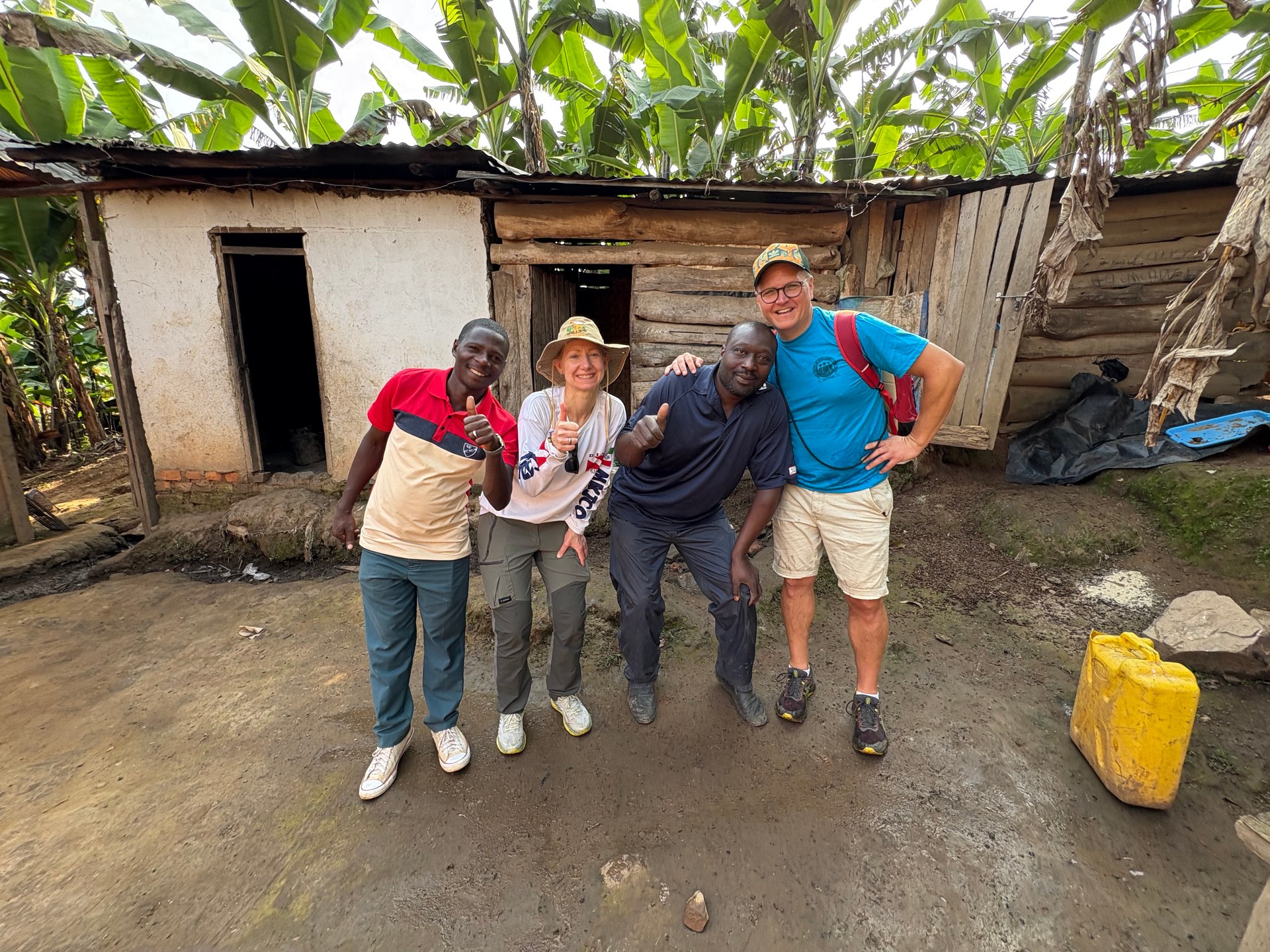
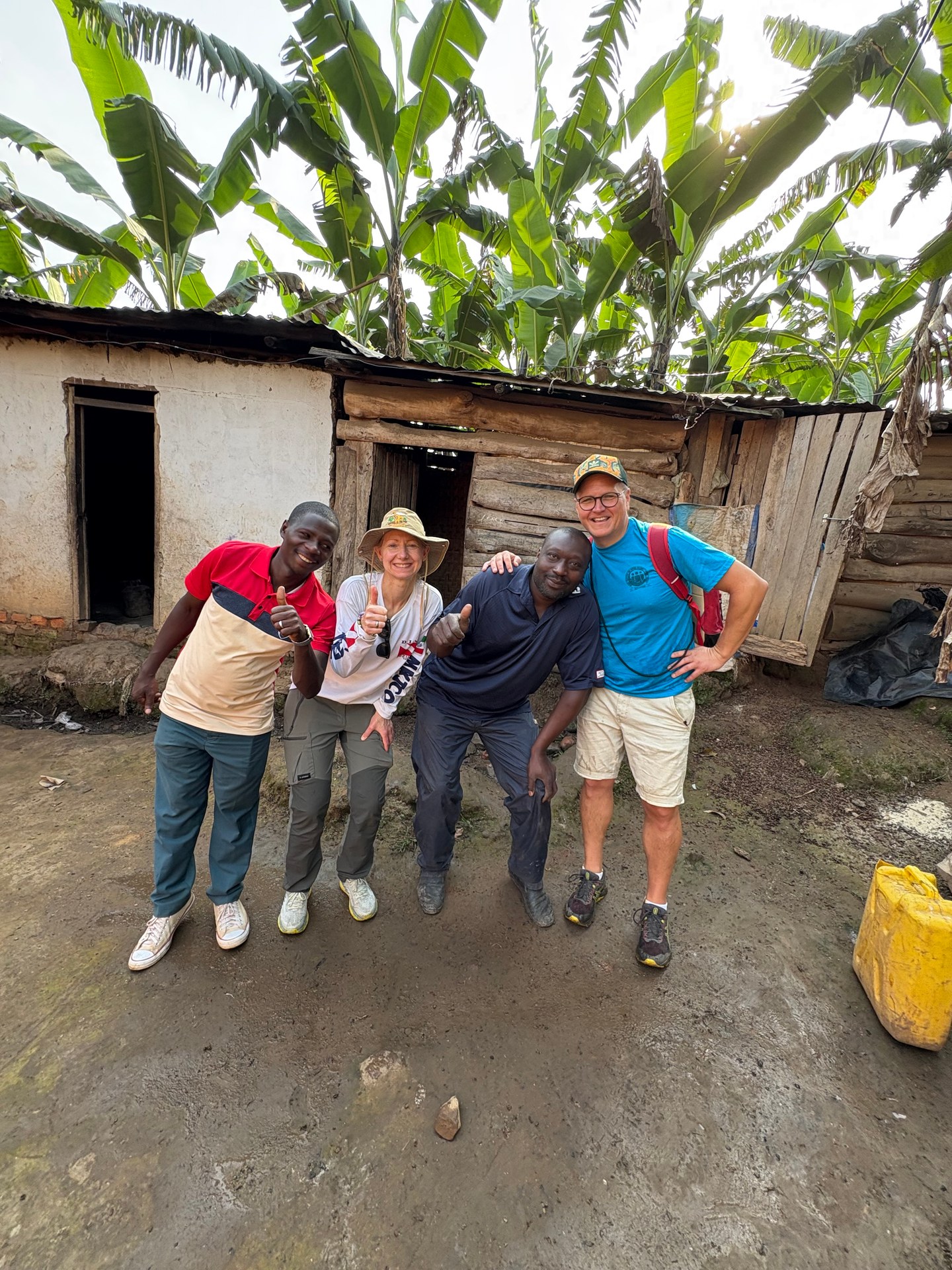
The UWA allocates a percentage of permit revenue to community development funds around the park. Lodges and tour operators with genuine community ties — employing local staff, sourcing food locally, running or supporting schools and orphanages in park-edge villages — provide a more honest version of tourism than those that frame the surrounding poverty as scenery. During my visit to Buhoma in June 2026, spending time with the local chicken farmer and visiting the nearby orphanage gave the trek itself a different weight. The forest, the gorillas, the children at the orphanage gate who were initially shy but joined us for a meal — these experiences exist in the same place and are part of the same story.
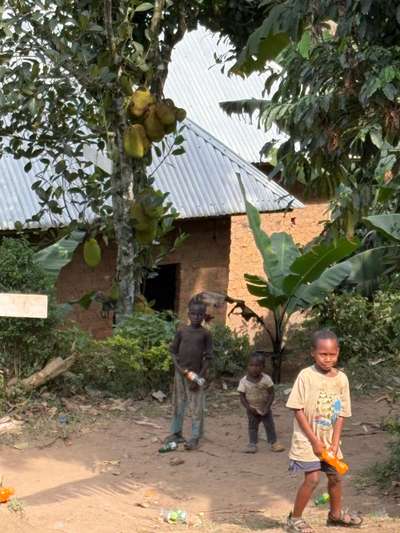
Those children from the neighbourhood of the orphanage looked underfed and their clothing was visibly worn. That observation is not made to dramatise poverty but to note that the distance between a USD 800 gorilla permit and the daily material reality of Buhoma's residents is real and visible. Lodges and operators that bridge that gap through genuine employment and procurement — rather than through a staged village walk that ends at the gift shop — deserve the preference of visitors who are paying premium prices to be here.
[QUOTE: local guide on first impressions of the forest at Buhoma — to be collected on next visit]
Community experiences can be arranged through most lodges in Buhoma and are worth building into your itinerary if you have more than one night in the area. Options typically include guided village walks, visits to craft cooperatives, and introductions to community farming projects like the poultry initiative near the orphanage. These are not add-ons that compete with the gorilla trek — they make the whole experience more coherent and more honest.
The Day of the Trek: A Realistic Hour-by-Hour Outline
Trekking days at Bwindi follow a fixed structure. Visitors assemble at the UWA ranger station in their sector at 7:30 or 8:00 a.m. for the morning briefing. Groups are assigned to gorilla families based on pre-booked permits. The briefing covers park rules, safety protocols, and the reported location of the group from the previous evening's tracking. After the briefing, trekking begins.
The time it takes to reach the gorilla family varies entirely by where the animals moved overnight. Some days this means an hour of hiking on a well-defined trail. Other days it means three or four hours of dense forest, following a ranger who is cutting through undergrowth with a machete. There is no reliable way to predict this at the time of booking, which is why packing water and snacks for a full day is always the right call even if your trek ends up being short.
When you reach the gorilla group, the experience is difficult to describe to someone who has not had it. Mountain gorillas are large — a silverback can weigh over 200 kilograms — and they are genuinely indifferent to human presence once habituated. They go about their business: feeding, grooming, playing, resting. Juveniles may approach within a metre or two out of curiosity. The rangers enforce a minimum distance of seven metres, but the gorillas themselves do not always comply with this from their side. If a gorilla approaches you, the protocol is to hold still and look downward — avoid direct eye contact, which signals aggression in gorilla social communication.
The one-hour time limit with the gorillas is strictly enforced and begins from the moment of first contact with the group. Rangers carry a timer. When the hour is up, you move away from the family and begin the return trek. Most groups are back at the trailhead or their vehicles by early to mid-afternoon, though longer treks can extend this to late afternoon.
After the Trek: Health, Recovery, and Staying Longer
Gorilla trekking requires visitors to maintain strict health protocols that protect the animals, whose immune systems share enough overlap with humans to make them vulnerable to common respiratory infections. If you arrive with a cold, flu, or any respiratory symptoms, the rangers will turn you away at the briefing — the permit is non-refundable in this circumstance, though responsible tour operators carry insurance arrangements that may partially cover this. Arriving unwell is not a grey area: the rules are enforced and they exist for good reason.
Masks are required within seven metres of gorilla groups. This requirement was formalised during the COVID-19 pandemic and has remained in place as part of broader biosecurity protocols. Bring a mask to the trailhead regardless of current global health conditions — it is a non-negotiable UWA requirement.
After a long trek, the physical recovery happens faster than most beginners expect. A good meal, adequate hydration, and an early night leave most visitors functional the following day. If you plan to do a second trek — permitted if you hold permits on consecutive days — the main risk is accumulated soreness in your calves and knees rather than any genuine physical damage. Staying for two or three nights in Bwindi rather than rushing through on a day trip dramatically improves the overall quality of the experience, and gives time for the community visits, bird walks, and village interactions that distinguish a genuine engagement with this place from a transactional permit-and-gorilla-photo encounter.
On the accommodation side, Bwindi's lodges range from simple community bandas at USD 30 to 50 per night to internationally known luxury properties above USD 1,000 per person per night. The right choice depends on budget, but the minimum comfortable standard for most visitors involves hot water, secure storage for valuables, and reliable meal service. The infrastructure in Buhoma supports a wider range of options than the more remote sectors.
Frequently Asked Questions
How fit do I need to be for gorilla trekking in Bwindi as a beginner?
You do not need to be an athlete, but you need to be honest about your current fitness level. The terrain is steep, uneven, and often muddy. A trek can last anywhere from two to eight hours depending on where the gorilla group has moved overnight. If you can walk for three to four hours on hilly terrain without significant discomfort, you are likely to manage a standard Bwindi trek. For those with limited fitness, requesting a permit for a gorilla group at a lower elevation — notably in the Rushaga sector — and hiring a porter at the trailhead makes a substantial difference. The UWA also allows visitors who are genuinely unable to complete the trek to wait at a specific point while others in the group continue, though this is a last resort.
When is the best time of year to go gorilla trekking in Bwindi?
The two drier periods — June to September and December to February — offer better trail conditions, clearer views, and lower risk of rain-soaked gear. My June 2026 visit found the forest cool and misty in the mornings, with the trails damp but manageable. Bwindi receives rainfall in all months, however, and even the dry season brings occasional showers at altitude. The wetter months of March to May and October to November are not impossible for trekking but require more robust waterproof gear and should be avoided by beginners who have not done wet-weather hiking before. Permit availability is generally better in shoulder months, and lodge rates can be lower outside the July to August peak.
How do I book a gorilla trekking permit for Bwindi?
Permits are issued by the Uganda Wildlife Authority (UWA) and can be booked through their official website or through a licensed tour operator. Most first-time visitors book through an operator because this simplifies the logistics of transport, accommodation, and permit collection into a single arrangement. Permits cost USD 800 per person for foreign non-residents and USD 600 for foreign residents of East African Community countries as of 2026. In peak season (July, August, and December), permits can sell out three to six months in advance. Booking six months ahead for peak season travel is prudent. Cancellation policies vary by operator and the UWA itself does not offer refunds on permits if a trek is cancelled due to illness.
What should I pack for a gorilla trek in Bwindi?
The essential packing list: fully waterproof rain jacket and trousers (not just water-resistant), sturdy hiking boots with ankle support and strong grip, gaiters to keep mud out of boots, gloves, a hat with brim, long-sleeved shirt and full-length trousers (protects against insect bites and vegetation), a small daypack, at least two litres of water, snacks for a full day, a camera or phone in a waterproof bag, insect repellent, sunscreen for open sections, and a mask (mandatory within seven metres of gorillas). Leave large suitcases and non-essential gear at your lodge. Most properties offer secure storage. Walking sticks are available at the trailhead. Hiring a porter for around USD 15 to 20 is worth considering for any trek longer than three hours.
Which sector of Bwindi is best for first-time gorilla trekkers?
Buhoma is generally the most recommended sector for first-timers. It has the best-developed lodge infrastructure, well-maintained trails relative to the rest of the park, and a long history of tourism that means rangers and trail systems are particularly experienced at handling mixed-ability groups. The Mubare family — one of the two habituated groups tracked from Buhoma — has been receiving visitors since 1993 and is among the most relaxed in terms of human presence. Rushaga in the south is a good alternative for beginners specifically because it has the highest number of habituated groups and therefore the best permit availability, with some groups located at more accessible elevations. Nkuringo and Ruhija are better suited to more experienced hikers.