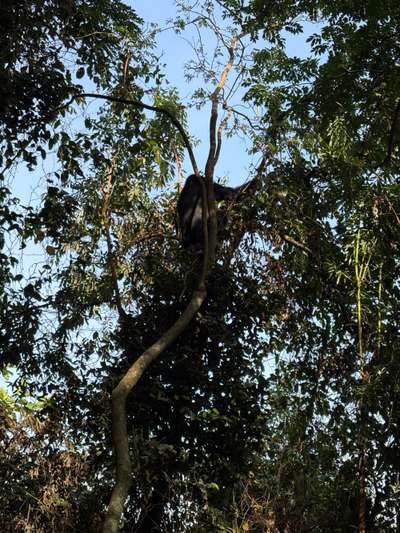
After three hours of pushing through vegetation so dense it blocks out the sky, our ranger stopped without a word and raised one fist. We froze. Through a gap in the undergrowth, a pair of dark eyes looked back at us — calm, unhurried, entirely unbothered. The gorilla was three metres away, sitting in the lower branches of a large tree, pulling leaves into its mouth with a motion that felt almost casual. The forest around us was completely silent except for the soft sound of chewing.
That encounter, in the Buhoma sector of Bwindi Impenetrable National Park, happened during my visit in January 2026 at GPS coordinates -0.9748°N, 29.6281°E. I have been back since — the June 2026 visit produced the photograph at the top of this page: a silverback feeding in the canopy, photographed from directly below. Both visits were documented with GPS-tagged photos, taken on location. This guide draws on those direct experiences, not secondary sources.
What this article covers is the practical reality of gorilla trekking in Bwindi: how the permit system works, what it costs, how different the four trekking sectors are from each other, what to bring, and how to prepare physically. There is a lot of generic content on this topic online. This is not that.
Bwindi Impenetrable National Park: Why This Place Matters
Bwindi Impenetrable National Park sits in the extreme southwest corner of Uganda, at an elevation that ranges from roughly 1,160 to 2,607 metres above sea level. The name "impenetrable" is not hyperbole. The forest floor is covered with a dense tangle of roots, ferns, and undergrowth that makes off-trail movement genuinely difficult. The trails that rangers cut and maintain are narrow, often steep, and frequently muddy — even during the so-called dry season. This is ancient Afromontane forest, and it behaves like it.
The park covers approximately 331 square kilometres and is listed as a UNESCO World Heritage Site. Its ecological importance goes beyond gorillas: Bwindi hosts over 350 bird species, more than 200 tree species, and a remarkable number of endemic plants. But for most international visitors, the reason to come is singular — this forest holds one of the largest concentrations of mountain gorillas on earth.
Uganda as a whole recorded a mountain gorilla population of 459 individuals across the 2018–2020 census period, according to the Uganda Wildlife Authority and referenced in the Statistical Abstract series produced by the Uganda Bureau of Statistics. The gorilla population has grown significantly over the past three decades, from roughly 300 individuals in the 1980s, largely as a result of sustained conservation efforts — of which controlled tourism permits are a direct part. The revenue from trekking permits funds ranger salaries, anti-poaching patrols, veterinary programmes, and community benefit schemes that give local landowners a financial stake in the forest's survival.
The park is divided into four main trekking sectors: Buhoma in the north, Nkuringo in the south, Ruhija in the east, and Rushaga in the southeast. Each has a different character, different levels of difficulty, and a different set of habituated gorilla families. Choosing between them is one of the first decisions a visitor needs to make — and it matters more than most people realise.
The Gorilla Families: Sectors, Groups, and What Makes Each Different
The Buhoma sector is where most first-time visitors go, and for good reason. It is the oldest trekking area in the park, with gorilla families that have been habituated to human presence the longest. The Mubare group, with around 11 members, and the Habinyanja group (15 members) are the most accustomed to visitors. A third group, Rushegura, also operates from this sector with 15 members. In practical terms, this long habituation means the gorillas tend to be calmer and less reactive to the presence of humans. The family we encountered in January 2026 — feeding, resting, moving slowly through the lower canopy — showed no signs of stress or agitation. One sub-adult came within touching distance before our ranger quietly redirected it.
The Nkuringo sector, located south of Buhoma, was opened for gorilla tourism in 2004 and houses the Nkuringo group of approximately 14 members. This sector is considered more demanding than Buhoma: the gorilla family has a large home range that includes some of the steepest terrain in the park. Visitors should expect a full-day outing, sometimes covering significant elevation change. The Uganda 2020 travel guide published by the regional reference series describes the Nkuringo trek explicitly as suitable only for physically fit hikers, and that assessment is accurate.
Ruhija lies at the highest elevation of the four sectors and offers a different forest type — cooler, cloudier, and often mist-covered. The Oruzogo and Bitukura groups operate here. Rushaga, in the southeast, hosts the greatest number of habituated families of any single sector, making it the best option when booking late and permits in other sectors are already sold out.
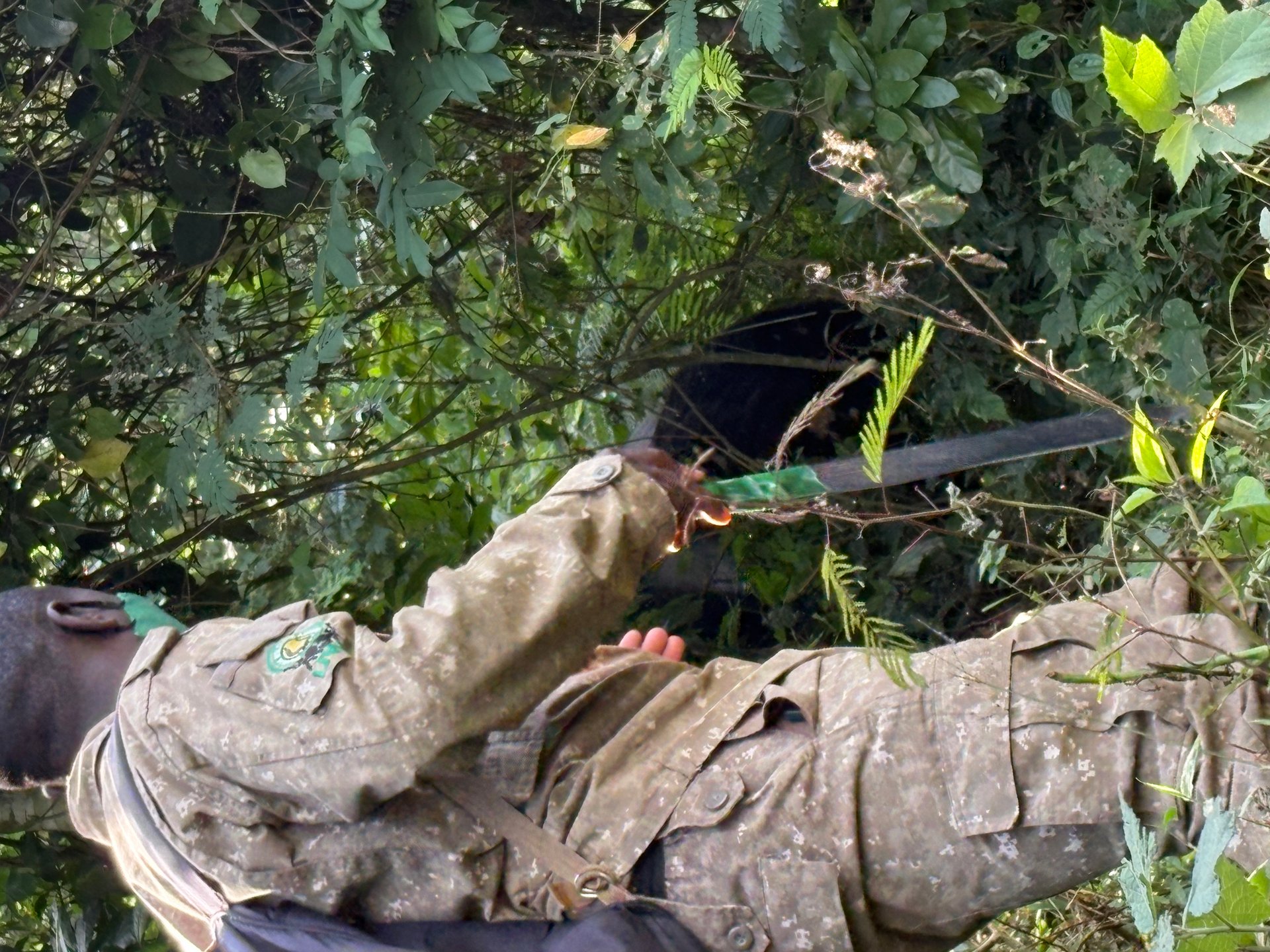
On both of my visits, each trekking group was accompanied by a lead guide and two armed rangers. The weapons — a standard feature of Uganda Wildlife Authority protocol — are carried for the group's protection, primarily against dangerous wildlife such as buffalo, not the gorillas. On our January 2026 trek, I noted an initial awkwardness at seeing rifles in a tourism context. Within the first hour, that feeling dissolved entirely. The rangers were attentive, friendly, and physically capable in terrain that reduced the rest of us to gasping. They helped slower walkers up the steepest sections and read the forest in a way that made their experience obvious.
The Permit System: How It Works and What It Costs
Gorilla trekking in Bwindi requires a permit issued by the Uganda Wildlife Authority. Each permit grants one person access to one gorilla family for one hour. Group sizes are capped at eight people per family per day — a restriction designed to minimise stress on the animals and maintain a genuine wildlife experience rather than a crowd event. That cap, combined with the relatively small number of habituated families and the total park capacity, means permits are a genuinely limited resource.
As of 2026, the standard permit price for foreign non-residents is $800 USD per person. Foreign residents of Uganda pay $600 per person. East African Community citizens pay a lower rate. These prices have increased over time — a deliberate policy to keep visitor numbers manageable while maximising conservation revenue per visitor. The Uganda Wildlife Regulations 2022 set out the current framework for permit issuance, pricing tiers, and conditions of use.
Permits can be booked directly through the Uganda Wildlife Authority, through the Uganda Tourism Board's booking platform, or via licensed tour operators who purchase allocations in advance. For independent travellers, direct booking with the UWA is possible but requires planning: popular dates — particularly during the peak dry season months of June to August and December to February — sell out months in advance. During my January 2026 visit, the Buhoma sector was booked to capacity. Availability had been confirmed four months earlier.
Tour operators based in Kampala, Entebbe, and at the park gates themselves offer combined packages that include transport, accommodation, and permits. These bundles typically cost more per item than booking each element separately, but they remove the logistical complexity of coordinating multiple providers in a remote area with limited mobile connectivity.
For comparison, the gorilla trekking permit in the Democratic Republic of Congo's Virunga National Park was priced at $400 USD for the Congolese side as referenced in the Uganda 2020 regional guide — significantly cheaper than the Uganda rate. However, the security situation in eastern DRC has fluctuated significantly over the years, and the DRC side carries different practical risks. Rwanda's Volcanoes National Park permit stands at $1,500 USD. Uganda remains the middle option on both price and accessibility.
The Mountain Gorilla: Population, Behaviour, and What Habituation Means
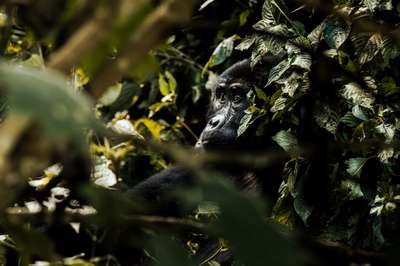
Mountain gorillas (Gorilla beringei beringei) are one of two subspecies of eastern gorilla and one of the most endangered great apes on earth. Unlike the lowland gorilla, the mountain gorilla cannot survive in captivity — every individual alive today lives wild in the Virunga massif or in Bwindi. That fact sharpens the significance of the population count considerably. Uganda recorded 459 mountain gorillas in the most recent census period (2018–2020), according to wildlife authority statistics cited in the Uganda Bureau of Statistics Statistical Abstract series.
Habituation is the multi-year process by which a wild gorilla family is gradually accustomed to human presence. Researchers and rangers spend months or years approaching a family repeatedly, withdrawing when the gorillas show stress, advancing when they are calm. A fully habituated family accepts the presence of a small group of humans for a defined period without altered behaviour — feeding, grooming, nursing, playing, and moving as they would if the humans were not there. The families used for trekking in Bwindi have all completed this process. Families used for "habituation experience" permits — a separate, more expensive product — are still mid-process, and those visits are longer, rougher, and considerably more unpredictable.
Gorillas are not dangerous animals under normal circumstances, but they are large, physically powerful, and capable of strong reactions to perceived threats. Rules are strict for a reason. During a trek, visitors are required to maintain a minimum distance of seven metres at all times, avoid direct eye contact with dominant males, and follow ranger instructions immediately. Sneezing, coughing, or showing signs of illness are grounds for being asked to leave. Anyone diagnosed with a contagious illness — including a common cold — is not permitted to join the trek. Gorillas are immunologically vulnerable to human respiratory viruses, and a disease transmission event in a small, isolated population would be catastrophic.
The one-hour time limit on visits is strictly enforced, even when the gorillas are close and the hour feels very short. It exists to protect the animals' behavioural routines. When the ranger signals time is up, the visit ends regardless of what is happening. During my June 2026 visit, the group we were watching included a silverback feeding at canopy level, a female nursing an infant, and two juveniles wrestling in the undergrowth. The hour passed faster than I can account for.
How to Prepare: Physical Fitness, Equipment, and Practical Logistics
The physical demands of gorilla trekking vary significantly depending on which family you are assigned to and where that family has moved overnight. Gorillas do not stay in one place. A ranger team goes out before dawn to locate the family from where they nested the previous evening. The trekking group assembles at the sector's trailhead, receives a briefing, and then walks to wherever the gorillas currently are. That distance can be 45 minutes or four hours. There is no advance guarantee.
The Buhoma sector's established families tend to range in the lower and mid elevations of the park, making it more accessible for visitors who are reasonably fit but not trained hikers. The Nkuringo group, as noted above, operates in steeper terrain. For the Nkuringo trek, the Uganda 2020 guide recommends preparing for a full-day outing — this is not marketing caution but practical advice. The slopes in that sector drop several hundred metres before climbing again, and the descent is hard on knees even with trekking poles.
Equipment worth taking seriously: sturdy ankle-supporting hiking boots are the single most important item. The trail becomes muddy after rain, and loose-ankle footwear on wet clay slopes carries a real injury risk. Knee-high gaiters or long socks tucked into boots protect against safari ants — large, aggressive insects that will climb inside loose trouser legs before biting. This is described in detail in multiple Uganda travel sources and confirmed by personal experience. Carry a waterproof bag cover for any camera equipment. Temperature at altitude can drop sharply, particularly in the early morning, so a light fleece or mid-layer is worth the pack weight even if the forecast looks warm.
Water: carry at least two litres per person. The trek itself does not provide resupply points, and the exertion at altitude in humid forest conditions produces significant fluid loss even when it does not feel hot. A snack, a rain jacket, and sunscreen complete the basics. Poles are provided on request at most sector trailheads, or can be brought from your accommodation. They are genuinely useful on the steeper sections.
Photography: the forest interior is dim. A fast lens or a camera with strong high-ISO performance will produce better results than relying on a smartphone's built-in stabilisation. Flash photography is prohibited around the gorillas. The GPS-tagged photos in this article were taken with a mirrorless camera at ISO values between 800 and 3200 — the gorilla canopy image required significant exposure compensation to avoid blowing out the sky visible through the tree cover.
Uganda Tourism Data: What the Official Statistics Show
The Uganda Bureau of Statistics produces an annual Statistical Abstract that tracks accommodation facilities, visitor numbers, wildlife statistics, and tourism revenue across the country. The accommodation facility survey data, as published in the Statistical Abstract 2014, covered 20 districts nationally, including Kampala — a methodological point worth noting because it means rural districts surrounding national parks like Bwindi were not always fully captured in early surveys. The last full national accommodation census prior to that publication was conducted in 2011, with the next comprehensive update scheduled to align with the 2014 housing census cycle. This gap in data quality is relevant for anyone trying to compare official visitor statistics with the on-the-ground reality of lodge availability near the park.
What the statistics do confirm clearly is that gorilla trekking is Uganda's primary international tourism draw. Revenue from wildlife permits contributes directly to the Uganda Wildlife Authority's operating budget, which in turn funds ranger programmes, veterinary services, and habitat protection across all of Uganda's national parks — not just Bwindi. The permit price increases implemented in recent years are controversial among some budget-conscious travellers but are broadly justified by conservation economists who point to the per-visitor revenue efficiency compared to high-volume, low-cost models.
Gorilla trekking in Rwanda's Volcanoes National Park, for comparison, costs $1,500 USD per permit — nearly double the Uganda rate. Rwanda has positioned itself firmly at the luxury end of the gorilla tourism market, with most visitors staying in high-end lodges. Uganda offers a wider range of price points: from community rest camps at $15 per night in Buhoma to mid-range lodges in the $150–$400 range and a handful of properties above that. For travellers whose budget allows the permit but not a $600-per-night lodge, Uganda remains the accessible option.
Where to Stay: Accommodation Near the Trekking Sectors
Accommodation options near Bwindi are directly tied to which sector you are trekking from, because the sectors are not close to each other. Buhoma and Nkuringo are separated by several hours of mountain road — staying at a Buhoma lodge and driving to Nkuringo on the morning of a trek is technically possible but logistically punishing, particularly given that trailhead briefings start at 7:30am or earlier. The general recommendation is to stay as close to your assigned sector trailhead as possible.
In Buhoma, the Buhoma Community Rest Camp offers the most affordable option in the area — camping from $15 USD, with budget rooms and a basic restaurant on site. This community-run facility sits directly at the park entrance. At the other end of the price spectrum, several lodges in the $200–$500 range offer elevated forest views, guided walks, and dining packages. The lodge directory at bwindi-lodges.com covers the full range of options across all four sectors with current pricing.
The briefing describes four simple safari tents on wooden platforms and three basic rooms at one Buhoma property, alongside a restaurant serving honest portions — a description that matches the mid-budget category that accounts for most of the accommodation stock near the park. These properties serve their purpose: they are clean, well-positioned for an early trekking start, and staffed by people who understand exactly what their guests are there for.
Frequently Asked Questions
How far in advance do I need to book a gorilla trekking permit? ▼
For peak season dates — June through August and December through February — book four to six months in advance. Permits in popular sectors like Buhoma sell out well ahead of these periods. Outside of peak season, a six-to-eight-week lead time is usually sufficient, though specific sector and family requests may not always be available. Permits can be booked directly through the Uganda Wildlife Authority or via licensed tour operators who hold allocations.
Is gorilla trekking physically demanding, and who should not do it? ▼
It depends on the sector and how far the family has ranged. Buhoma is generally more accessible — treks typically run one to three hours. Nkuringo involves significantly steeper terrain and should be treated as a full-day outing for fit hikers. Anyone with serious mobility limitations should discuss their situation with the Uganda Wildlife Authority or their tour operator when booking, as some permit reallocation provisions exist. Children under 15 are not permitted. Anyone showing symptoms of a contagious illness — including a cold — should stay at the lodge.
What is the best time of year to go gorilla trekking in Bwindi? ▼
Gorillas can be tracked year-round, including public holidays. The drier months of June to August and December to January tend to make trails less muddy and the forest canopy more open for photography. However, the forest is genuinely wet at most times of year, and a visit in any month should assume the possibility of rain. The photos in this article were taken in January and June — both produced excellent encounters. There is no bad month for gorilla trekking in Bwindi; there are only better or worse trail conditions.
Can I choose which gorilla family I visit? ▼
You can request a specific sector when booking, and to a lesser extent a preference for particular groups within that sector. Final assignment is made by the Uganda Wildlife Authority based on permit availability. Visitors booking through tour operators may have slightly more flexibility, as operators sometimes hold permits across multiple families. The Habinyanja and Rushegura groups in Buhoma are the most habituated and tend to have the most predictable behaviour. The Nkuringo group offers a wilder, more strenuous experience in different terrain.
What should I bring and what is the strict equipment list? ▼
Essential items: ankle-supporting hiking boots or trail shoes (not sandals or trainers), long trousers tucked into socks to prevent ant penetration, a waterproof jacket, a rain cover for any camera bag, at least two litres of water per person, a light fleece layer for the cool early morning start, and a snack. Trekking poles are optional but useful. Flash photography is prohibited around the gorillas. Leave valuables at your lodge. Bring insect repellent — it helps with ground-level insects during rest stops, though it has little effect on safari ants already inside your socks.