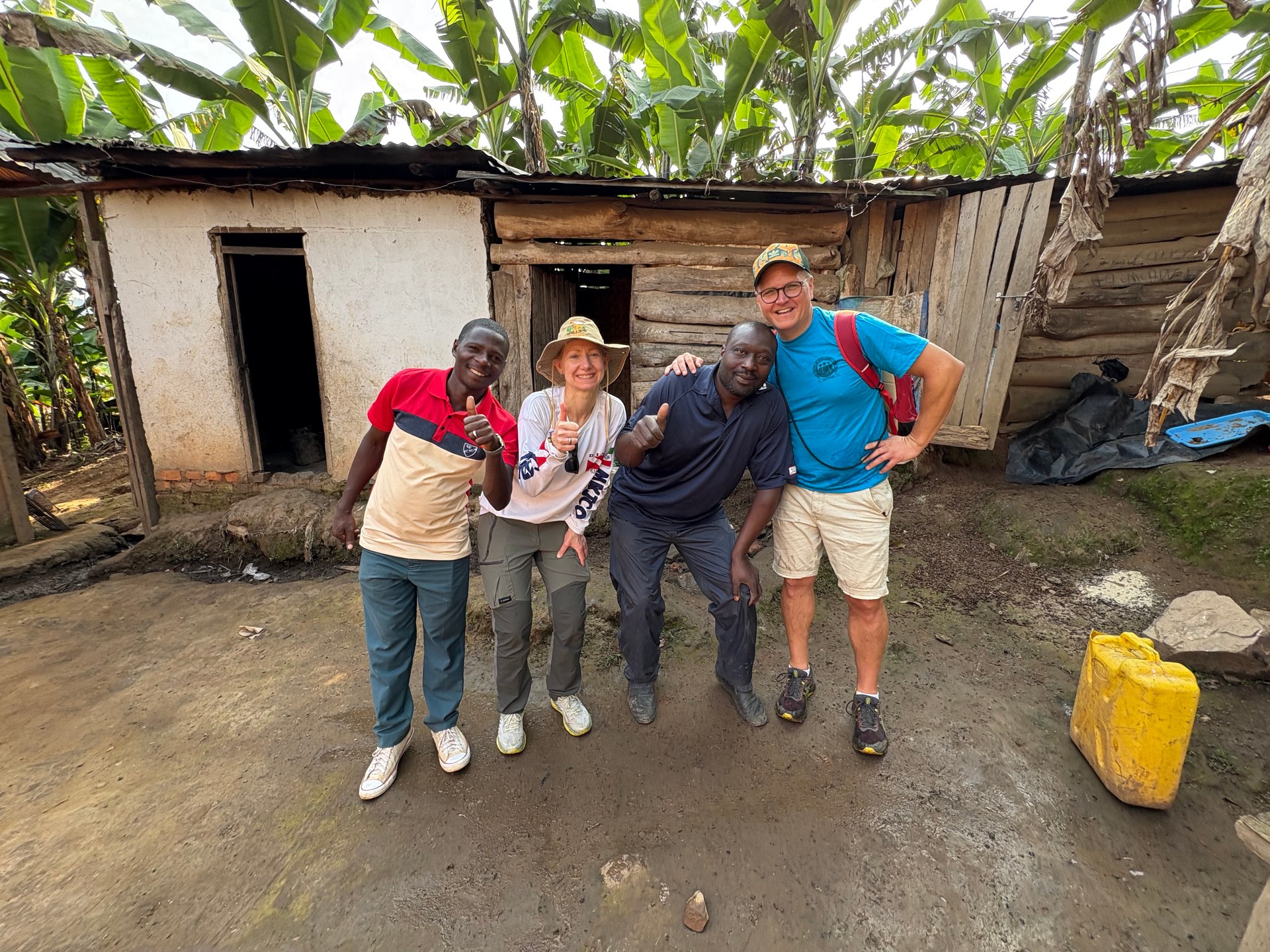
On the morning of 21 June 2026, before the mist had lifted off the canopy above Buhoma, I walked with a local farmer through a dirt compound where dozens of chicks scratched at the red earth underfoot. The farmer — a slight, serious man who clearly takes his work personally — explained how he manages each batch from hatching to maturity. We had visited him several times before, always to buy chicks for the children's home in the village: some kept for eggs, others eventually for meat. The care he put into the rearing was striking. This is what life in the communities surrounding Bwindi Impenetrable National Park actually looks like — not postcards of silverbacks, but small-scale, dignified enterprise woven into a landscape that also happens to contain one of the rarest animals on Earth.
That tension — between the economic reality of the villages and the conservation imperative of the park — is precisely what the Uganda gorilla trekking permit system was designed to navigate. Every USD 800 paid by an international visitor to the Uganda Wildlife Authority (UWA) contributes to the funding of ranger patrols, community revenue-sharing programmes, and the research that keeps the mountain gorilla population growing. During my five visits to Bwindi, spread across January and June 2026, I have seen both sides of that equation: the mud and the effort of the trek itself, and the quieter, slower work of making conservation economically worthwhile for the people who live beside it.
This guide covers everything you need to know before you buy your permit: what it costs, how to secure one before they sell out, which of Bwindi's four sectors suits your itinerary, and what the day of your trek will actually feel like from the pre-dawn briefing to the moment a silverback locks eyes with you across six metres of undergrowth.
The Mountain Gorilla: Africa's Rarest Great Ape
Mountain gorillas (Gorilla beringei beringei) exist in precisely two places on Earth: the Virunga Massif, a chain of extinct and active volcanoes straddling Uganda, Rwanda, and the Democratic Republic of Congo, and Bwindi Impenetrable National Park in southwestern Uganda. The most recent comprehensive census, conducted between 2018 and 2020, counted approximately 459 mountain gorillas in Uganda alone. The global population — Bwindi plus the Virungas — had risen to just over 1,000 individuals by that period, a number that sounds reassuringly large until you consider that it represents the entire world population of the subspecies.
Gorillas are remarkably expressive animals. They communicate through a repertoire of low grunts, belch vocalisations, and alarm barks. The chest-beating most people associate with gorillas is primarily a display behaviour — used by silverbacks to signal dominance and size — and carries over a surprising distance through dense forest. In the habituated groups visitors are permitted to approach, chest-beating is relatively rare; these animals are accustomed to human presence and rarely feel threatened enough to display.
What is less often discussed is the effort that preceded that calm. Habituation — the multi-year process of gradually acclimatising a wild gorilla family to the presence of human observers — takes between two and four years of daily contact by ranger teams. During that period, the gorillas are followed at a respectful distance, with rangers spending hours simply sitting in view of the family without approaching, allowing the animals to become familiar with human scent and movement. Only when a family consistently shows relaxed behaviour around people at close range is it certified for tourist visits. Bwindi currently has more than twenty habituated groups spread across its four sectors.
The human history of this corner of Uganda stretches back surprisingly far. One name worth knowing is Leonard Sharp — a Scottish missionary and physician who arrived in the early twentieth century and in 1921 established a hospital for leprosy patients on Bwama Island in Lake Bunyonyi, just a few hours' drive from Bwindi. Sharp's work shaped the social infrastructure of the region in ways that outlasted him by decades. The island hospital became a landmark, and Lake Bunyonyi — with its steep terraced hillsides and some fifty-odd islands — is today a popular extension for travellers who combine gorilla trekking with a few nights on the water. That combination of conservation, community, and colonial-era history is woven through the Bwindi region in ways a quick itinerary can easily miss.
Gorilla Trekking Permit Prices: Uganda vs. Rwanda vs. DRC
The Uganda Wildlife Authority currently charges USD 800 per person for a single gorilla trekking permit for international non-residents. This covers one session with a habituated gorilla family, capped at one hour and a maximum of eight visitors. The fee is non-refundable once the trek has begun, though UWA does allow rescheduling under certain circumstances if requested well in advance.
Foreign residents of East African Community countries pay a reduced rate — confirm the current figure directly with UWA at the time of booking, as the discount tier has been adjusted periodically. Ugandan citizens pay a substantially lower rate set in Ugandan shillings.
For context, a 2020 travel guide to Uganda noted that the permit then cost USD 600, having been USD 500 for many years prior to that. The incremental increases reflect both rising operating costs and a deliberate pricing strategy: UWA has chosen to compete on exclusivity and quality rather than volume, reasoning that fewer, higher-paying visitors cause less ecological disturbance while generating comparable or greater revenue for conservation.
Across the border in Rwanda, a permit at Volcanoes National Park costs USD 1,500 — nearly double the Uganda rate — but Rwanda has made a compelling case for the premium through exceptionally well-organised logistics, high-end lodge infrastructure, and short average trekking times thanks to the relatively open terrain of the Virunga volcanoes compared to Bwindi's dense forest. In the Democratic Republic of Congo, Kahuzi-Biega National Park offers Eastern Lowland gorilla permits at USD 400 for adults, though security conditions in eastern DRC require thorough pre-trip assessment. The Virunga National Park, also in DRC, has historically offered mountain gorilla tracking at USD 400, with discounts for students, though the park has experienced significant instability and its operational status should be verified before any booking.
Uganda's USD 800 sits at what many experienced East Africa travellers consider the sweet spot: a price that filters out casual or ambivalent visitors while remaining accessible to a broader range of budgets than Rwanda. The park experience itself is arguably more adventurous — Bwindi's terrain is genuinely demanding, the forest is denser, and encounters feel correspondingly wilder. Whether that is an advantage or a drawback depends entirely on what you are looking for.
How to Book a Uganda Gorilla Trekking Permit
Permits are administered exclusively by the Uganda Wildlife Authority. There are two ways to purchase directly: online through the UWA website at ugandawildlife.org, or in person at UWA headquarters at Plot 7, Kira Road, Kamwokya, Kampala (open Monday to Friday 8am–5pm, Sunday 9am–1pm). Payment is accepted in USD by card or bank transfer for most international bookings; cash payments are handled at the Kampala office.
The third option — and the one most international visitors ultimately use — is booking through a licensed Ugandan tour operator. This does not cost more than buying direct; the permit price is fixed by UWA regardless of channel. What the operator adds is logistical support: vehicle hire, driver-guide, accommodation bookings, and the experience to handle permit rescheduling or last-minute changes. For first-time visitors especially, this integration is worth the small administrative fee operators typically charge.
Book as early as possible. Approximately 80 percent of the daily permit allocation across all sectors is purchased in advance by tour operators and travel agencies. The remaining 20 percent is technically available to independent travellers booking directly with UWA, but that pool is often depleted months ahead of peak travel dates. For visits between June and September — the long dry season, when trails are most passable and wildlife activity tends to concentrate — bookings six months in advance are not excessive. The Christmas and New Year period is similarly competitive.
Standby permits used to offer a workaround: travellers would arrive at the park gate in the hope of absorbing unused slots from no-shows or cancellations. With pre-booking rates now so high, standby availability has become unreliable. Building your entire trip itinerary around the hope of a standby permit is a significant gamble that most experienced guides advise against.
When booking, specify which of Bwindi's four sectors you intend to visit — Buhoma, Rushaga, Nkuringo, or Ruhija — because permits are allocated by sector and are not interchangeable on the day. Choosing the wrong sector for your lodge location means an unnecessary early-morning drive that can add two or more hours to an already demanding day.
Bwindi's Four Sectors: Which One Should You Choose?
Bwindi Impenetrable National Park covers 331 square kilometres of montane and lowland forest along Uganda's border with the DRC. It is not a single uniform habitat: altitude ranges from around 1,160 metres in the warmer, lower north to over 2,600 metres in the high south, and the vegetation, weather, and lodge infrastructure differ substantially between sectors. Each sector has a distinct character, and the choice of sector should be driven by your accommodation preference, physical fitness, and — most practically — where availability falls.
Buhoma
Buhoma, in the north of the park, is the oldest and best-established sector. The first gorilla trekking operations began here in 1993, and the area has the most developed lodge infrastructure of any sector, ranging from simple community guesthouses through mid-range forest camps to properties like Volcanoes Bwindi Lodge and Silverback Lodge at the upper end of the market. For first-time visitors, Buhoma is usually the most straightforward choice: road access is better than in the south, flight connections via Kihihi airstrip are reliable, and the ranger teams here have decades of experience guiding international visitors.
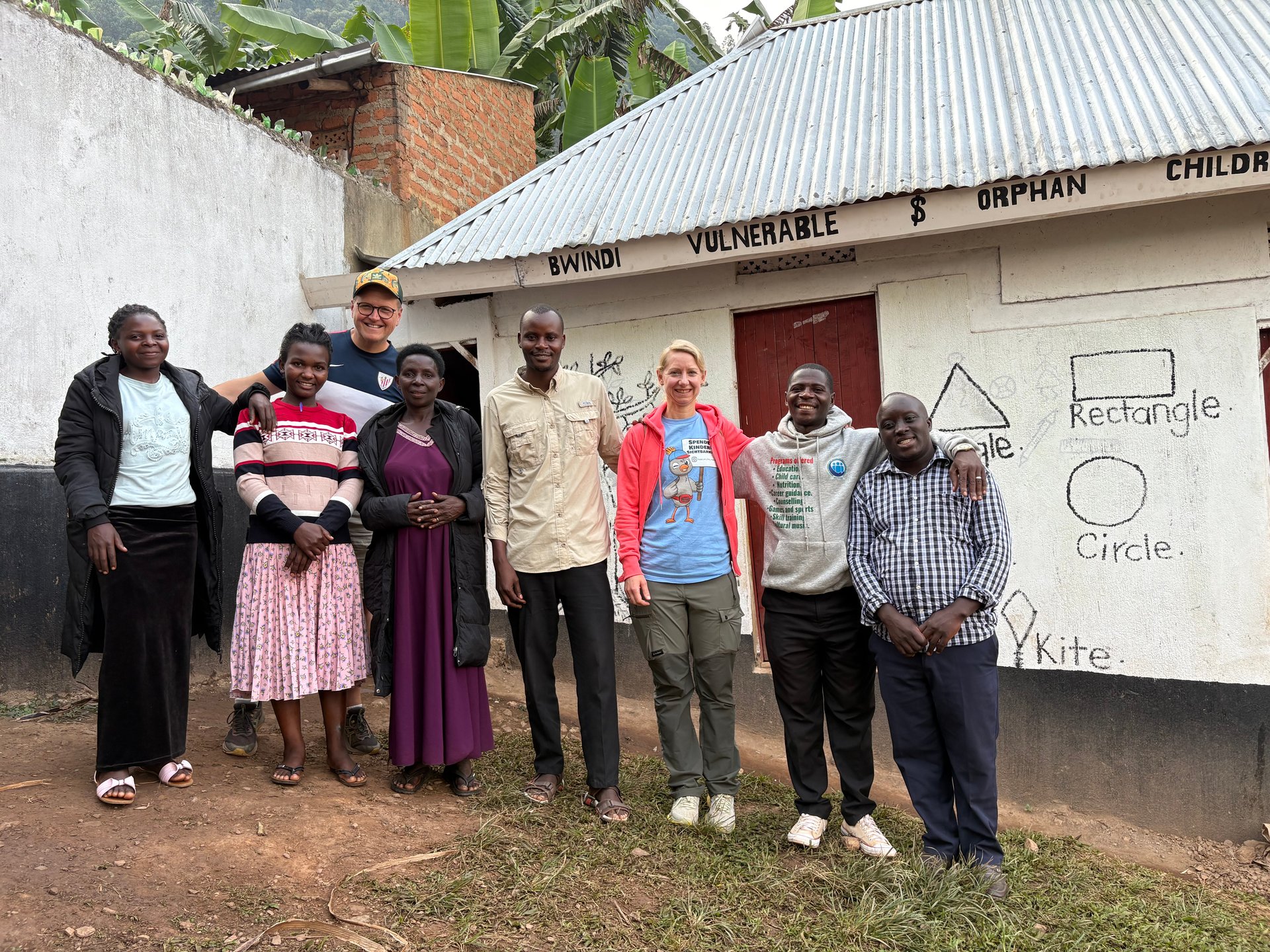
My own most recent visit in June 2026 was based in Buhoma. The village that has grown around the park gate — a cluster of guesthouses, small shops, and community enterprises including the chicken farmer I visited — gives the sector a lived-in quality that the more remote southern sectors do not have. That said, Buhoma's gorilla trek can be demanding: the Mubare, Habinyanja, and Rushegura groups all range across steep, heavily forested terrain, and a long-duration trek of four to six hours is entirely possible.
Rushaga
Rushaga, in the far south, is Bwindi's busiest sector by permit volume, simply because it has the largest number of habituated gorilla families — currently more than half of all Bwindi's habituated groups are tracked from here. That means more permit availability on any given day, which makes Rushaga the most practical choice when booking at shorter notice. The gorilla habituation experience — where small groups follow a family being habituated over four hours rather than one — is also based in this sector, at a higher price but for a substantially more intimate encounter.
Lodges in Rushaga range from Gorilla Safari Lodge and Gorilla Valley Lodge (solid mid-range options with views into the valley) through to more basic community camps. Road access has improved in recent years, though the final stretch from Kisoro can still be testing in heavy rain.
Nkuringo
Nkuringo sits at over 2,000 metres on the southwestern edge of the park, offering views across the Albertine Rift Valley toward the DRC. The sector has a single habituated gorilla family (the Nkuringo group itself), which means permit availability is strictly limited — there are only eight slots per day. What the sector lacks in volume it makes up for in atmosphere: the ridge-top setting is dramatic, the birding is excellent, and Nkuringo Bwindi Gorilla Lodge, the principal property here, operates a community partnership model that channels tourism revenue directly into local schools and healthcare. The lodge works with the Uganda Carbon Bureau on a carbon offset programme — a detail that appeals to environmentally conscious travellers.
Clouds Mountain Gorilla Lodge, developed in partnership between Wildplaces Africa and the African Wildlife Foundation, is also accessed from the Nkuringo side and represents one of the finest wilderness lodge experiences in the park. Budget-conscious travellers can consider Bwindi Backpackers nearby, which offers dormitory and private room options from around USD 40 per night.
Ruhija
Ruhija is the least visited of the four sectors and arguably the most challenging. The track that winds up from Kabale to the sector's lodges — including Ruhija Gorilla Safari Lodge and Cuckooland Tented Camp — is steep enough to be impassable in a standard saloon car after heavy rain. The forest here is Hagenia-dominated at altitude and genuinely thick, meaning trek durations are often longer and the walking harder than elsewhere. In return, visitors report a sense of real remoteness: fewer people, quieter mornings, and an unmediated encounter with the forest that the more developed sectors sometimes dilute.
Ruhija Community Rest Camp is positioned five minutes from the sector's tracking start point — convenient for those who want to minimise early-morning transfers. Birders in particular are drawn to Ruhija, which sits within a key area for Albertine Rift endemics including the African green broadbill and Shelley's crimsonwing.
What to Expect on Trekking Day
Trekking days at all four sectors follow the same basic structure. Briefing begins at the park headquarters at 7:30 or 8am, depending on the sector. Rangers present the day's group assignments, explain the rules — no flash photography, minimum approach distance of seven metres, masks worn within the gorilla family's proximity, strict one-hour limit once contact is made — and give a brief overview of the gorillas' recent movements. Groups of eight are then assigned to a specific family and set off with their lead ranger and two or three escorts.
The trek itself can be anywhere between thirty minutes and eight hours depending on where the gorillas have chosen to sleep the previous night. Rangers track the family from its last known night-nest location at dawn, sending radio updates back to the gate so later-starting groups have a more accurate sense of duration. On shorter treks, guides often slow the approach deliberately to allow guests to absorb the forest rather than arriving at the family in a breathless rush.
The one-hour contact limit is enforced strictly, and for good reason: gorillas are highly susceptible to human respiratory illnesses, and prolonged exposure increases transmission risk. Masks are mandatory within a set distance, regardless of vaccination status. Photography without flash is allowed; video is unrestricted. Almost everyone who has done the trek describes the experience of the encounter — the size, the calm, the occasional direct gaze — as something that resists adequate description afterward.
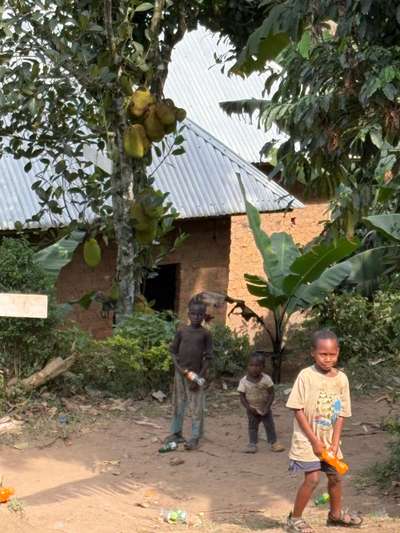
During that same June 2026 morning in Buhoma, I passed several children from the neighbourhood near the children's home — three of them were clearly uncertain around strangers, their clothing worn, their posture cautious in the way that comes not from shyness but from difficult circumstances. We invited them to eat with us. It is a small gesture in the context of conservation tourism, but it is a reminder of what the tourism economy around Bwindi is ultimately about: keeping a landscape and its people viable together, so that both have a future.
Practical Tips for Your Gorilla Trek
Fitness and Terrain
No technical climbing is required, but Bwindi's slopes are steep and the vegetation is dense. Expect to push through undergrowth, climb over fallen trees, and navigate mud that can be ankle-deep after rain — which is possible in any month, even during the dry season. The minimum age is 15. There is no maximum age, but visitors with mobility limitations should have an honest conversation with their tour operator and the UWA ranger team before committing. A small number of lodges can arrange a sedan chair service with local porters for sections of particularly steep terrain; this service should be organised in advance.
What to Bring
Long-sleeved shirt and long trousers in dark or earth tones — gorilla guides prefer visitors avoid bright colours, though this is a convention rather than a rule. Waterproof hiking boots with ankle support are essential. Gardening gloves are underrated and genuinely useful for grabbing branches on steep ascents. Two to three litres of water. A rain jacket regardless of the forecast. Your camera (no flash). Insect repellent. A surgical mask — the park issues them at the briefing but bringing your own is cleaner. Do not bring food into the forest.
Best Season to Visit
The two dry seasons — June to September and December to February — are generally considered the best times for trekking. Trails are drier, gorillas tend to stay at lower altitudes where they are easier to approach, and the forest is at its most navigable. June, as I found during my most recent visit, can still produce morning mist and intermittent afternoon rain, but overall conditions are reliably good. The wet seasons (March–May and October–November) are quieter, permit availability is better at shorter notice, and the park is dramatically lush — but you will get muddy, and river crossings can be more challenging.
Gorilla Illness Protocol
UWA takes gorilla health seriously. If you have any cold, flu, or respiratory illness symptoms on the day of your trek, you will be asked not to enter the forest. A replacement permit may be offered for a different day subject to availability, or a refund may be considered in exceptional circumstances — but do not count on either. This policy exists because mountain gorillas have no immunity to common human respiratory viruses, and a single transmission event can move rapidly through an entire family. It is one of the more sobering reminders that gorilla tourism is not just an activity but an ongoing experiment in coexistence that requires restraint from the human side.