The gorilla appeared without warning. Three hours into the jungle, sweat soaking through every layer, legs aching from the uneven terrain, and then — a face through the leaves. A mountain gorilla, unhurried, regarding us with the kind of composure that made the entire trek feel entirely worthwhile. The family around him went about their day: an infant tumbling in the undergrowth, a female pulling at a cluster of leaves, a large silverback resting with one arm folded beneath his chin. We stood perhaps four meters away. Nobody spoke.
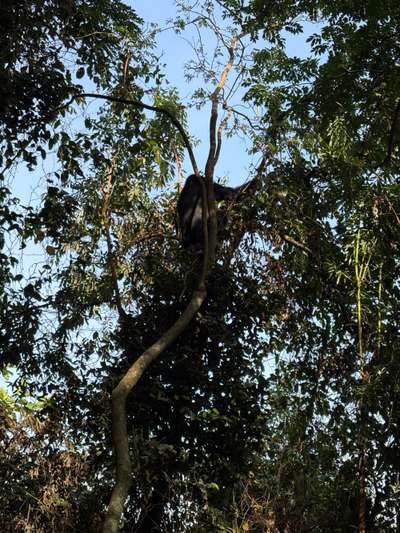
That encounter happened during my visit to Bwindi Impenetrable National Park in January 2026 — GPS-verified at coordinates -0.9725°N, 29.6213°E — a point deep in the forest above the village of Buhoma. It was a four-day stay in the region, split between the gorilla trekking itself and time spent in and around the Gorilla Bluff Lodge, talking to rangers, watching the village go about its routines, and trying to understand what it actually means to visit this place as a traveler in 2026. I returned again in June 2026, photographing a gorilla high in the tree canopy, feeding on leaves, at GPS coordinates -0.9735°N, 29.6281°E — the image that opens this article.
A lot of people ask about safety before visiting Bwindi. The question is reasonable. Uganda sits in a complex region, Bwindi shares a border with the Democratic Republic of Congo, and international news cycles do not always make careful distinctions between different parts of Central and East Africa. This guide is an attempt to answer that question honestly, with data, personal observation, and the specific context of the national park area around Buhoma.
Bwindi Impenetrable National Park: Context, History, and Governance
Bwindi Impenetrable National Park lies in the southwestern corner of Uganda, in the Rukiga Highlands above the Albertine Rift Valley. The park covers roughly 321 square kilometers of montane and lowland forest, one of the oldest and most biodiverse forest ecosystems in Africa. It was gazetted as a national park in 1991 and designated a UNESCO World Heritage Site in 1994, recognized for its exceptional biodiversity — including more than 200 tree species, 120 mammal species, and over 350 bird species. The forest is ancient. Parts of it survived the last ice age as a glacial refugium, which explains the extraordinary concentration of endemic species found here.
What makes Bwindi unusual in conservation terms is its governance model. The park operates through a genuinely collaborative structure between Uganda Wildlife Authority (UWA), local district governments, and community organizations. A portion of park revenue — historically around 20% of gate fees — is returned directly to the surrounding communities through the Revenue Sharing Programme. This is not window dressing. Communities that benefit economically from the park's existence have a direct stake in protecting it. The model has been studied and partially replicated elsewhere in Africa, and it is one reason Bwindi has largely avoided the poaching crises that have devastated gorilla populations in the DRC.
The Wakiso District Local Government, along with other district authorities in the southwestern region, participates in this public-private management framework. It is a structure that keeps the park connected to local political and economic realities rather than cordoned off from them — and that connection, more than any fence or patrol schedule, is probably the deepest guarantee of the park's long-term security.
Bwindi sits at the edge of the broader Virunga ecosystem — the chain of volcanoes and forests shared between Uganda, Rwanda, and the Democratic Republic of Congo. The Virunga National Park in the DRC, managed by ICCN (Institut Congolais pour la Conservation de la Nature), lies to the west. The connectivity between these forest blocks matters enormously for gorilla genetics and population resilience. It also means that regional security conditions in the DRC are relevant — but not equivalent — to conditions inside Bwindi itself. The distinction matters for travelers.
Buhoma: The Northern Gateway to Bwindi
Buhoma is the oldest and most established entry point to Bwindi. The village sits at the northwestern corner of the park, perched on steep hillsides that descend into the forest below. The park headquarters for the northern sector is located here, and it is from Buhoma that trekking groups depart each morning to find the habituated gorilla families in this part of the park.
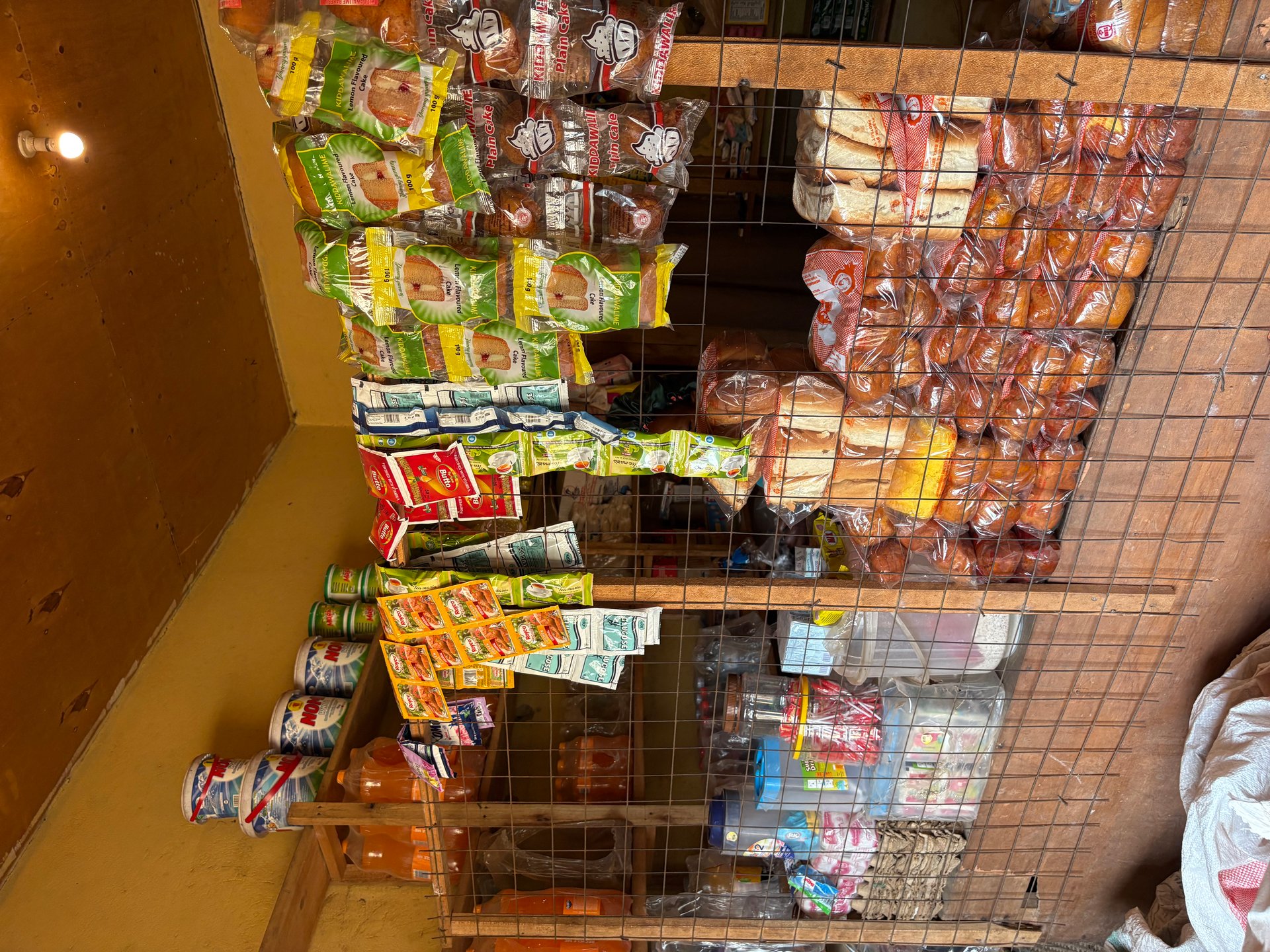
The village itself is worth paying attention to. During my January 2026 visit, I walked the main road through Buhoma and spent time watching its daily rhythms. The shops — typically around 20 square meters, fronted with metal grilles, stocked with packaged snacks, bottled water, mobile credit, and basic household goods — are run predominantly by women. At one such shop, I stopped to buy water and some sweets for children who had gathered outside. The owner managed her small enterprise with the kind of matter-of-fact competence that characterizes small-scale commerce throughout Uganda. These shops are not tourist infrastructure. They serve a community that lives here year-round, and their existence is one signal of a functioning local economy.
An NGO founded in Buhoma in 2009 has been running guided mountain bike tours through the rainforest and surrounding villages, offering bicycle rentals for independent travelers, sewing courses, and a souvenir shop. The organization was created to generate funds for a women's vocational training program. Its presence — and its resilience over more than fifteen years — is one indicator of a community stable enough to sustain civil society institutions.
Bwindi has four main entry sectors — Buhoma, Ruhija, Rushaga, and Nkuringo — each offering access to different habituated gorilla families. Buhoma hosts several of the most well-established families, some of which have been habituated for over two decades. The longer habituation period tends to produce calmer encounters, which is relevant for safety: a fully habituated gorilla family is largely indifferent to human presence and presents minimal risk when proper protocols are observed.
The Mountain Gorillas of Bwindi: 459 Individuals and What That Number Means
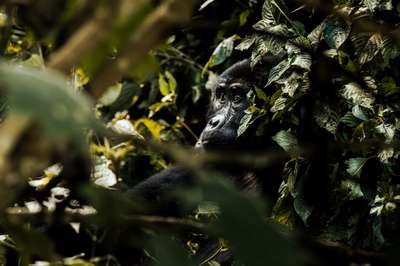
The most recent comprehensive census, covering the period 2018–2020, recorded 459 mountain gorillas in Uganda. The global mountain gorilla population, which spans Bwindi and the Virunga massif shared between Uganda, Rwanda, and the DRC, now exceeds 1,000 individuals — a figure that represents a genuine conservation success story, as the species was once considered functionally doomed. In the late 1980s, the Bwindi population was estimated at fewer than 300 individuals.
The International Gorilla Conservation Programme (IGCP) coordinates conservation efforts across all three range countries, tracking habituation, monitoring health, and managing the cross-border implications of a population that does not observe national boundaries. The IGCP's work, alongside UWA's management, is why the Bwindi gorillas remain relatively healthy and why the trekking permits — at USD 800 per person — carry genuine conservation weight.
That USD 800 figure deserves context. It is not arbitrary pricing. A significant portion flows back into anti-poaching operations, ranger salaries, community programs, and veterinary care for habituated families. The revenue model is designed to make each gorilla worth more alive and accessible than any alternative use of the land. Whether that logic holds in perpetuity depends on continued political stability, international tourism demand, and the integrity of the revenue-sharing mechanisms — but the evidence from the past three decades is that it has worked.
During our gorilla trekking in January 2026, within the first hour of hiking, we encountered a gorilla sitting high in a tree, feeding on leaves with complete calm. He was aware of us but entirely unbothered. Later in the same trek, after roughly three hours of walking, we reached the main family group — perhaps eight to ten individuals visible at once, spread across a clearing and the adjacent undergrowth. The silverback was resting. The younger animals were playing. We spent roughly an hour with them, the permitted maximum, maintaining the required seven-meter minimum distance while rangers monitored the group's behavior and our own.
Safety in Buhoma and Bwindi: Data, Context, and What the Numbers Actually Mean
The question of safety in Bwindi cannot be answered with a single yes or no. It requires distinguishing between different types of risk, different parts of Uganda, and different contexts for travel. A brief and honest analysis follows.
Regional Security Context
Uganda's southwestern highlands, where Bwindi sits, are consistently among the most stable regions in the country. According to the Uganda Security Monitoring Index published in March 2026 (Uganda SMI, Mar2026), national-level data shows that freedom of movement is approximately 64% restricted compared to baseline indicators — a figure that sounds alarming until it is disaggregated by region. The same report notes that 78% of daily life in national park regions proceeds normally. That distinction matters enormously. The security challenges Uganda faces are concentrated in specific geographic areas, primarily in the north and northeast of the country. The southwest, including the Bwindi area, operates on a different footing.
The western border with the DRC warrants specific attention. The DRC side of the Virunga ecosystem has experienced significant instability in recent years, and the recommendation — as noted in the 2020 Uganda travel guide published by Reise Know-How Verlag — has been to exercise caution regarding the border crossing at Bunagana and to monitor the situation at www.visitvirunga.org for current conditions. Bwindi itself, however, is not proximate to these border tensions. The park lies along the Ugandan side of the ridge, separated from the active conflict zones by terrain and distance. Travelers entering Uganda at Entebbe and driving southwest to Bwindi do not pass through any high-risk zones.
In-Park Safety: The Ranger System
Inside the park, safety is managed through a structured ranger escort system. Every trekking group is accompanied by at least one trained guide and two rangers. On our January 2026 trek, both rangers were armed — a detail that felt unusual at first but made immediate practical sense. The arms are not theater. Rangers carry weapons because encounters with wildlife can occasionally become unpredictable, and because the forest borders on areas where poaching, though relatively rare at Bwindi, remains a concern. In practice, the rangers on our trek were relaxed, skilled, and thoroughly professional. They navigated the terrain with practiced ease, helped trekkers through the steeper sections, maintained awareness of the gorilla family's movements, and at no point created an atmosphere of tension or anxiety.
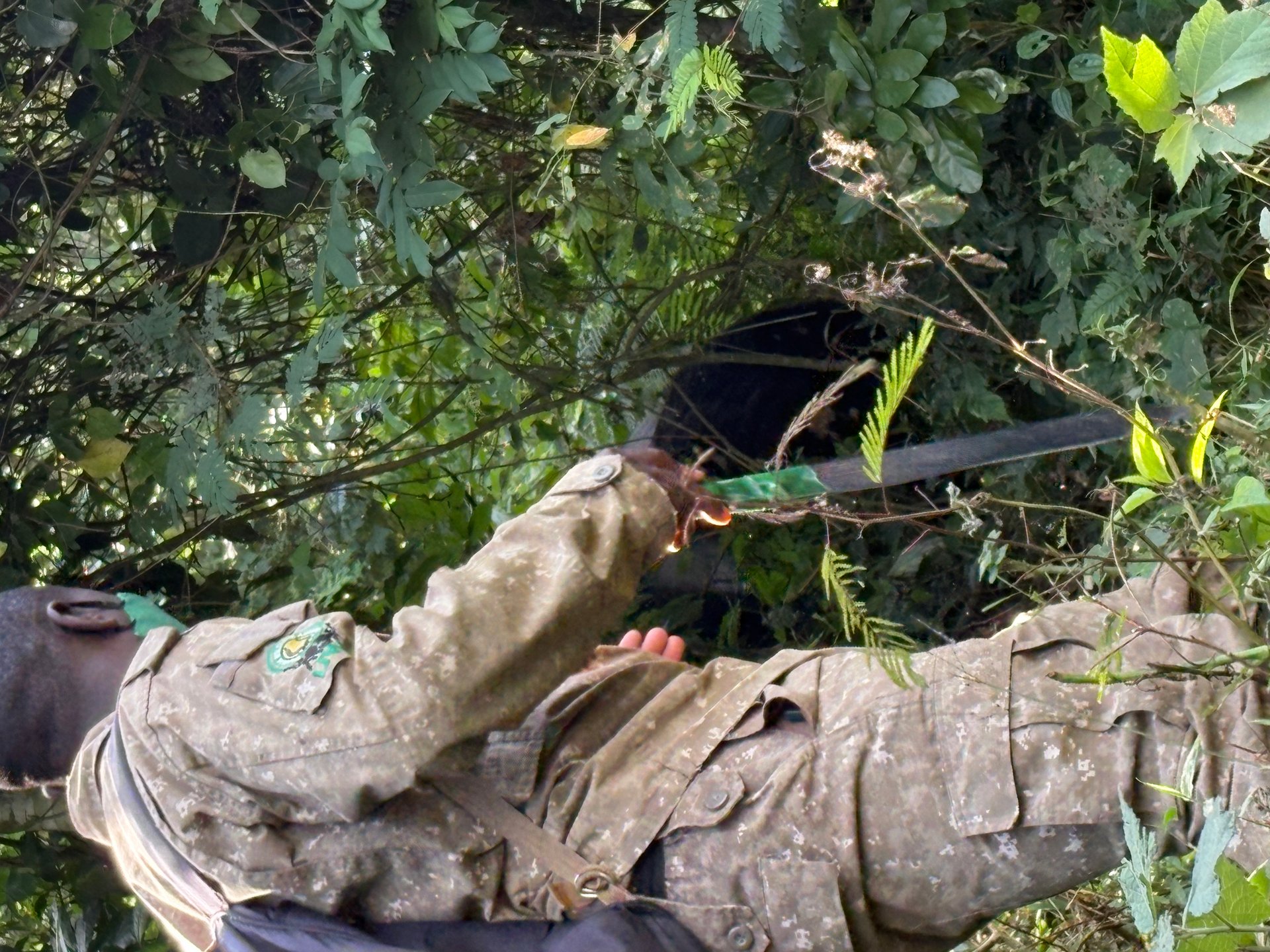
The physical terrain itself is the most consistent safety challenge. "Impenetrable" is not marketing language — the forest lives up to the name. Slopes are steep, root systems create irregular footing, and rainfall makes certain sections slippery regardless of season. Rangers clear paths with machetes where necessary. Trekkers should expect a genuine physical effort: the trek can range from one hour in favorable conditions to six hours when the gorilla family has moved deep into the forest. Good footwear, rain gear, and a reasonable level of baseline fitness are not optional.
Wildlife Safety Protocols
Mountain gorillas are not aggressive toward humans under normal circumstances — the habituated families in Bwindi have been in regular contact with rangers and researchers for decades, and their behavioral tolerance of human proximity is well-established. UWA enforces strict protocols: maximum group size of eight trekkers per gorilla family per day, minimum approach distance of seven meters, no direct eye contact sustained for long periods, no flash photography, and a maximum of one hour with the family. These rules exist to protect both the gorillas and the visitors. Respiratory illnesses transmissible from humans to gorillas are a genuine concern, which is why face masks may be required and why anyone showing signs of illness on trek day may be asked not to participate.
In extremely rare cases, a silverback may perform a mock charge — a display behavior, not an attack. Rangers are trained to manage this situation, and trekkers are briefed on the appropriate response (crouch, look down, stay still) before the trek begins. In all my visits to Bwindi across October 2024, January 2026, and June 2026, I observed no such event. The families we encountered were, in the fullest sense, at peace.
Practical Information for Your Gorilla Trek from Buhoma
Permits and Booking
Gorilla trekking permits for Bwindi cost USD 800 per person per trek as of 2026. Permits are issued by Uganda Wildlife Authority and should be booked well in advance — the park limits the number of trekkers per gorilla family per day to eight, and with multiple habituated families in the Buhoma sector, total daily capacity remains constrained. Peak booking periods run from June to September and December to February, corresponding to the two primary dry seasons when trail conditions are most favorable.
Permits can be booked directly through the UWA website or through licensed tour operators. Foreign non-residents pay USD 800; foreign residents of Uganda pay USD 600. The difference reflects a deliberate pricing structure that discourages pure permit arbitrage while remaining accessible to the expatriate community based in Kampala and other Ugandan cities.
Getting to Buhoma
Buhoma is approximately 8–10 hours by road from Kampala, or 5–6 hours from the regional hub of Kabale. The road from Kabale to Buhoma is partially unpaved, and a 4WD vehicle is strongly recommended regardless of season. Charter flights to Kihihi airstrip, approximately 40 kilometers from Buhoma, reduce travel time considerably and are available through several operators. The airstrip is small and dependent on weather, so flexibility in scheduling is advisable.
Most travelers choose to stay in Buhoma village or in the lodges immediately adjacent to the park entrance. This proximity means a shorter drive to the briefing point each morning, which matters when treks begin early — typically at 7:30 or 8:00 AM. The Gorilla Bluff Lodge, where I stayed in January 2026, is built directly into the hillside above Buhoma, with views over the surrounding forest and steep timber staircases connecting the guest rooms to the main house. Morning breakfast — fresh mango, banana, melon, and juice — was served before the trek, a sensible arrangement given the physical demands of the day ahead.
Accommodation Survey Context
A note on the accommodation landscape: the most recent national census of accommodation facilities in Uganda was conducted in 2011, with an update planned for the 2014 housing census, according to the Uganda Statistical Abstract 2014. The survey covered 20 districts distributed nationally, including Kampala. This means that detailed official data on lodges in the Bwindi area specifically is limited, and on-the-ground research — which is what this site provides — fills a gap that official statistics cannot. The reality is that the accommodation options in and around Buhoma range from basic community guesthouses to mid-range lodges to high-end tented camps, with considerable variation in facilities, service quality, and environmental footprint.
What to Pack
The forest is wet regardless of season, though the degree varies. Light waterproof hiking boots with ankle support are essential. Long trousers and long sleeves protect against vegetation and insects. Gardening gloves — widely recommended and available for hire at the trailhead — protect hands when grabbing roots and branches on steep sections. A daypack with water, snacks, sunscreen, and a rain cover for camera equipment covers the practical requirements. Trekking poles are allowed and genuinely useful on descents.
January in Bwindi carries the tail end of the short dry season. When I visited that month, the trails were firm but not dusty, with morning mist burning off by mid-morning. June sits in the early long dry season — the gorilla feeding high in the tree canopy that I photographed in June 2026 was in bright, filtered sunlight. Both periods offer reliable trekking conditions, though June through September is generally considered optimal and prices for accommodation reflect the increased demand accordingly.
Community Engagement Beyond the Trek
Buhoma offers activities beyond gorilla trekking that are worth considering, particularly for travelers spending multiple days in the area. Community walks through the villages surrounding the park boundary provide direct contact with the agricultural and social fabric of the area. The NGO operating out of Buhoma since 2009 runs guided mountain bike tours through the rainforest and surrounding villages, offers bicycle rentals for independent exploration, and operates a souvenir shop where revenue supports a women's vocational education program. These are not peripheral add-ons. They are part of what makes Buhoma a place rather than just a trailhead, and engaging with them contributes directly to the community economy that underpins park conservation.
Bird watching in Bwindi is exceptional — the park hosts more Albertine Rift endemic bird species than any other forest in Africa, and early mornings near the forest edge, before the trek briefing, offer opportunities that serious birders should not ignore. Chimpanzee tracking is available at other sites in Uganda, most notably Kibale National Park, and is often combined with Bwindi in a two-week itinerary.
Frequently Asked Questions
Is it safe to visit Bwindi and Buhoma for gorilla trekking in 2026? +
Yes, for the vast majority of international visitors, Bwindi and the Buhoma area are safe destinations. According to the Uganda Security Monitoring Index (March 2026), 78% of daily life in national park regions proceeds normally. The southwestern highlands where Bwindi is located are consistently among the most stable parts of Uganda. The park is staffed by Uganda Wildlife Authority rangers and has a long track record of hosting international tourists without significant incident. Standard travel precautions apply — consult your government's travel advisory, arrange comprehensive travel insurance, and book through a licensed tour operator or directly with UWA.
How long does a gorilla trek in Buhoma typically take? +
Trek duration varies significantly depending on where the gorilla family has moved since the previous day's monitoring. In the best case, you may locate a family within one hour. In more demanding conditions, the trek can extend to six hours or more of hiking through steep, dense forest before finding the gorillas. Once you reach the family, the permitted time with them is one hour regardless of trek duration. Plan for a full day. During my January 2026 visit, the trek to the main family took approximately three hours each way, with the gorilla encounter itself lasting the full permitted hour.
What is included in the gorilla trekking permit price? +
The USD 800 permit covers the guided trek with a trained UWA guide and armed ranger escort, access to the park for the trekking day, and the one-hour encounter with the gorilla family. It does not cover accommodation, transport to Buhoma, meals, tips for guides and rangers (customary but not compulsory), or porter hire (available at the trailhead and highly recommended for carrying daypack weight on steep terrain). A significant portion of the permit fee is directed back to conservation programs and community revenue sharing.
What are the safety rules for the gorilla encounter itself? +
Uganda Wildlife Authority enforces strict protocols: maximum eight trekkers per family per day, minimum seven meters distance from any gorilla, no flash photography, no sustained direct eye contact with the silverback, and a maximum of one hour with the family. Trekkers showing signs of respiratory illness may be asked not to participate — mountain gorillas are susceptible to human respiratory diseases. If a gorilla moves toward you, rangers will instruct you to crouch, avoid eye contact, and hold still. These protocols are explained at a pre-trek briefing each morning. Following them carefully is the most important safety measure you can take.
When is the best time of year to go gorilla trekking in Bwindi? +
Gorilla trekking is possible year-round in Bwindi, but trail conditions and overall experience differ by season. The two dry seasons — June to September and December to February — offer firmer trails and clearer skies. June through September is generally considered the most popular and reliable period. January is also a good month: when I visited in January 2026, trails were in good condition and the morning mist added atmosphere without compromising the trek. The wet seasons (March–May and October–November) bring heavier rainfall that makes slopes more challenging but also reduce visitor numbers and can lower accommodation prices. The gorillas are present year-round and the forest is always dramatic.