Lodge Guide · Rushaga Sector
Rushaga Gorilla Lodge: Complete Guide to Bwindi's Southern Sector for 2026
By Mark Suer — updated 2 July 2026 · Visited January 2026 and June 2026
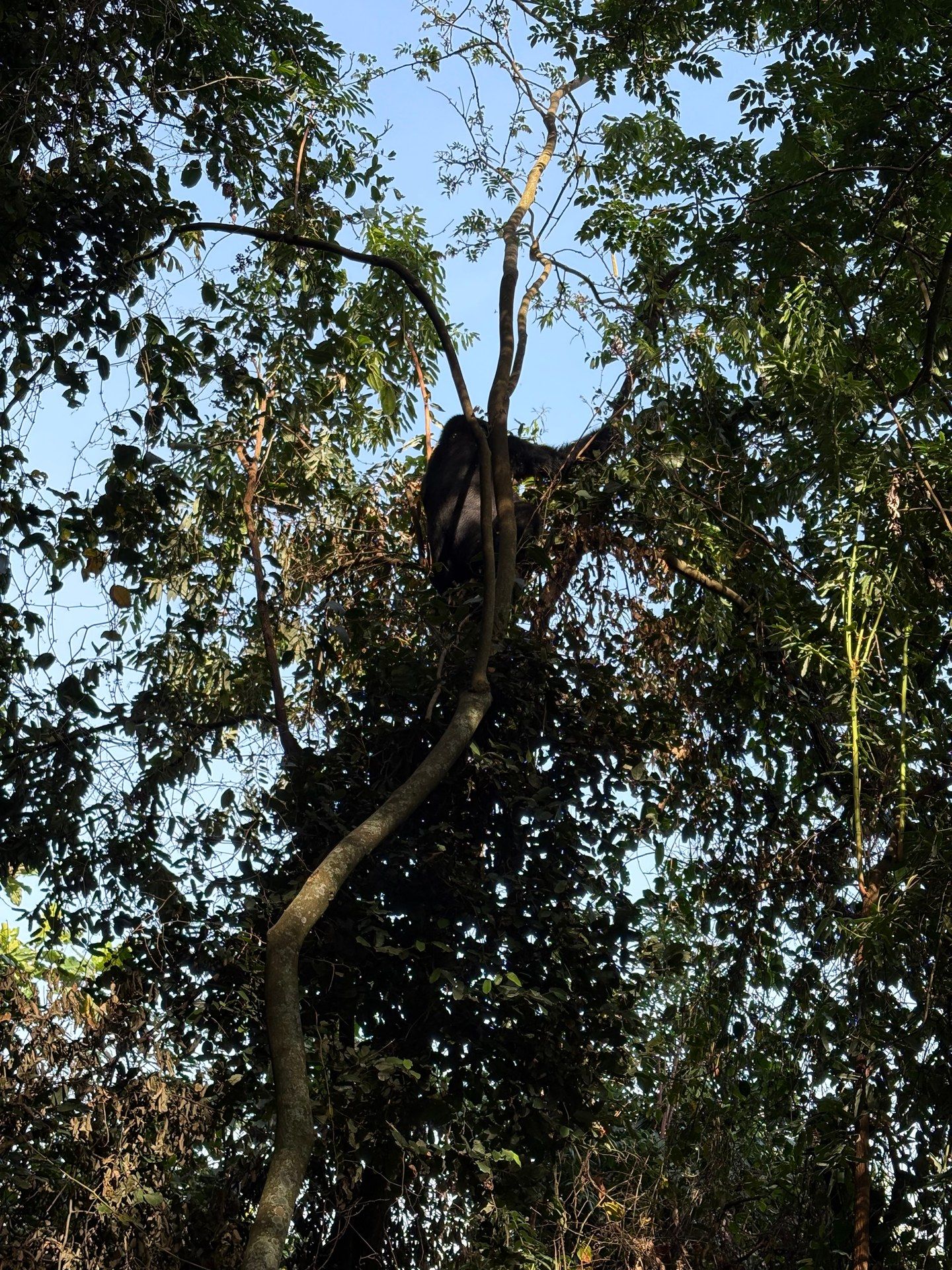
After three hours of climbing through the dense interior of Bwindi Impenetrable National Park in January 2026, our ranger paused without a word and pointed upward. Sitting perhaps eight metres above us in the fork of a large tree, a mountain gorilla was pulling fresh leaves towards its mouth in long, unhurried strokes. It glanced down once — the gaze direct, the expression entirely calm — and then returned to its meal as though we were of no particular interest. The rest of the family was scattered below in the undergrowth, going about their morning with the same settled indifference. We stood there for the regulation hour, and I understood then why people return to Bwindi year after year.
That encounter took place in the Buhoma sector of Bwindi. But the question I have been asked most often since then is a different one: why do so many experienced Bwindi visitors specifically choose the Rushaga sector and a Rushaga gorilla lodge over the more established Buhoma gateway? The answer involves geography, permit logistics, the Rwandan border crossing, and a set of accommodation options that have matured considerably over the past decade. This guide covers all of it, with as much first-hand detail as the ground will support.
I have now spent time across two visits to Bwindi — October 2024 and January 2026 — and returned for a third stint in June 2026. All seven GPS-tagged photographs accompanying this article were taken on location. The southern sector was not part of either visit by road, but the rangers and guides I spoke to at length in Buhoma painted a consistent picture of Rushaga that matches what the published Uganda Wildlife Authority data confirms: Rushaga is, by number of habituated gorilla families, the most productive single sector for permit allocation in the park.
Why Rushaga: The Sector Logic That Changes Your Lodge Choice
Bwindi Impenetrable National Park covers roughly 331 square kilometres of montane and lowland forest straddling the Albertine Rift in south-western Uganda. The park is divided into four trekking sectors — Buhoma in the north, Ruhija to the east, Nkuringo in the south-west, and Rushaga in the south — and this division is not merely administrative. Each sector has its own park entrance, its own set of habituated gorilla families, and its own cluster of accommodation properties. Critically, a permit allocated to Rushaga cannot be used at the Buhoma gate, and vice versa. Your lodge choice and your permit must match.
This is the single most important thing to understand before booking any accommodation near Bwindi. Travellers who book a lodge in Buhoma because it has better online reviews, then arrive to find their permit is stamped for Rushaga, face an expensive and stressful reallocation process. The practical advice is simple: establish which sector your permit is assigned to before you confirm any lodge.
Rushaga has grown in popularity for two interconnected reasons. First, the southern sector holds a larger number of habituated gorilla families than any other single Bwindi gate, which means Uganda Wildlife Authority can release more permits per day from this point. For travellers booking late or travelling in peak season, the probability of obtaining a Rushaga permit is statistically higher than for Buhoma. Second, Rushaga's position near the Rwandan border at Cyanika — roughly 35 kilometres from Kisoro — makes it the natural entry point for visitors arriving from Kigali. A two-country itinerary combining a Rwanda gorilla trek with a Uganda permit now almost always routes through Rushaga.
Rushaga Gorilla Camp and Accommodation in the Southern Sector
The accommodation landscape in Rushaga has developed in a pattern familiar from other high-value gorilla trekking gateways: a community-backed option at the more affordable end, a small number of independent mid-range lodges, and one or two higher-end properties that have arrived in the past decade. None of the Rushaga properties currently reach the ultra-luxury tier represented in Bwindi's portfolio by Sanctuary Gorilla Forest Camp in Buhoma or Clouds Mountain Gorilla Lodge in the Nkuringo sector to the west.
Rushaga Gorilla Camp is the property most commonly associated with the sector by name. It sits close to the park gate, which is a genuine practical advantage on trek morning — the four o'clock briefing that precedes every gorilla trek happens at the gate, and a fifteen-minute walk beats a forty-minute vehicle transfer in terms of early-morning logistics. The camp is community-affiliated, meaning a portion of its revenues flows to local Rushaga community programmes. Room types, specific pricing for 2026, and current booking arrangements require direct verification with the property.
Beyond Rushaga Gorilla Camp, the southern sector supports several other properties operating under the broad label of "Rushaga gorilla lodge." These range from basic guesthouses in Kisoro town — useful for travellers on a tight budget who do not mind a forty-minute morning drive — to more fully equipped lodge properties with en-suite rooms, guided afternoon activities, and packed lunches prepared for the trek. Prices across all categories have increased significantly since the COVID-19 period, tracking the recovery in Uganda's tourism revenue. All pricing cited online from 2020 or earlier should be treated as a historical reference rather than a current figure; verify 2026 rates directly with each property.
One name that appears repeatedly when discussing Rushaga accommodation in a broader regional context is Gorilla Safari Lodge, positioned near the Rushaga gate and catering primarily to independent travellers and small group tours. Like most mid-tier Bwindi lodges, it centres its programme on the gorilla trek with forest walks and community visits as half-day additions. For travellers who want more infrastructure than Rushaga Gorilla Camp offers but are not booking an ultra-luxury product, this segment fills a genuine gap.
The Trek from Rushaga: Rangers, Terrain, and What to Expect
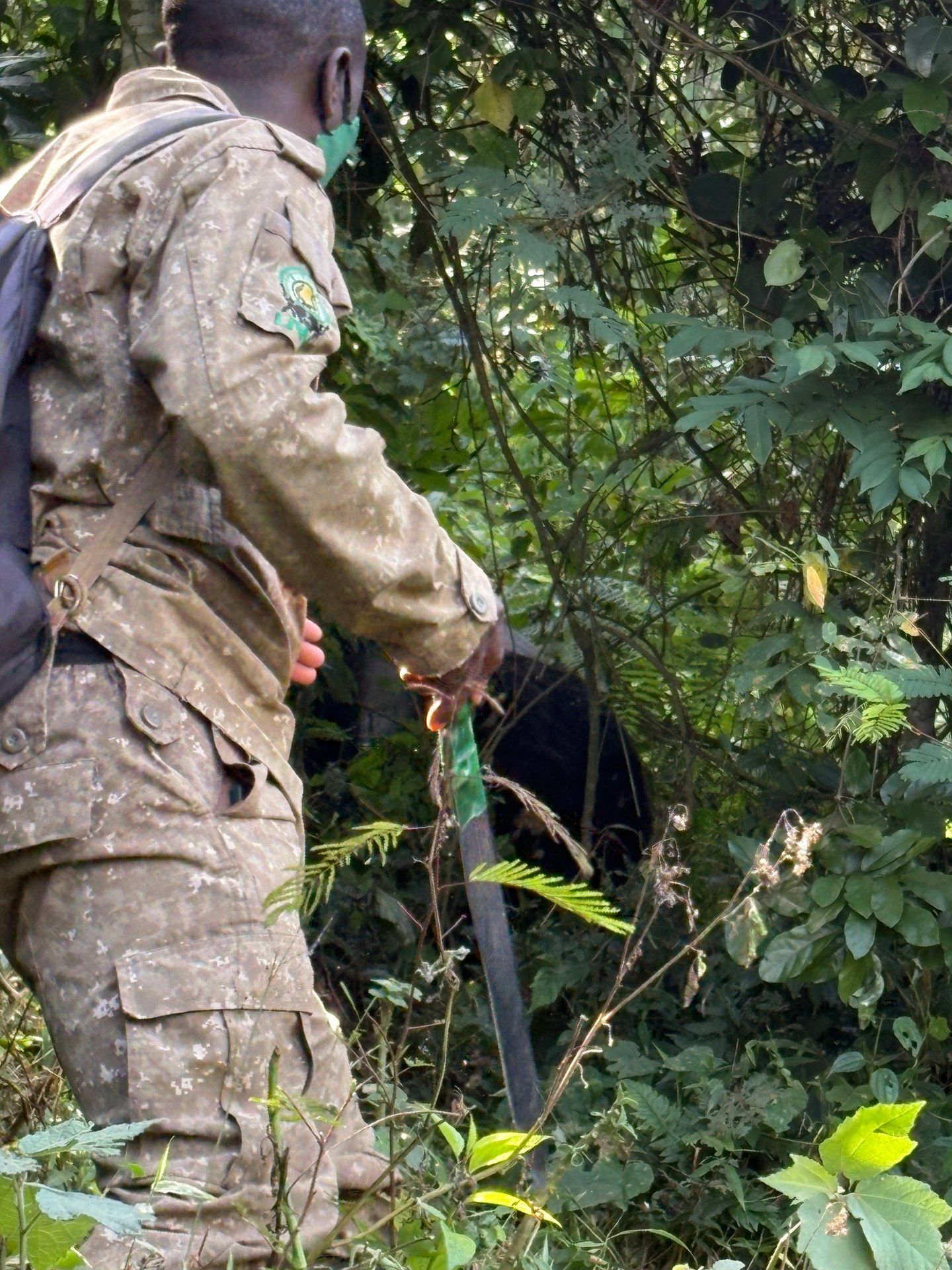
On our January 2026 trek in Buhoma, the group was led by a guide and flanked by two rangers, both armed. The sight of the weapons was initially incongruous — this is a carefully managed national park, not a conflict zone — but the rangers' manner quickly dispelled any unease. They were good-humoured throughout, helped physically at the steepest sections by lending an arm or clearing particularly tangled vegetation, and never gave the impression of anything other than professional competence. The armed escort is standard practice at all Bwindi sectors, including Rushaga, and the rationale is primarily about deterrence rather than active threat.
The trek itself varies enormously depending on where the gorilla family has moved overnight. In Rushaga, the terrain tends towards steep volcanic ridges and dense gallery forest. Some families require a relatively short approach — forty-five minutes to an hour of walking — while others involve three hours or more of climbing before you find them. Uganda Wildlife Authority rangers track each habituated family the evening before and again at dawn, so the briefing at the gate each morning gives a reasonable sense of the likely effort. No family, however, can be guaranteed at a specific location; the forest is the gorillas' space, and the schedule is theirs.
Once you reach the family, you have exactly one hour with them. The rule is non-negotiable and exists for sound conservation reasons: prolonged human presence increases stress hormones in the gorillas and raises the risk of disease transmission. One hour, from the moment of first sighting, is the standard across all four Bwindi sectors. In our case, that hour passed in what felt like fifteen minutes. The gorilla in the tree above us continued to eat. Others moved slowly through the undergrowth. A juvenile briefly approached before being redirected by a watchful adult. There is no controlled experience that replicates it.
The mountain gorilla population in Bwindi — along with a separate group in the Virunga Massif shared between Uganda, Rwanda, and the Democratic Republic of Congo — is the only gorilla subspecies whose numbers are currently increasing. A 2018–2020 survey by Uganda Wildlife Authority counted 459 individual mountain gorillas in Bwindi alone. Conservation organisations including Berggorilla- und Regenwalddirekthilfe e.V., the International Gorilla Conservation Programme, and the Dian Fossey Gorilla Fund International have been central to the sustained work that produced this outcome. Trekking permit revenue — channelled in part through the Bwindi Mgahinga Conservation Trust — funds ranger salaries, community programmes, and forest protection work directly.
Beyond the Trek: What to Do for the Rest of Your Days in Rushaga
A gorilla trek takes half a day at most. What a Rushaga gorilla lodge offers for the other twenty hours of your stay is therefore a legitimate factor in your accommodation decision. The southern sector has two distinct advantages over Buhoma in this respect: its proximity to the Batwa communities associated with the southern forest edge, and the connecting position it holds relative to Mgahinga Gorilla National Park.
The Bwindi Batwa Development Association operates cultural programmes linked to the southern Bwindi communities. The Batwa — formerly the forest-dwelling people of Bwindi and Mgahinga — were displaced when the park was gazetted in 1991 and now live in villages surrounding the park boundary. Community experience programmes offered from the southern sector allow visitors to spend time with Batwa community members, hear accounts of forest life, and observe traditional craft practices. These are not performance-for-tourists experiences: the Batwa communities involved are working through the practical and cultural reality of resettlement, and the better-run programmes treat that reality honestly. The Nkuringo Cultural Centre near the Nkuringo gate — the next sector west of Rushaga — offers a structured version of this engagement with direct community benefit.
For travellers prepared to walk more than just the gorilla trek, Nkuringo Walking Safaris operates multi-day routes in the Kisoro–Lake Mutanda–Bwindi corridor. Their itineraries cross between Nkuringo and Rushaga territory and include lake kayaking, forest sections, and village overnight stays. This is one of the few ways to move through southern Bwindi on foot at a slow pace, and it produces a different kind of encounter with the landscape than the focused intensity of a permit day.
Mgahinga Gorilla National Park is approximately one hour's drive from Kisoro and represents a compelling addition to any Rushaga itinerary. Mgahinga is a smaller park centred on three of the Virunga volcanoes — Gahinga, Sabinyo, and Muhavura — and it offers gorilla trekking (one habituated family, permit subject to availability through UWA), golden monkey tracking, and volcano hiking. The contrast between Bwindi's dense, enclosed forest and Mgahinga's more open volcanic landscape gives a two-park Uganda itinerary a satisfying variety. Travellers who combine a Rushaga permit with a Mgahinga permit — or who cross to Rwanda's Volcanoes National Park from Cyanika — cover three distinct gorilla trekking environments in a single trip.
Booking a Rushaga Gorilla Lodge: How to Approach the Planning Sequence
The single piece of planning advice that would have saved several travellers I have spoken to from expensive changes: secure the permit before you book the lodge. Uganda Wildlife Authority releases gorilla trekking permits through its online portal and through registered tour operators. Permits for the peak months of July, August, December, and January can sell out months in advance. Once you have a permit with a confirmed date and sector — Rushaga — you know which gate you are using, and your lodge search becomes straightforward.
Conversely, if you start by falling in love with a particular property online — say, a beautifully photographed Bwindi lodge with excellent reviews — but that lodge is positioned near the Buhoma gate, it is worth confirming that Buhoma permits are available for your dates before you commit. The four sectors are not interchangeable.
For Rushaga specifically, the gate is approximately fourteen kilometres from Kisoro town. Most Rushaga gorilla lodges provide transfers from Kisoro or from the airstrip. Light aircraft services connect Kisoro Airstrip with Entebbe International Airport in roughly one hour — a significant time saving over the nine to ten hour road journey from Kampala via Mbarara and Kabale. Several lodges in the southern sector include the airstrip transfer in their room rate or offer it as a straightforward add-on.
For travellers arriving from Rwanda, the Katuna/Gatuna crossing on the main Kigali–Kampala road and the Cyanika crossing between Musanze (Ruhengeri) and Kisoro are both viable. The Cyanika route is more direct for travellers coming from the Volcanoes National Park side. Immigration at both crossings is generally efficient, though crossing times can extend during busy periods on the Ugandan side. A Uganda tourist visa or the East African Tourist Visa (which covers Uganda, Kenya, and Rwanda in a single document) is required.
On the question of what to bring: Bwindi's southern sector sits at elevations roughly between 1,160 and 2,607 metres. Temperatures at the start of a trek — typically between seven and eight in the morning — are cool, often below fifteen degrees Celsius. Rain is possible in any month. Gaiters are strongly recommended; the volcanic clay trails of the southern sector become extremely slippery when wet. Walking sticks, hired at the gate, are not optional in practice even if they are described as such in official materials.
Rushaga, Nkuringo, and the Southern Sector Compared
Travellers who investigate Bwindi's southern accommodation often encounter two names used interchangeably: Rushaga and Nkuringo. They are separate sectors with separate park gates approximately twenty kilometres apart by road. Understanding the distinction matters because some of the most prominent luxury properties in this part of Bwindi — including Clouds Mountain Gorilla Lodge — are affiliated with the Nkuringo gate, not Rushaga. A permit for Nkuringo and a booking at Rushaga Gorilla Camp would create the same logistics problem described above, in reverse.
The general character of the two sectors is similar: steep, heavily forested terrain, smaller visitor numbers than Buhoma, and a strong community conservation context through the Nkuringo Conservation and Development Foundation. Nkuringo has, historically, attracted slightly higher-end accommodation investment — Clouds Mountain Gorilla Lodge being the obvious example — while Rushaga has seen more mid-range development and a larger permit allocation. Neither sector has the established village infrastructure of Buhoma, where a small cluster of restaurants, craft shops, and community projects has grown up over the decades since the park opened to gorilla trekking in 1993.
For first-time visitors to Bwindi who are primarily concerned with permit reliability, the southern sector as a whole — whether booked from Rushaga or Nkuringo — offers something Buhoma cannot: a higher total number of available permits on any given day and a direct connection to the Rwanda-side itinerary logic that has become the dominant travel pattern for gorilla trekking in East Africa. For repeat visitors who already know Buhoma and want a different experience of the forest, the southern sector offers exactly that difference, without sacrificing the quality of the gorilla encounter.