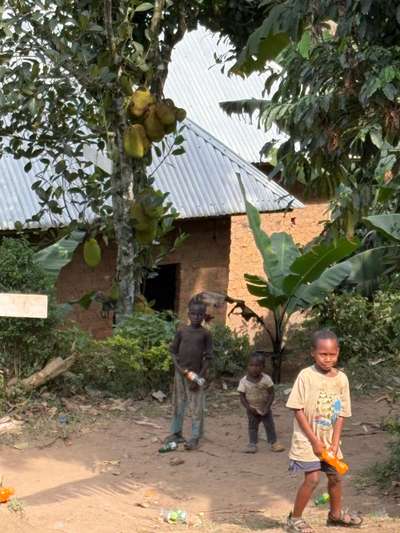
Three children appeared at the edge of the property, hesitant. They lingered just beyond the open gate of the orphanage compound in Buhoma, watching us with cautious eyes. Their clothes were worn, and there was something in the way they held themselves — a quiet guardedness — that told you their days were harder than they should be. During my visit to Buhoma in June 2026, documented with GPS-tagged photos at coordinates -0.9617°N, 29.6109°E, this was one of those unscripted moments that resets your sense of what a trip is actually about. We invited them in without hesitation. They sat down and ate with us.
That moment, small and unremarkable in one sense, sits at the centre of what makes Bwindi different from other gorilla destinations. The park is extraordinary on its own terms. But it is the community around it — the farmers, the families, the children growing up in the shadow of one of the world's most protected forests — that gives a stay here its particular texture. For families travelling with children, this context matters more than it might at first appear. Bwindi Impenetrable National Park rewards slow, attentive travel. The question of which lodges in Bwindi National Park are genuinely suitable for families with children is, therefore, not simply a logistical one. It is a question about what kind of experience you want to have.
This guide brings together on-the-ground observations from two separate visits to the Bwindi area — in January 2026 and again in June 2026, totalling three days on site — alongside official statistics and specific lodge information. It is written for families who are seriously considering this trip and want honest, practical detail rather than brochure language.
The Age Restriction That Changes Everything for Families
Before any accommodation question can be meaningfully answered, one rule needs to be understood clearly: children under the age of 15 are not permitted to participate in gorilla tracking in Bwindi Impenetrable National Park. This is not a soft guideline or a recommendation — it is a fixed regulation applied without exception. The restriction applies equally across all four sectors of the park and all gorilla groups.
The reasoning is grounded in conservation biology. Mountain gorillas share approximately 98 percent of their DNA with humans, which makes them highly susceptible to human infectious diseases. A child's immune system is more likely to carry or transmit pathogens that could be fatal to habituated gorilla groups. The minimum age of 15 was set precisely because younger visitors represent a higher biosecurity risk. Additionally, the trek itself — which can last anywhere from one to five hours through dense, steep forest — makes physical demands that are considered unsuitable for young children.
Visitors displaying symptoms of a cold or any contagious illness are also refused entry on the day, regardless of age or the cost of their permit. This includes runny noses, coughs, and fever. The gorilla tracking rangers at each sector headquarters check visitors before departure, and the decision of the ranger is final. Families travelling with children who are borderline in age or health should factor this into their planning.
For families with teenagers aged 15 and above, the experience is fully accessible. The hour spent with a habituated gorilla group — typically ten to twenty metres away from the animals in their natural forest habitat — is consistently described as one of the most affecting wildlife encounters available anywhere in the world. The time limitation to one hour is deliberately maintained to prevent behavioural disruption to the gorillas, whose daily routines follow patterns that decades of habituation work have carefully preserved.
For families travelling with younger children, the park still offers substantial value. The Buhoma area in particular has a well-developed set of community activities, nature walks, and cultural experiences that do not involve gorilla contact. The question then becomes which lodges in Bwindi National Park are organised well enough to cater to mixed-age family groups.
Choosing the Right Sector: Buhoma, Nkuringo, Ruhija, and Rushaga
Bwindi Impenetrable National Park covers 331 square kilometres and is accessed via four distinct entry sectors. Each has its own character, its own gorilla groups, and its own range of accommodation. Families should understand the differences before booking, because the choice of sector affects logistics, cost, and the overall tone of the experience.
Buhoma is the oldest and most developed sector, and it remains the most frequently visited. Located in the northwest of the park, it sits at roughly 1,500 metres altitude and is the most straightforward to reach from the Ugandan road network. The gorilla tracking here begins at the park headquarters, and the combination of habituated gorilla groups, established lodges, and community tourism infrastructure makes it the default recommendation for first-time visitors — including families. Three gorilla groups are based in the Buhoma sector: the Mubare group (11 members), the Habinyanja group (15 members), and the Rushegura group (15 members). The Mubare and Habinyanja groups are the longest habituated and tend to offer calmer encounters.
Nkuringo lies in the southwest, at higher elevation, and offers a more remote feel. The Nkuringo gorilla group (14 members) was opened for tourism in 2004, making it a relatively newer addition. The altitude here is noticeably higher, which means cooler temperatures and occasionally more challenging trekking terrain. The accommodation options are fewer and more rustic, which can be appealing for families seeking a genuine wilderness feel but requires more careful preparation.
Ruhija sits on the eastern side of the park at the highest elevation of the four sectors. It is the least developed for tourism, with fewer lodge options and more basic facilities. For families with younger children, Ruhija's limited infrastructure makes it less practical. Birding is exceptional here, and the forest scenery is some of the most dramatic in the park — but the logistical demands are higher.
Rushaga in the south has developed rapidly in recent years and now offers several gorilla groups and a growing range of accommodation. Camping is available from as little as USD 4 per person at Nshongi Camp and from USD 10 at the Nshongi Gorilla Resort, making it the most affordable entry point into the Bwindi experience. For budget-minded families, Rushaga deserves serious consideration — though the infrastructure for family-specific activities beyond gorilla tracking remains less developed than Buhoma.
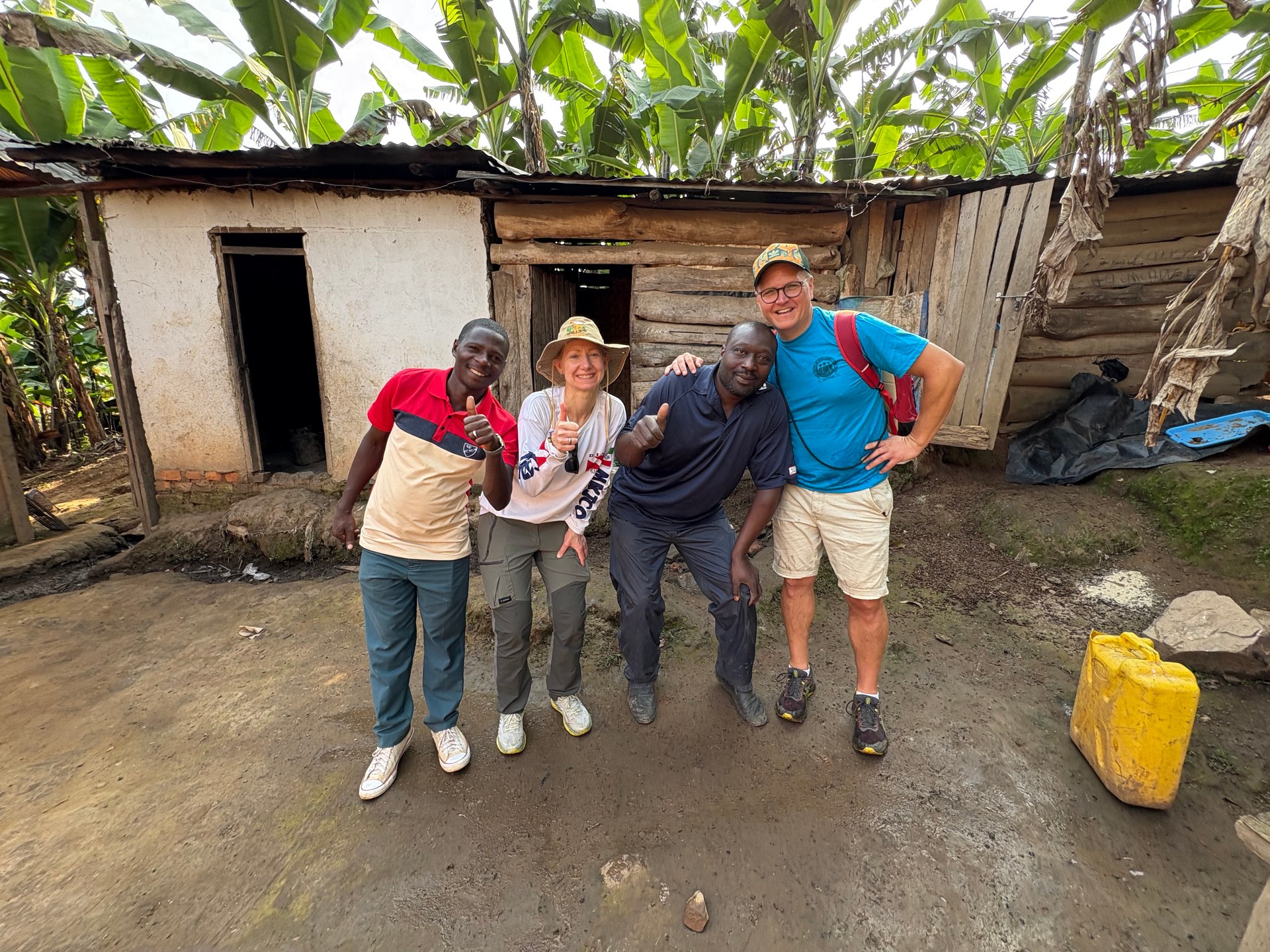
During my visits to Buhoma in 2026, I spent time with a local poultry farmer who supplies chickens to the nearby orphanage — both for eggs and for meat. The farm is small and meticulously run. The farmer knew each bird individually, handled the chicks with care, and explained the economics of the operation in straightforward terms. It is exactly the kind of community enterprise that family-oriented lodges in the area actively support through their procurement. When a lodge advertises locally sourced food, this is what that actually looks like.
Family Lodges in Bwindi National Park: What the Options Actually Look Like
The accommodation market around Bwindi spans a wide range, from USD 4 camping sites to USD 500-plus full-board cottages. For families, the relevant variables are: whether the property can accommodate multiple guests per unit, whether there are activities for non-trekking family members, and whether the general environment is safe and manageable for children.
Upper Range: Buhoma Lodge
Buhoma Lodge, operated by Uganda Exclusive Camps, is the benchmark upper-range property in the Buhoma sector. Rates start at USD 500 per cottage including full board, with Wi-Fi available. The eight cottages are built from local materials, each with a private veranda and large windows facing the forest canopy. Morning tea or coffee is brought to the cottage, and the elevated lounge and restaurant area has a working fireplace for cooler evenings. All meals are prepared from regionally sourced ingredients.
For families, the cottage format is practical — it provides more privacy and space than hotel-style rooms. The full-board arrangement removes the logistical challenge of sourcing meals independently, which matters more in a remote location. The forest views from the cottages mean that even non-trekking days feel immersive. The lodge sits directly adjacent to the park, so forest sounds and bird calls are constants throughout the day and night.
Mid-Range and Community Options
The Buhoma Community Rest Camp sits directly at the park entrance and offers a practical combination of facilities: safari tents on wooden platforms, basic rooms, cottages, and a campsite from USD 15. There is a restaurant on site serving generous portions at reasonable prices. This is a community-run facility, which means the revenue flows directly to the local population rather than an external operator. For families who want a genuine connection to the Buhoma community, this is a more meaningful choice than its modest price point might suggest.
In the Nkuringo sector, Bwindi Backpackers Lodge offers camping from USD 10 per person. The Albertine Gorilla Campsite nearby provides basic facilities at similar rates, positioned close to the gorilla tracking departure point. These options suit families with teenagers who are comfortable with simple conditions and want a more expedition-like feel.
In Ruhija, the Ruhija Community Rest Camp, Gorilla Friends Resort and Campsite (from USD 5), and Trekkers Tavern (which also accepts campers on request) provide the main options. The community-run facilities across all sectors tend to share a similar character: basic but functional, locally staffed, and positioned close enough to the park to make early morning gorilla trekking starts manageable.
Understanding the Accommodation Data
Placing these lodges in context requires understanding how Uganda's accommodation sector is formally tracked. According to the Statistical Abstract 2014, published by the Uganda Bureau of Statistics, the national survey of accommodation facilities covers 20 districts distributed across the country, including Kampala. The last comprehensive census of accommodation facilities was conducted in 2011, with the subsequent update scheduled for the 2014 housing census (source: Statistical Abstract 2014). This means that the official data on lodge capacity and occupancy rates in the Bwindi area is more than a decade old, and the actual market — particularly at the upper end — has grown and changed considerably since then.
What the Statistical Abstract 2014 data does confirm is that lodges consistently recorded the highest occupancy rates among accommodation types in Uganda's tourism sector, outperforming campsites and guest houses. Demand for lodge-style accommodation near the major wildlife parks, including Bwindi, was already outstripping supply at the time of that survey. The decade since has seen significant investment at the upper end of the market, while budget and mid-range options have remained relatively limited.
Mountain Gorillas: Population, Permits, and the Revenue System
The mountain gorilla (Gorilla beringei beringei) is one of the world's most critically studied large mammals. The Ugandan population stands at approximately 459 individuals based on census data covering the period 2018–2020. This population is shared primarily between Bwindi Impenetrable National Park and the Virunga massif, which straddles the borders of Uganda, Rwanda, and the Democratic Republic of Congo. Bwindi is the only location in the world where mountain gorillas are found outside the Virunga volcanic range, and it holds a distinct subpopulation sometimes referred to as the Bwindi gorillas.
For families, the permit system matters practically. A gorilla trekking permit for foreign non-resident visitors costs USD 800 per person. Children aged 15 and above are subject to the same permit requirement as adults. For a family of four in which two teenagers qualify for trekking, the permit cost alone is USD 1,600 — before accommodation, transport, or any other expenses. This is not a trip that rewards impulse booking or vague planning.
The permit fee is collected and managed through Uganda Wildlife Authority (UWA), with Uganda Revenue Authority (URA) — the national tax collection body — involved in the broader framework of government revenues generated by wildlife tourism. The gorilla permit system is a direct part of Uganda's conservation financing model: permit revenues fund park management, ranger salaries, community development programmes, and ongoing habituation of new gorilla groups. When a family buys four permits, a meaningful portion of that expenditure feeds back into the conservation infrastructure that keeps these animals alive and accessible.
It is worth noting for planning purposes that gorillas can be visited year-round, including during school holidays and public holidays. There is no closed season. Weather affects the difficulty of the trek — the dry seasons (June to August and December to February) generally produce firmer trails and clearer views — but the gorillas themselves are present and habituated regardless of the month. My June 2026 visit fell at the beginning of the dry season, and the forest was accessible without the deep mud that the long rains of April and May produce.
[QUOTE: local guide on first impressions of families arriving at the Buhoma sector headquarters]The one-hour time limit with the gorillas is a strict conservation measure, not a logistical convenience. Habituated gorilla groups are exposed to human visitors every day, and the cumulative stress of extended contact — even with calm, compliant visitors — would eventually alter their social behaviour. The limit exists to preserve the habituation without deepening it to dependency. For families, this means the experience is intense rather than leisurely: one hour in the presence of animals that share nearly all of your DNA, watching silverbacks move through vegetation, mothers carry infants, and juveniles play.
Community Life in Buhoma: What Families Find Beyond the Forest
One of the less-discussed aspects of a stay near Bwindi — and one of the most instructive for families — is the community life immediately outside the park boundary. Buhoma is a small settlement, but it is not isolated. The main road runs through it, and the community is deeply engaged with the park's tourism economy through crafts, guiding, farming, and hospitality.
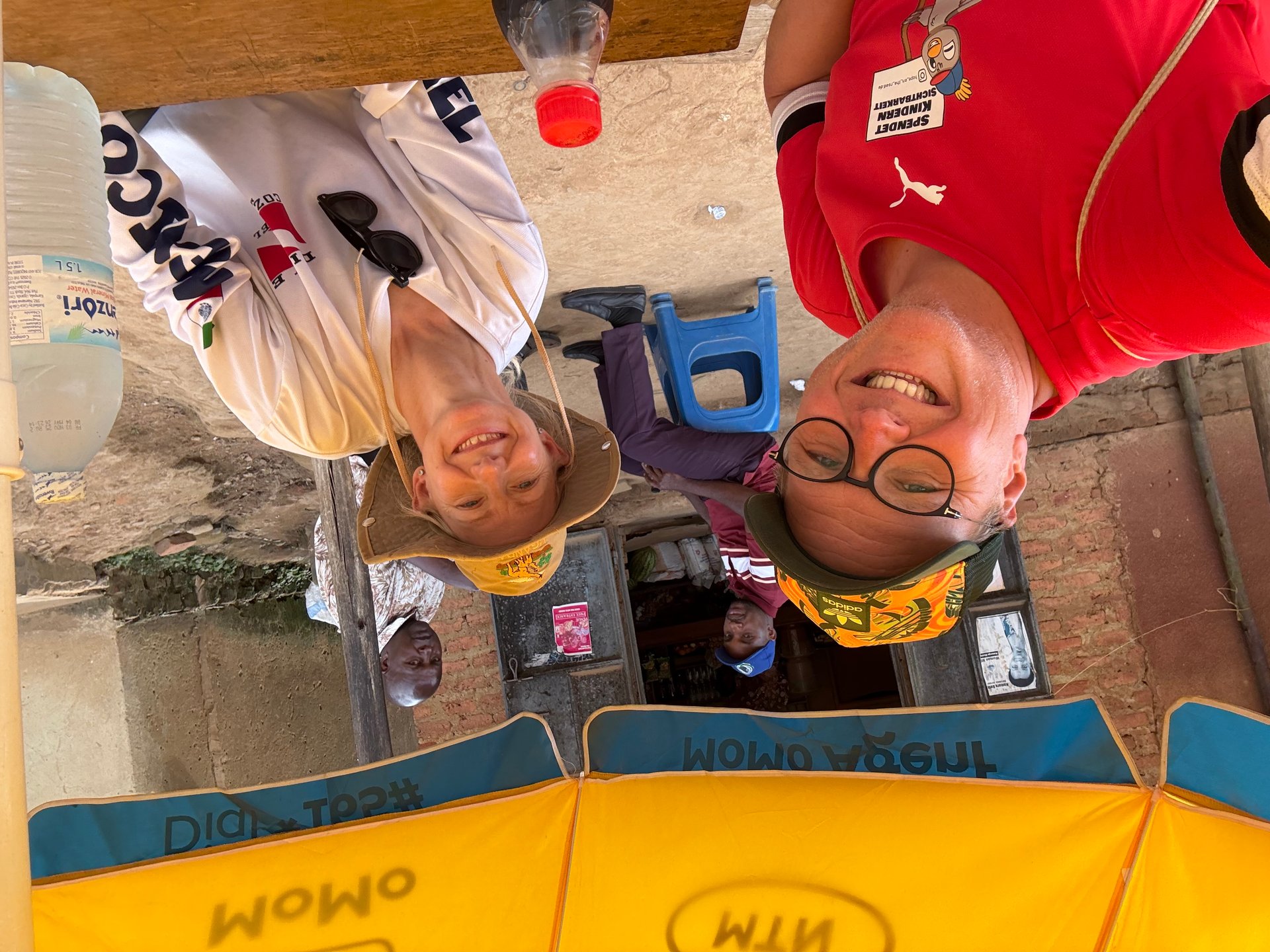
On one afternoon during the June 2026 visit, we sat on a simple bench outside a small shop directly on Buhoma's main road, under a makeshift parasol, and drank water in the shade. It was not a planned activity. It was a pause in the day. A few minutes sitting at that roadside tells you more about the actual texture of life in this community than any guided tour: the pace of people passing, the sounds from nearby compounds, the school children in the late afternoon. GPS coordinates confirm this spot at -0.9673°N, 29.6145°E — roughly five minutes' walk from the park gate.
For families travelling with children under 15 who cannot trek, this community layer is where the trip's value is largely found. Several lodges in the Buhoma area organise community walks that visit local farms, schools, and craft workshops. These are not staged performances for tourists — they are functional parts of the local economy that allow visitors in. The poultry farm I visited supplies the orphanage next door. The orphanage is the reason three children appeared at the gate that morning in June, looking for food.
Families who stay for at least three nights in the area — rather than arriving the night before their trek and leaving the morning after — tend to report a qualitatively different experience. The park and its gorillas are remarkable, but they are thirty minutes of your day. The remaining hours, and the children who may be with you, are shaped by everything else around the forest: the lodges, the staff, the farmers, the road, the bench, the water.
Lodges that genuinely support community employment and local procurement are not just performing a sustainable tourism credential. They are materially connected to the same network of farms, schools, and families that give the Bwindi experience its depth. When choosing family lodges in Bwindi National Park, the question of community connection is as practical as the question of room configuration.
Practical Planning: What Families Need to Prepare
Permits and age verification. Bring each child's passport to the park headquarters. Rangers check ages against documents, and the minimum age of 15 for gorilla trekking is not subject to discretion. Teenagers who qualify should carry identification throughout the trek.
Health and vaccination requirements. Visitors with any respiratory symptoms — including mild colds — are refused permits on the day of the trek. This applies to all family members who plan to trek. Families should allow buffer days in their itinerary to account for a potential refusal and a rescheduled attempt. Vaccination against yellow fever is required for entry into Uganda, and the standard travel health recommendations for sub-Saharan Africa apply.
Equipment for the trek. Each trekking family member needs sturdy, high-ankle boots with thick socks — this is the recommended way to prevent large forest ants from making their way up the leg inside loose trousers. Rain gear is essential for all sectors regardless of season; pack a waterproof cover for camera equipment separately. A light fleece or jacket is appropriate for the cooler morning start times. The trek departs early — typically around 7:00 or 8:00 am — so cold at the start of the day is normal even in the dry season.
Getting to Bwindi. The park is roughly 8 to 9 hours from Kampala by road, depending on which sector you are heading to. The road surface improves regularly but is still variable. Many families choose to break the journey with a night in Fort Portal or Kabale. Domestic flights to Kihihi (for Buhoma) or Kisoro (for Nkuringo and Rushaga) significantly reduce travel time and are worth the cost for families with young children.
What younger children can do. For children under 15, the Buhoma Community Rest Camp and similar mid-range properties typically offer community walks, birdwatching with local guides, and visits to nearby cultural sites. The forest itself is accessible on short nature walks that do not approach the gorilla groups. The Batwa trail, which introduces visitors to the history and culture of the Batwa people — the forest's original inhabitants — is appropriate for older children and is offered from several lodges in the Buhoma area.
Budget planning. A realistic budget for a family of four spending three nights at a mid-range property in Buhoma, with two adults and two teenagers trekking once, includes: permits (4 x USD 800 = USD 3,200), accommodation at approximately USD 150–250 per night for a family unit (USD 450–750 for three nights), meals if not included (approximately USD 20–40 per person per day), transport (variable), and guide fees. The permit cost is the dominant variable. Families should book permits as far in advance as possible through Uganda Wildlife Authority — availability in peak months (July and August) can be very limited.
Statistical Abstract 2014: Uganda's Accommodation Survey and What It Tells Families
The Statistical Abstract 2014, published by Uganda Bureau of Statistics, is the primary official source for national accommodation data. Its methodology covers 20 districts distributed across Uganda, including the major urban centre of Kampala. The survey documents lodge capacity, occupancy rates, tourism arrivals, wildlife permit sales, and related metrics across a snapshot of the national market (source: Statistical Abstract 2014).
The significance for families planning a Bwindi trip is not in the raw numbers — which are now over a decade old — but in the structural patterns they reveal. Lodges in Uganda's national parks have consistently operated at higher occupancy rates than other accommodation types. The survey confirmed strong demand even before the post-2015 growth in high-end safari tourism in Uganda. The implication is that family lodges in Bwindi National Park at all price points need to be booked well in advance, particularly for families needing multiple interconnected rooms or large cottages.
It is also relevant that the last comprehensive accommodation census before the Statistical Abstract 2014 was conducted in 2011, with the next update planned for the 2014 housing census (source: Statistical Abstract 2014). This gap in formal data collection reflects a broader pattern in Ugandan tourism statistics: the official numbers tend to lag the market reality, particularly in remote park areas where new small lodges open without always registering in national surveys. Families researching accommodation should treat published capacity figures as floor estimates rather than ceilings.
What the permit sales data in official documents does confirm is the steady growth of gorilla trekking as Uganda's primary high-value tourism product. Gorilla permit revenues form a significant portion of Uganda Revenue Authority's tourism-related collections and flow directly into Uganda Wildlife Authority's park management budgets. The mountain gorilla population of 459 individuals in Uganda (2018–2020 census data) supports this entire economic system — and its health is directly linked to the quality of management that permit revenues fund.
Frequently Asked Questions
Can children under 15 visit Bwindi Impenetrable National Park? +
Yes, children of any age can visit the park and the surrounding community. However, gorilla trekking specifically requires a minimum age of 15. Children under 15 can participate in community walks, birdwatching, nature trails, and cultural experiences such as the Batwa heritage trail. Families with younger children should plan their itinerary around these activities and treat the gorilla trek as an option for qualifying family members.
Which sector of Bwindi is most suitable for families? +
Buhoma is the most developed and accessible sector and is generally the best choice for first-time family visitors. It has the widest range of accommodation at different price points, the most established community tourism activities, and the most straightforward road access from Kampala. Rushaga is worth considering for budget-focused families, with camping from USD 4 per person. Nkuringo and Ruhija suit families seeking a more remote experience but have fewer infrastructure options for families with young children.
What is the best time of year for a family trip to Bwindi? +
Gorillas can be visited year-round. The dry seasons — June to August and December to February — offer firmer trails and are generally more comfortable for families with children. The long rains (March to May) produce muddy, slippery trekking conditions. June, as observed during the 2026 visit, marks the transition into the dry season and typically offers good trail conditions alongside lush green scenery. School holiday timing in July and August aligns conveniently with the peak dry season, but permits sell out faster in these months — book well in advance.
How far in advance should families book gorilla permits and lodges? +
For peak months (July, August, and the Christmas period), permits and upper-range lodges should be booked at least six months in advance. Gorilla permits are issued by Uganda Wildlife Authority and can be booked online or through a registered tour operator. Popular lodges in Buhoma — particularly the full-board cottage properties — can sell out equally far in advance. For shoulder season travel (June, September–November), three to four months' lead time is generally sufficient, though earlier is always safer for families needing multiple rooms or interconnected accommodation.
What health precautions should families take before visiting Bwindi? +
Yellow fever vaccination is a legal requirement for entry into Uganda and must be evidenced with a vaccination certificate. Anti-malarial medication is strongly recommended for all family members, including children, as Bwindi's altitude reduces but does not eliminate the malaria risk. Any family member with symptoms of a respiratory illness — including a mild cold — will be refused permission to trek on the day. Build buffer days into your itinerary to allow for a possible rescheduled trek. Bring sufficient medication for the full trip duration, as pharmacy access near the park is limited.