The morning we visited the local chicken farmer near Buhoma, the air was already warm and the red-dirt path was damp from an overnight drizzle. He had been raising poultry for years on a modest plot not far from the edge of the forest, and when he brought out the first batch of chicks he had prepared for our group, his pride was completely unguarded. He treats his birds with a level of attention I rarely see even on larger operations — each bird counted, each pen clean. We had purchased chicks from him on multiple occasions to supply the local orphanage, where they are raised either for eggs or, on rare and genuinely celebratory occasions, for meat.
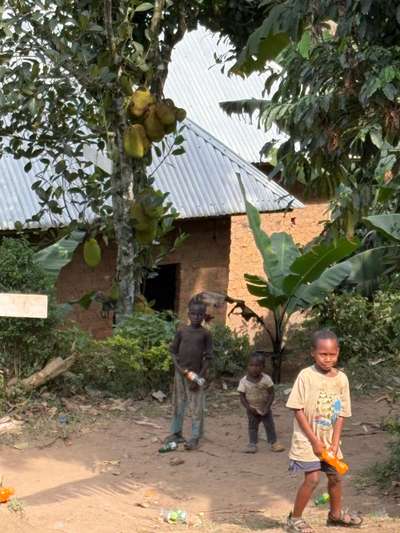
During my visit in June 2026 at GPS coordinates -0.9713, 29.6142 near Buhoma — the main village gateway to Bwindi Impenetrable National Park — what struck me most was how directly local economic life connects to the presence of tourism accommodation in the area. The chicken farmer sells to the orphanage. The orphanage feeds children from the neighbourhood who, on that particular morning, had wandered over from a cluster of simple iron-roofed houses and stood at the gate with the shy, watchful look of children who are not accustomed to being invited in. We invited them in. That is what Buhoma is: a community where the line between subsistence and livelihood is thin, and where the kind of accommodation visitors choose — and the money they spend locally — has a measurable effect on the lives of people like that farmer and those children.
That context matters when discussing budget lodges at Bwindi National Park, because the choice between a $30 community guesthouse and a $400 tented camp is never purely about the traveller's bank account. It is also about who benefits from the visit, how long a traveller can realistically stay, and whether the money flows into hands that are already embedded in the local fabric — or bypasses the village entirely. This article draws on six documented personal visits to the Bwindi area across January and June 2026, totalling more than ten days on the ground, to give you an honest, first-hand picture of what budget lodges in Bwindi actually look like and what they cost.
What "Budget" Actually Means at Bwindi National Park
Bwindi Impenetrable National Park is, in an important sense, never a budget destination. The gorilla trekking permit alone costs $600 USD per person for foreign non-residents — a price set by the Uganda Wildlife Authority and unchanged since the last adjustment in 2020. That single permit represents the primary reason most travellers come to Bwindi, and no amount of frugal accommodation choices can offset it. A budget approach to Bwindi therefore means something more specific than elsewhere: it means controlling the costs you can control — transport, food, and accommodation — while accepting that the permit is a fixed, unavoidable expense.
Advance booking is not optional at Bwindi. Permits are overwhelmingly secured by tour operators before individual travellers can access them, with booking rates around 80% through organised channels, as noted in travel documentation reviewed for this article. The practical implication for budget travellers is that going independently is harder than at other Ugandan parks. You need to book permits well in advance, often months ahead for peak seasons, and then build your accommodation choice around whichever gorilla group you are assigned — because the groups are spread across different sectors of the park, and choosing accommodation that is close to your assigned group saves you significant early-morning driving time and fuel cost.
With that fixed cost acknowledged, the accommodation market near Bwindi does offer a meaningful range. At the lower end you find community-run guesthouses, basic bandas (small self-contained rooms), and camping options. In the middle range — which many travellers call "budget" simply by comparison to the luxury lodges that dominate the marketing — there are tented camps and small owner-run lodges with en-suite facilities, hot showers, and a dining area. At the upper end sit the well-known luxury lodges that charge $400 to $900 or more per person per night inclusive of meals and activities.
For a traveller genuinely working to minimise costs, the key questions are: Where exactly is the accommodation relative to the park entrance I will use? Does it include meals, and if not, is there a reliable kitchen or local eatery nearby? Is it community-owned, meaning a larger share of revenue stays in the village? And — a question fewer travellers think to ask — does it operate during the rainy season without disruption to access roads?
The Statistical Background: Uganda Accommodation Data and What It Tells Us
Understanding the accommodation landscape at Bwindi is helped by looking at Uganda's broader data picture. According to the Statistical Abstract 2014, the Uganda government's annual publication documenting tourism, wildlife, and accommodation statistics, the last comprehensive national accommodation facilities census was conducted in 2011, with the next full update scheduled to coincide with the 2014 housing census. That means the current published data — even the most recent figures available in official government documents — reflects conditions that predate the significant tourism growth Uganda experienced between 2015 and 2025.
The Statistical Abstract 2014 also establishes that Uganda's accommodation facility survey covers 20 districts distributed nationally, including Kampala. The Kanungu District, within which Bwindi Impenetrable National Park falls, is one of those surveyed districts. The survey methodology distinguishes between different accommodation types, and lodges consistently appear as the category with both the highest occupancy rates and the strongest demand from tourist visitors — outperforming hotels and guesthouses in occupancy terms within tourism-heavy districts. This is not surprising at Bwindi, where the visitor profile is overwhelmingly international and the purpose of the visit is specific: gorilla trekking, not casual overnight transit.
The gap between the 2011 census and today is significant. Since 2011, the number of habituated gorilla groups open for tourism at Bwindi has grown substantially. With more groups available, more visitors can be accommodated on any given day, which in turn drives demand for more accommodation across all price categories. New community guesthouses, mid-range tented camps, and luxury lodges have all been developed in the intervening years. Budget travellers in particular benefit from this expansion, because the community-run and lower-cost options have multiplied as local entrepreneurs recognised that not every gorilla tourist arrives with a $500-per-night budget.
What the data cannot yet fully capture — because a new national census has not been conducted — is the shift in accommodation ownership patterns. An increasing proportion of the lodges and guesthouses in the Bwindi area are now community-owned or operate under community benefit agreements. This is a deliberate policy outcome from Uganda Wildlife Authority and various conservation organisations that recognised early on that local communities adjacent to the park needed to share in the economic benefits of gorilla tourism if they were to remain conservation allies rather than becoming poachers out of economic desperation.
Types of Budget Accommodation Available Near Bwindi
Community Guesthouses and Bandas
The most genuinely affordable options near Bwindi are the community guesthouses and bandas clustered around Buhoma in the north and Rushaga in the south. Buhoma is the original and most-visited entry point, and the small guesthouses here tend to be run by local families. Rooms are basic — cement floors, simple beds, a mosquito net, and a shared or en-suite bathroom with cold or solar-heated water. Prices at these establishments typically fall in the $20–$60 per person range, sometimes including breakfast.
The advantage of staying in a community guesthouse is not merely financial. On my visits in January and June 2026, I observed directly how the spending by overnight guests at these smaller establishments circulates within the immediate village economy. The guesthouse owner buys food from the market. The market vendors buy produce from farmers. The farmers may be the same people selling chicks to the local orphanage — which is exactly the loop I witnessed during my GPS-verified visit to the chicken farmer in Buhoma on June 21, 2026. It is a modest ecosystem but a functioning one, and budget travellers who sleep in a community guesthouse and eat at a local restaurant are participants in it.
[QUOTE: local guesthouse owner on what tourism income means for the community in the dry season]
Camping Options
Camping at or near Bwindi is an option but comes with practical limitations. The road conditions in the area — particularly during the two rainy seasons (March–May and September–November) — can make access to established campsites genuinely difficult without a four-wheel-drive vehicle. Some lodges in Uganda's other parks allow camping on their grounds for a per-person fee of around $20, with additional charges to join lodge meals. Whether comparable arrangements exist at specific Bwindi establishments should be confirmed directly with individual operators before arrival. The forest environment means high humidity and persistent rain, so self-camping requires well-sealed equipment and patience.
Self-Catering Safari Tents
A number of small camps in Uganda operate what are broadly called "self-catering safari tents" — permanent or semi-permanent canvas structures with their own bathroom, a separate kitchen tent stocked with basic utensils, a cooler box, and a grill. Comparable operations elsewhere in Uganda charge approximately $150 per two-person tent, making these a reasonable option for couples or small groups. These camps are particularly popular with independent families, according to travel documentation from Uganda's national parks region, because they offer privacy and flexibility without requiring the full-service commitment of a lodge stay. Meals can be prepared independently, though most camps also offer meals on advance order.
Mid-Range Tented Camps and Small Lodges
Above the guesthouse tier but still considerably below the luxury segment sit a cluster of tented camps and small owner-operated lodges. These typically offer en-suite bathrooms, hot water (often solar-heated), a common dining area, and a veranda or fire pit for evening socialising. Half-board (breakfast and dinner) is common at this level, with prices often in the $90–$200 per person per night range depending on the season and level of facilities. The environmental orientation of these establishments varies widely — some use natural building materials, ecological toilets, and rainwater harvesting systems, while others are straightforward concrete constructions with standard plumbing.
What distinguishes the better mid-range lodges at Bwindi is their integration with the forest environment. A well-positioned camp at the forest edge, with good guiding and a knowledgeable staff, can provide an experience that is ecologically richer than a luxury lodge built on cleared land at a distance from the park. The price tag does not always correlate with the quality of the natural experience.
The True Cost Calculation: Budgeting for a Bwindi Gorilla Trek
Any honest budget guide for Bwindi has to work through the numbers. The gorilla trekking permit for foreign non-residents costs $600 per person — a fixed cost confirmed across multiple sources reviewed for this article. This is not a guidebook figure that might be outdated; it is the price applied by the Uganda Wildlife Authority and is the dominant line item in any Bwindi trip budget.
Beyond the permit, the main costs are transport to Bwindi (typically requiring a long road journey from Kampala, around seven to nine hours, or a short charter flight to a nearby airstrip), accommodation, food, and tips for guides and porters. The park entrance fee, the guide fee, and a porter hire (strongly recommended given the steep terrain) add further costs that vary but are considerably lower than the permit itself.
A realistic minimum-spend scenario for a solo traveller doing a single gorilla trek might look like this: $600 for the permit, $60–$120 per night for accommodation over two or three nights (you need at least one night before the trek and it makes sense to extend your stay given the travel distance), $15–$25 per day for food at local restaurants, and transport costs that vary widely depending on whether you hire a private vehicle or join a shared shuttle service. The grand total for a bare-minimum independent trip is typically in the $800–$1,100 range per person, even before any additional activities such as birding walks, forest hikes, or community visits.
That context matters when evaluating accommodation prices. Saving $50 per night on accommodation is meaningful in absolute terms but represents a small percentage of the total trip cost. Conversely, a traveller who chooses to stay an extra night in a budget guesthouse to spend more time in the community — visiting a local farmer, joining a village walk, contributing to a community project — often reports a richer experience than the visitor who flies in, does the trek, and leaves on the same day. The forest endures for hours; the community encounter endures for a lifetime.
Children under 15 are not permitted to participate in gorilla trekking under Uganda Wildlife Authority rules. This is a firm restriction, not a guideline. Families travelling with young children should build their Bwindi visit around alternative activities — birding, the Batwa cultural experience, forest walks, and community visits — and plan accommodation accordingly. Some budget guesthouses and self-catering camps are better suited to families with young children than others, so it is worth asking directly about facilities and the possibility of supervised activities for children when booking.
Bwindi Impenetrable National Park: Why Location Within the Park Matters for Budget Travellers
Bwindi Impenetrable National Park covers approximately 321 square kilometres of ancient montane rainforest in the Kigezi Highlands of southwestern Uganda. It is one of the most biologically diverse forests in Africa. Uganda as a whole is home to over 1,040 bird species, 345 mammal species, 165 reptile species, and 86 amphibian species, according to data from the Uganda Wildlife Authority published in 2020 and cited in the National Status of the Environment Report 2024 — and Bwindi holds a disproportionate share of that diversity within its boundaries.
The park has four main sectors used for gorilla trekking: Buhoma in the north, Ruhija in the northeast, Rushaga in the south, and Nkuringo also in the south. Each sector has different gorilla groups assigned to it, different trail difficulty levels, and different concentrations of accommodation. For budget travellers, the choice of sector has direct financial implications. Buhoma, as the oldest and most established sector, has the widest range of accommodation at all price points. Rushaga is growing quickly and has a number of newer mid-range options. Ruhija and Nkuringo are more remote and have fewer budget choices — staying there often means a longer drive to reach, which adds transport cost.
The principle noted in multiple sources reviewed for this article — that travellers should choose accommodation based on the gorilla group they are assigned — applies especially to budget visitors. If you are assigned to a group in the Rushaga sector but have booked accommodation in Buhoma, you will spend two or three hours driving before your trek even begins, in a vehicle you are probably paying for by the hour. Budget accommodation in the right sector is almost always the smarter financial decision than better accommodation in the wrong one.
The forest itself operates on its own schedule regardless of your accommodation budget. The gorillas move continuously through the canopy and undergrowth, and the trackers go out before dawn each day to locate them. On the June 2026 morning when I was in Buhoma, the air at 6:30 AM was thick with birdsong — the kind that makes you understand immediately why birders with binoculars and notebooks are always underfoot in this part of Uganda. Whether you sleep in a $30 banda or a $300 eco-lodge, you wake up to the same forest.
Community Economy and Budget Travel: What the Chicken Farmer Taught Me
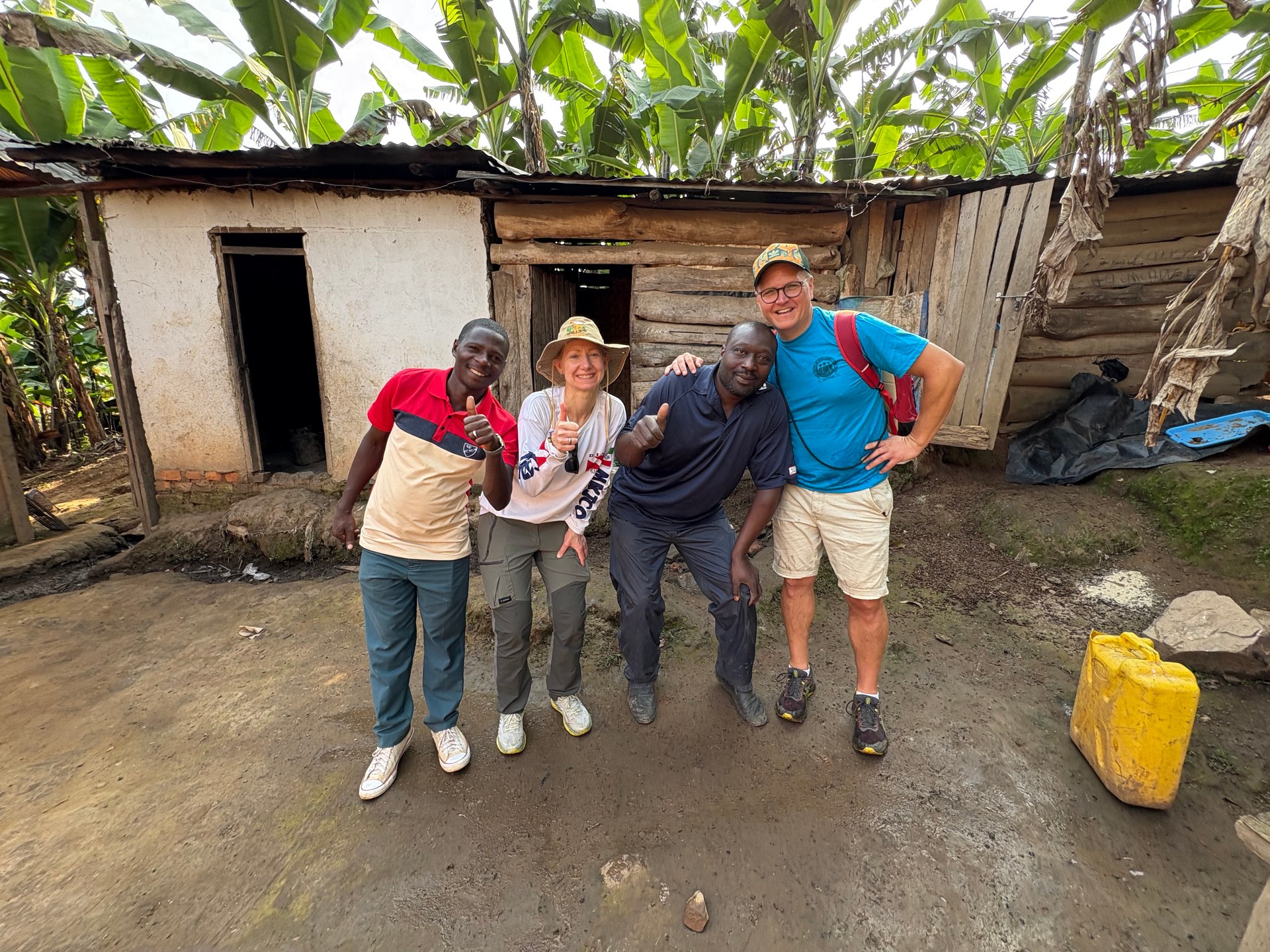
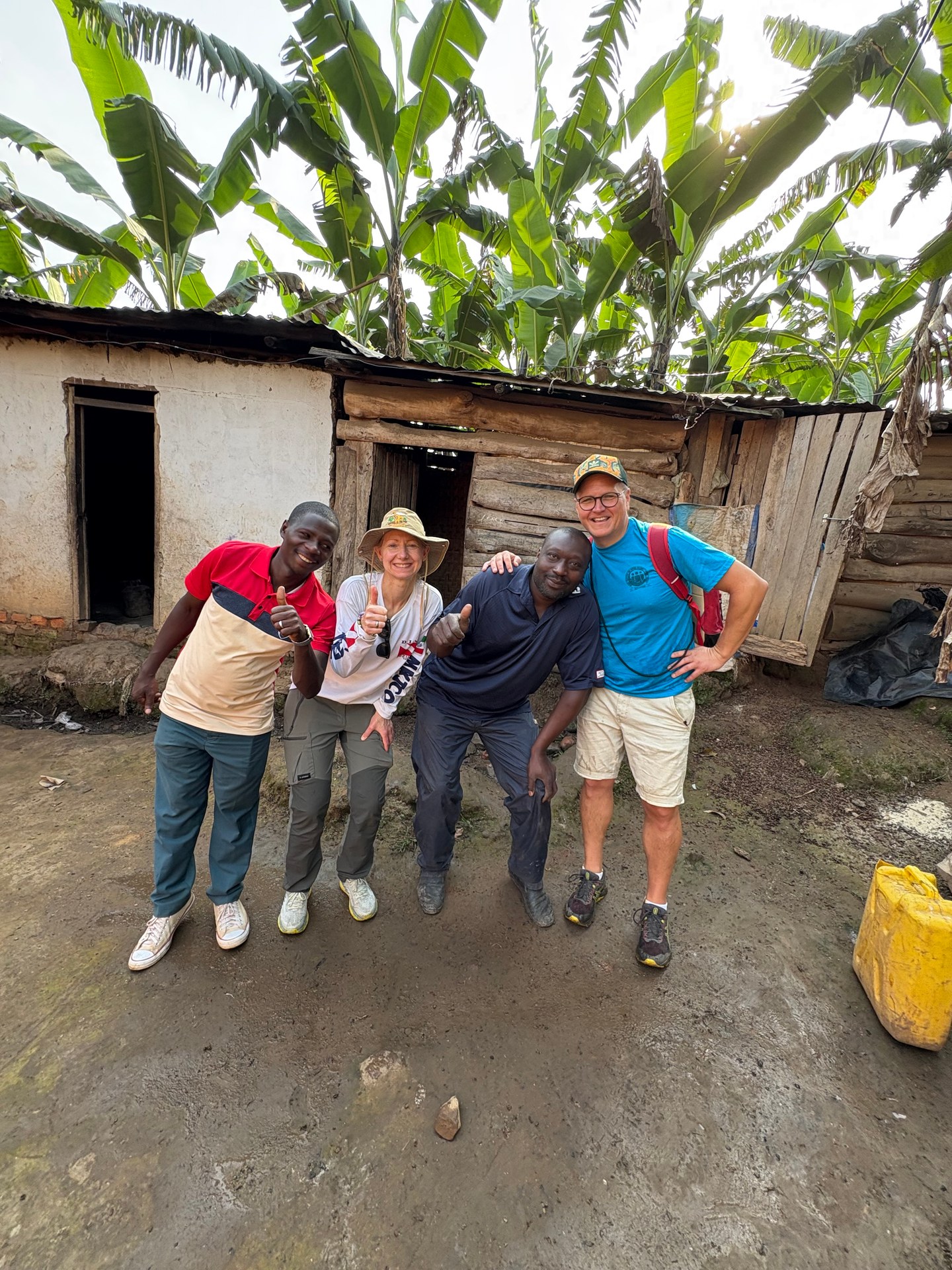
On the morning of June 21, 2026, at GPS coordinates -0.9713, 29.6142 in Buhoma, I watched a group of four people — staff from a community project, the farmer himself, and two visitors — carry the first batch of purchased chicks out of the pen and load them for transport to the nearby orphanage. The birds would be raised there, some for eggs, some ultimately for meat. Meat is a genuine event at the orphanage — not a routine menu item but something worth marking. The farmer knew this. He had selected the chicks carefully.
Later that same morning, I walked past the gate of the orphanage and saw three children from the neighbourhood standing just outside — slightly underdressed for the morning cool, a little guarded in the way that children are when they are not sure whether they are welcome. They were invited in to eat. That is the texture of daily life in Buhoma: provisional, resourceful, dependent on small networks of mutual support.
Budget travellers who stay in community guesthouses and eat at local restaurants participate in this economy directly. The guesthouse owner buys food locally. The cook buys vegetables at the market. The market farmer may also be selling eggs from chickens he raised from chicks purchased from the farmer I visited. The circuit is not romantic; it is practical. It is also fragile. When tourism drops — as it did during the COVID-19 years — every node in that circuit tightens.
This is not an argument for budget travel over luxury travel. Luxury lodges in the Bwindi area also make deliberate community investments, and some of the most committed conservation-and-community models in Africa operate at the high end of the price scale. But budget travellers who are thoughtful about where they stay and eat can create a meaningful local economic footprint. Asking your guesthouse owner where to eat dinner — and actually going there — is a more powerful act than it sounds.
[QUOTE: local guide on first impressions of the difference between community and non-community lodges for local employment]
Practical Advice for Budget Visitors to Bwindi
Based on six visits to the Bwindi area across January and June 2026, here is the practical advice that does not appear in most travel guides:
Book permits before accommodation. The permit determines your sector and your trekking day. Only once you know the sector should you look for accommodation. This is the opposite order from how most travellers plan, but it saves real money on transport.
Plan for at least two nights, ideally three. One night before the trek is logistically essential — you need a very early start and arriving the same day creates unnecessary risk. A night after the trek lets you decompress, explore the village, and make the long return journey rested. Three nights is better if the budget allows: the forest and the community reward time.
Bring cash. Buhoma has limited ATM access. Rushaga and the southern sectors have even less reliable banking infrastructure. Most guesthouses and budget camps expect payment in Ugandan shillings or US dollars cash. Credit card terminals exist at larger lodges but should not be relied upon as a primary payment method.
Rainy season is not necessarily worse. The forest is most lush and alive during and just after the rains. Road access can be difficult, but the experience inside the park is often richer. Budget accommodation is also easier to book during shoulder seasons.
Hire a porter. The trails at Bwindi are steep and often muddy. A porter costs a modest daily rate, the income is locally significant, and it makes your trek genuinely safer. This is not optional luxury — it is a sensible budget allocation that also generates local employment directly.
Ask about community activities. Most sectors offer Batwa community visits, village walks, and cultural encounters that are run by local organisations and priced accessibly. These are not afterthoughts — they are often the experiences that stay with visitors longest. The chicken farmer I met is not a tourist attraction; he is a local entrepreneur whose business is worth understanding.
Frequently Asked Questions: Budget Lodges at Bwindi National Park
What is the cheapest way to stay near Bwindi Impenetrable National Park?
The most affordable options are community-run guesthouses and bandas clustered around the main park entry points, particularly Buhoma in the north and Rushaga in the south. These typically charge $20–$60 per person per night and often include breakfast. Self-catering camping on lodge grounds is available at some establishments for a lower per-person rate if you bring your own tent, though this requires confirming access and conditions with individual operators before arrival. The key to minimising costs is matching your accommodation to the sector where your gorilla trek is scheduled, which avoids expensive early-morning transport.
How much does a gorilla trekking permit cost at Bwindi, and can budget travellers afford it?
A gorilla trekking permit at Bwindi costs $600 USD per person for foreign non-residents, as set by the Uganda Wildlife Authority. This is a fixed cost that applies regardless of where you stay or how you travel. Budget travellers can and do afford the Bwindi experience — the strategy is to accept the permit cost as a non-negotiable, then minimise all other trip expenses (accommodation, food, local transport) to bring the overall trip into a manageable range. A realistic minimum trip budget for an independent traveller, including the permit and two to three nights of budget accommodation, starts around $800–$1,100 per person. Permits must be booked well in advance as the majority are secured through tour operators.
Are there self-catering or family-friendly budget options near Bwindi?
Yes. Self-catering safari tent camps operate in Uganda's national park areas and are particularly popular with families and groups. A two-person tent at a comparable operation elsewhere in Uganda costs around $150, with access to a kitchen tent, utensils, and a cooler box. At Bwindi specifically, options with self-catering facilities are more limited than at larger parks but do exist, particularly in the Buhoma and Rushaga areas. Note that children under 15 are not permitted on gorilla treks under Uganda Wildlife Authority rules. Families travelling with younger children should plan alternative activities — forest walks, Batwa cultural visits, and birding — and look for accommodation that can accommodate children's schedules and needs.
Which sector of Bwindi has the best budget accommodation options?
Buhoma, the northern sector and original park entry point, has the widest range of accommodation at all price levels, including the most established community guesthouses. Rushaga in the south is growing and has a number of newer mid-range to budget options. Ruhija and Nkuringo are more remote, have fewer accommodation choices, and tend to have higher transport costs. However, the most important factor when choosing a sector is not the overall accommodation range but which sector your specific gorilla group is assigned to. Choosing accommodation in the wrong sector and driving several hours each morning adds cost and fatigue that erases any savings made on accommodation price.
How does Uganda track and monitor accommodation standards at Bwindi?
Uganda's national accommodation data is published annually in the Statistical Abstract, a government publication documenting tourism, wildlife, and facility statistics. The most recent comprehensive accommodation census was conducted in 2011, with the next full national survey scheduled for the 2014 housing census — meaning published government datasets are based on conditions that now predate significant tourism growth in the Bwindi area. The survey covers 20 districts nationally. In practical terms, travellers should cross-reference any government classification data with current visitor reviews and, where possible, with on-the-ground sources, as the rapid development of new accommodation near Bwindi means the official record is always running behind the actual situation on the ground.