The morning started not at a lodge reception desk but at a small farm on the edge of Buhoma village. We had come to visit a local poultry farmer — a man who raises chicks with a level of care and attention that would put many larger operations to shame. He walked us through his pens one by one, explaining how each batch of chicks was managed, how the feed was mixed, and why he rotated his flocks rather than pushing them to exhaustion. This was not a tourist attraction. It was a working smallholder enterprise, and we were there because the nearby orphanage needed a reliable source of eggs and, occasionally, meat.
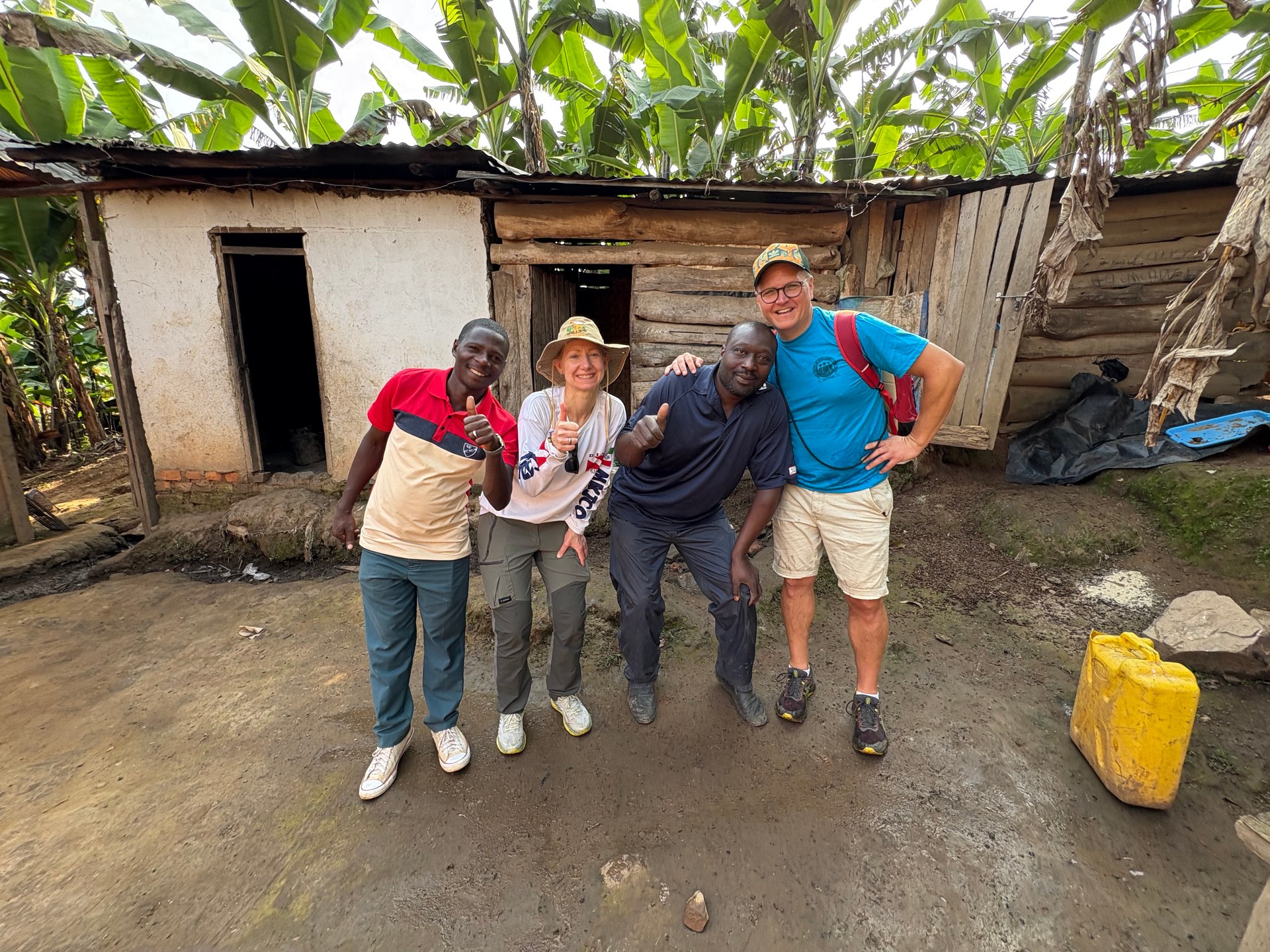
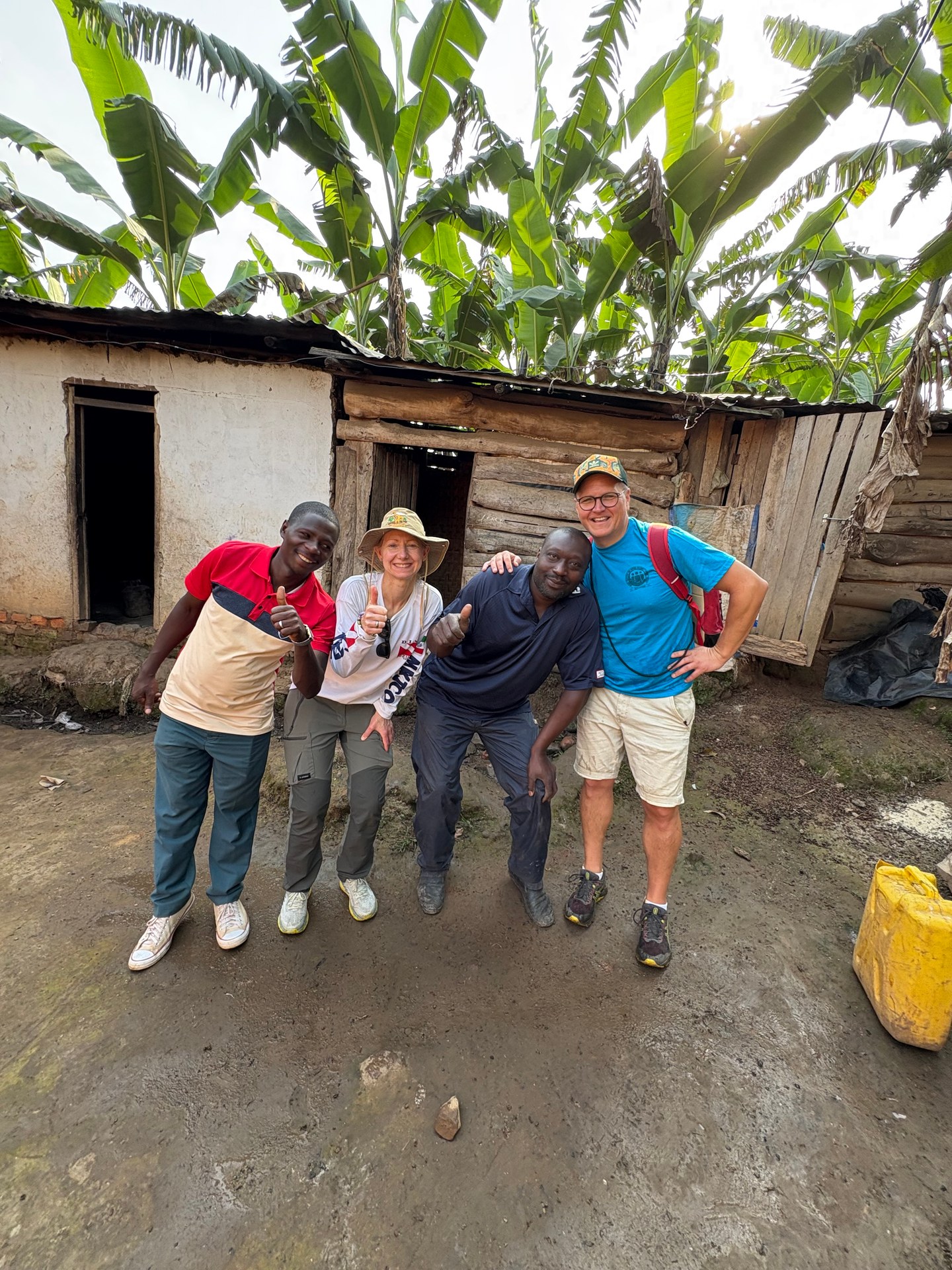
During my visit in June 2026 at GPS coordinates -0.9713°N, 29.6142°E, I photographed the farmer together with members of our group holding the first batch of chicks we purchased for the orphanage. Some of those birds would eventually provide eggs for daily meals. Others, on rare occasions, would be eaten — a genuine celebration when meat appeared on the table at all. It was a practical, dignified arrangement: local enterprise meeting local need, no dependency, no drama.
I mention this scene not as a detour but as a compass bearing. Understanding the lodges near Bwindi National Park means understanding the community that surrounds the park. The lodges that work — the ones worth your money and your trust — are those that have found the same kind of integration: embedded in the local economy, honest about what they offer, and connected to the landscape rather than imposed upon it. That is the standard this comparison uses.
What the Official Data Says About Lodges Near Bwindi
Before comparing individual properties, it helps to understand the structural context that shapes accommodation options in southwestern Uganda. Uganda's Statistical Abstract 2014 — an annual government publication documenting tourism, wildlife, and hospitality statistics — provides the most complete official picture of the accommodation landscape. According to that document, the national accommodation facility survey covers 20 districts distributed across the country, including Kampala. The last comprehensive census of accommodation facilities was conducted in 2011, with the subsequent update scheduled for the 2014 national housing census.
What that data consistently shows is that lodges — as a category — record the highest occupancy rates and the highest demand among tourists of any accommodation type in Uganda. This is not surprising. Uganda's gorilla trekking industry runs on a permit system with fixed daily limits, which means visitors must plan months in advance. Early planners book lodges. Walk-ins and last-minute travellers end up in guesthouses or basic campsites. The lodge market at Bwindi benefits directly from this advance booking pressure.
What the official statistics do not capture is the enormous variance in quality, price, and positioning within the "lodge" category. A property calling itself a lodge in Rushaga might charge USD 80 per person per night or USD 800. Both entries appear in the same statistical column. The data tells you the category dominates; it does not tell you which property inside that category is worth the investment. That requires on-the-ground experience — and that is what this comparison provides.
Bwindi Impenetrable National Park: Why Location Determines Everything
Bwindi Impenetrable National Park sits in the Kigezi Highlands of southwestern Uganda, directly on the border with the Democratic Republic of Congo. It covers roughly 331 square kilometres of montane and lowland forest at elevations ranging from about 1,160 to 2,607 metres above sea level. The park is divided into four main sectors — Buhoma in the north, Ruhija in the east, Rushaga and Nkuringo in the south — and each sector has its own gorilla families, its own trekking difficulty profile, and its own cluster of accommodation.
This geography creates a fundamental principle for choosing a lodge: the permit dictates the sector, and the sector should dictate the lodge. A traveller with a Rushaga permit who books accommodation in Buhoma faces a two-hour drive over unpaved highland roads every morning before the trek even starts. This is not a minor inconvenience — mountain gorilla treks begin at 08:00 sharp, rangers do not wait, and the roads between sectors are not forgiving in wet weather. The Uganda travel guide (Reiseführer Uganda 2020) is explicit on this point: accommodation should be selected according to the gorilla group on the permit, specifically to avoid long drive times in the morning and after the trek.
The gorillas themselves can be visited year-round, including public holidays and school break periods. However, the forest interior changes substantially between seasons. When I visited in January 2026 during a dry-season window, the undergrowth was comparatively open. My June 2026 visit to Buhoma — documented by three GPS-tagged photographs taken at 06:31 to 06:36 on 21 June 2026 — fell in the long rains period. The paths were slick and the canopy dense, which affected how long treks ran and how exhausted guests appeared on their return. A good lodge accounts for this: adequate drying facilities, hot water on demand, and a warm meal waiting.
Understanding the four sectors also clarifies why no single lodge can honestly claim to be the best option for all travellers. Buhoma is the most developed sector and the most accessible from Kampala via the Fort Portal route. It carries more infrastructure, more lodge choice, and consequently more foot traffic. Rushaga in the south offers access to the largest number of habituated gorilla families in the park, making it the preferred sector for travellers who want multiple trek opportunities or who are booking a gorilla habituation experience rather than a standard one-hour visit. Nkuringo sits on a dramatic ridge with views toward the Virunga volcanoes of the DRC, but its altitude and road conditions make it the most physically demanding sector to access. Ruhija is the quietest and least visited, suited to travellers who want solitude over convenience.
Lodge Categories and Price Tiers: What Each Tier Actually Delivers
The accommodation market near Bwindi spans roughly four price tiers. Understanding what each tier genuinely provides — not the marketing version, but the operational reality — helps travellers calibrate expectations before arrival.
Budget (Under USD 100 per person per night)
Budget lodges and guesthouses cluster mainly around Buhoma and Rushaga trading centres. These properties typically offer basic banda or cottage accommodation with private bathrooms, simple meals, and little else. Hot water is intermittent. Wi-Fi, if listed, is unreliable. The surrounding environment is intact — you are still in the highlands of southwestern Uganda, and the views and sounds remain extraordinary regardless of thread count.
The honest trade-off at this tier is time and energy management. Budget properties are rarely designed around the gorilla trekking schedule. Breakfasts can be slow to arrive, packed lunches are an afterthought, and the lack of a lounge or drying room becomes acutely relevant when you return from a four-hour wet-forest trek. For younger, experienced travellers who are fit, flexible on timing, and not relying on the lodge for logistical support, budget options represent genuine value. For families or first-time trekkers who need the property to function as a base of operations, the savings frequently come at a cost in comfort and coordination.
Mid-Range (USD 100–250 per person per night)
The mid-range tier is where Bwindi's accommodation market is most competitive and most diverse. Properties in this bracket typically offer en-suite cottages or bandas with consistent hot water, set meal times, packed lunch preparation, and at least one communal space — a veranda, a lounge, or a fire pit — where guests gather after the trek. Many properties in this tier have invested deliberately in staff training, and the service quality difference from budget tier is immediately noticeable.
Mid-range lodges in Bwindi also tend to be the properties most engaged with community tourism initiatives: village walks, cultural evenings, visits to local enterprises like the poultry farm we visited in Buhoma in June 2026. These are not mandatory add-ons, but properties that offer them tend to have deeper local relationships, which translates into better guides, fresher food, and a more grounded experience overall.
[QUOTE: local guide on first impressions of mid-range lodge community programmes]
Upmarket (USD 250–500 per person per night)
The upmarket tier introduces full-board accommodation, guided forest walks, private vehicles for transfers to the park gate, and a substantially higher staff-to-guest ratio. Properties at this tier have invested in architecture that responds to the landscape: stone, wood, canvas, and local materials that age into the hillside rather than fighting against it. The Virunga Lodge in Buhoma is a frequently cited reference point for this tier — positioned on a ridge with views across the forest to Lake Mutanda and the Virunga volcanoes, the property combines comfort with a genuine conservation programme.
At the upmarket level, the property becomes a meaningful part of the overall travel experience, not merely accommodation between treks. Meals are events. The guides are senior and knowledgeable. The post-trek debrief in the lounge, with coffee and the forest visible through the windows, is itself worth paying for. Travellers who have invested significantly in permits — USD 800 per person for a standard gorilla trek permit for foreign non-residents — are often best served by an upmarket lodge that matches the investment in experience design.
Luxury (USD 500+ per person per night)
At the luxury end, the distinction is less about amenities and more about exclusivity and programme depth. Properties in this tier maintain very low guest capacities — typically between six and twenty guests at any time — which means the park gate, the gorilla families, and the experience itself feel less crowded even when permits are fully sold out. Staff ratios are high, itineraries are fully managed, and the accommodation itself is often architecturally significant: individual villas or raised cottages with private outdoor spaces, stone bathtubs, and unobstructed forest views.
The Uganda travel guide (Reiseführer Uganda 2020) references the Bisate Lodge in Rwanda as a benchmark for this design philosophy — six thatched villas using local materials, integrated into steep forested hillside, combined with reforestation and community programmes. While Bisate sits across the border, the same model has informed the best of Bwindi's luxury tier: lodges that treat conservation and guest experience not as competing priorities but as the same programme. Properties that have achieved this integration at Bwindi include a small number of the sector's most established names — each of which deserves its own detailed review rather than compression into a category.
Bwindi Lodge Comparison: Sector, Price, and Suitability
The table below summarises the key dimensions for comparing lodges near Bwindi National Park. Prices are per person per night on a full-board basis and reflect the 2025–2026 booking season. They exclude gorilla permits, which must be purchased separately and are non-refundable once issued.
| Tier | Price Range (pppn) | Best Sector | Best For | Key Weakness |
|---|---|---|---|---|
| Budget | USD 40–100 | Buhoma, Rushaga | Independent travellers, flexible schedules | Logistical gaps, inconsistent meals |
| Mid-range | USD 100–250 | All sectors | Couples, small groups, community focus | Variable quality within tier |
| Upmarket | USD 250–500 | Buhoma, Nkuringo | First-time trekkers, experience-focused | Price requires advance planning |
| Luxury | USD 500+ | Buhoma, Rushaga | Honeymoons, high-end safari combinations | Very limited availability, long advance booking |
One dimension the table cannot capture is the community integration factor. During the January 2026 visit and the June 2026 visit, the clearest differentiator between comparable properties was not room size or menu quality but whether the property had built genuine working relationships with the surrounding villages. The Buhoma area in particular has a well-developed community tourism infrastructure — local guides, cultural centres, artisan cooperatives, and small enterprises like the poultry farm we photographed on 21 June 2026. Lodges that send guests toward these enterprises, and that source their supplies locally where possible, create a fundamentally different guest experience from those that operate as islands behind their perimeter fences.
Sector-by-Sector Breakdown: Pros, Cons, and Practical Advice
Buhoma — The Most Accessible Sector
Buhoma is the original gorilla trekking entry point and remains the most developed sector for tourism infrastructure. The road from Kabale to Buhoma, while unpaved for much of its length, is the most consistently maintained of the four access routes. Properties here benefit from proximity to the UWA (Uganda Wildlife Authority) park headquarters, which means permits can be confirmed and logistics coordinated on-site with relative ease.
The trade-off in Buhoma is density. Because it was the first sector to develop and remains the most visited, it carries more traffic, more vehicles on the access road, and more competition for trail slots on popular gorilla groups. Travellers seeking a quieter experience or a more intimate community connection may find that the village itself has become partly adapted to tourism in ways that feel less authentic than the southern sectors.
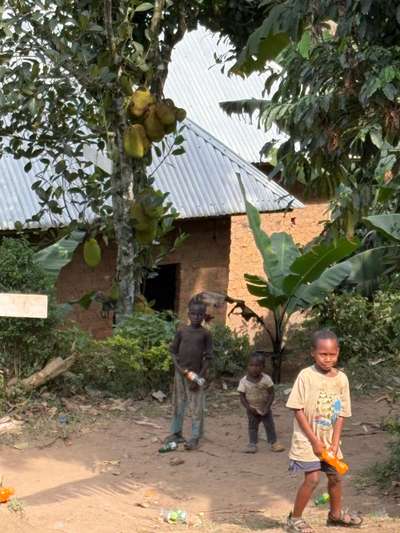
That said, the community around Buhoma has also developed some of the most sophisticated local enterprises. The poultry operation we visited in June 2026 — photographed at GPS -0.9713°N, 29.6142°E — is one example of a local entrepreneur who has built a stable, small business that supplies the orphanage and several lodges with locally raised birds and eggs. The children we encountered near the orphanage at GPS -0.9617°N, 29.6109°E were among the direct beneficiaries of this supply chain, as were the staff of several lodges that source locally. This is the Buhoma community economy in miniature: interlocked, fragile, and entirely dependent on tourism remaining stable.
Rushaga — The Most Family-Accessible Southern Sector
Rushaga in the south has expanded rapidly over the past decade and now offers the widest selection of habituated gorilla families in the park — making it the most likely sector to have permit availability when other sectors are sold out. The accommodation range at Rushaga has grown correspondingly, with properties now covering all price tiers.
The road to Rushaga from Kabale has improved markedly, and the journey time from the town to the sector is now consistently under two hours in dry conditions. In the rainy season, that estimate should be treated as aspirational rather than reliable. Budget an additional 30 to 45 minutes and ensure your lodge has confirmed that the access road is passable before you depart.
Nkuringo — The Most Dramatic Setting
Nkuringo sits on a ridge at high elevation with views that extend across into the DRC. The landscape is genuinely arresting — the Virunga volcanoes visible on clear mornings, the valley below, the forest rising on both sides. Properties here have invested in architecture that makes the most of these views, and the top-tier lodges in Nkuringo are among the most photographed in the entire Bwindi area.
The practical challenge at Nkuringo is the access road. It is steep, narrow, and in poor condition for much of its length. Self-drive is genuinely inadvisable unless you have substantial experience driving high-clearance vehicles on unpaved mountain roads in wet conditions. Most lodges at Nkuringo arrange transfers from Kabale, and this should be factored into the overall cost comparison.
Ruhija — For the Traveller Who Prefers Solitude
Ruhija is the least developed sector and consequently the most difficult to reach. Accommodation options are limited and concentrated in the budget to mid-range tier. There are no luxury lodges in Ruhija at present. What Ruhija offers in exchange is the quietest experience in the park: fewer vehicles, fewer visitors on the trails, and a sense that you are genuinely in a remote highland forest rather than on a well-managed circuit.
Ruhija also offers access to Hamukele, one of the gorilla families in the park that sees comparatively fewer visitors. For experienced trekkers and those returning to Bwindi for a second or third visit, Ruhija represents a deliberate step away from the infrastructure and toward the experience.
Who Should Stay Where: Honest Recommendations
After six documented visits to the Bwindi area — spanning January and June 2026, with previous visits in the same year and in prior seasons — a pattern emerges around who benefits most from which combination of sector and lodge tier.
First-time gorilla trekkers are almost always best served by a mid-range or upmarket lodge in Buhoma or Rushaga. The logistical support these properties provide — early briefings, reliable packed lunches, pre-arranged park gate transport, and experienced staff who understand that first-time trekkers arrive back exhausted and need to be managed carefully — makes a material difference to the overall experience. The permit alone costs USD 800 per person. Saving USD 50 per night on accommodation to stay in a property that cannot support the logistics is a false economy.
Travellers combining Bwindi with other Uganda destinations — Queen Elizabeth National Park, Lake Bunyonyi, the Kibale chimpanzee forest — typically need a property that handles transfers and onward logistics. Mid-range lodges with established operator relationships do this competently. Budget properties rarely do.
Families with children under 15 need to know that gorilla trekking is not available to them for the children — the UWA minimum age is 15. A lodge near Bwindi for a family trip that includes younger children needs to offer alternative programming: community visits, forest walks that do not require gorilla permits, cultural activities. Several mid-range lodges in Buhoma have invested in this and offer structured alternatives that justify the visit even without gorilla tracking. Budget properties almost universally do not.
Repeat visitors who have already completed a standard gorilla trek and are returning for a habituation experience or to visit a second gorilla family are the ideal audience for Ruhija or Nkuringo. They know what the trek demands, they do not need hand-holding, and they will appreciate the quieter, more private environment that these sectors offer.
What Genuine Sustainability Looks Like on the Ground
The word "sustainable" appears in nearly every lodge's marketing material near Bwindi. The practical gap between the word and the reality is substantial. During my visits across January and June 2026, the clearest signal of genuine community integration was not a certification on the wall but whether the lodge's food purchasing, staffing, and programme partnerships were traceable to specific local enterprises and individuals.
The poultry enterprise in Buhoma that we visited on 21 June 2026 is a specific and verifiable example. The farmer runs a small but well-managed operation at GPS -0.9713°N, 29.6142°E. He sells to the orphanage. He has sold to lodges. The revenue stays in Buhoma. When a lodge buys from him rather than importing eggs from Kabale, that decision has a measurable effect on his household income and on the orphanage's food security. That is community benefit. A solar panel on the roof of a property that otherwise imports all its food from Kampala is not.
For travellers who want their lodge spend to reflect values as well as comfort, the questions to ask at the booking stage are practical: Where does the food come from? Who are your local guides and are they employed full-time or on a casual basis? Do you have a documented community fund or partnership? The lodges that answer these questions clearly and specifically are the ones that have done the work. Those that respond with vague language about being "eco-conscious" or "green" have not.
Frequently Asked Questions
What is the cheapest way to stay near Bwindi National Park? +
Budget guesthouses and basic bandas near Buhoma and Rushaga start from around USD 40–60 per person per night. These typically include a simple room with a private bathroom and basic meals. Hot water and Wi-Fi are inconsistent at this price point. The main trade-off is logistical support: budget properties rarely arrange park gate transfers, packed lunches, or post-trek assistance. For travellers with flexible schedules and their own vehicle, this tier represents genuine value. For first-time trekkers relying on the lodge for logistics, it generally does not.
Which sector of Bwindi has the most lodge options? +
Buhoma in the north and Rushaga in the south offer the greatest number and widest range of lodges across all price tiers, from basic guesthouses to upmarket properties. Buhoma is the original gorilla trekking sector and carries the most established tourism infrastructure. Rushaga has grown rapidly in the past decade and now hosts the largest number of habituated gorilla families, which drives demand for accommodation. Nkuringo and Ruhija have fewer options, concentrated in the mid-range and budget tiers respectively, with Nkuringo offering some of the most dramatic settings in the park.
How far in advance should I book a lodge at Bwindi? +
The best lodges near Bwindi fill quickly because gorilla permits are finite and travellers book permits and accommodation together. For peak season travel (June to September and December to February), upmarket and luxury lodges should be booked at least six months in advance. Mid-range properties can often be secured three to four months out. Budget guesthouses have more availability but are best confirmed at least two months ahead to avoid arriving without accommodation in a remote highland area with limited alternatives. Permit availability should be confirmed before lodging is finalised — there is no point holding a lodge booking without the permit that justifies the journey.
Can families with young children stay at Bwindi lodges? +
Yes — families are welcome at most lodges near Bwindi. However, children under 15 are not permitted to participate in gorilla trekking under Uganda Wildlife Authority regulations. Families with younger children should book a lodge that offers alternative programming: guided forest walks that do not require gorilla permits, community visits, cultural activities, and farm visits. Several mid-range and upmarket properties in Buhoma have developed these alternatives specifically for family guests. It is worth asking the lodge directly what is available for children during the days when adults are trekking.
What should I look for when comparing lodges near Bwindi on a specific budget? +
Beyond nightly rate, the most important comparison factors are: (1) proximity to your permitted gorilla sector — a mismatch adds hours of difficult driving to your trek days; (2) meal and transfer logistics — whether the property provides park gate transport, reliable early breakfasts, and packed lunches; (3) community integration — whether the lodge sources locally and employs local guides, which affects both the quality of your experience and the social value of your spend; (4) wet-season preparedness — whether the lodge has drying facilities, consistent hot water, and good drainage, which matters significantly in the long rains (March to May and October to November). Price per night is a starting point, not the end of the comparison.