Gorilla Trekking in Buhoma: Safety Guide
After three hours of walking through Bwindi's rainforest — scrambling over exposed roots, pushing through vegetation, and climbing terrain that never seems to level off — we reached a gorilla family. They were settled and calm. We were standing close enough to hear leaves being pulled from branches. Nobody spoke. After weeks of planning and an $800 permit, the encounter was quiet and ordinary in the best possible way.
I visited Buhoma twice: first in October 2024 for two days, then again in January 2026 for several days. This guide covers what the experience actually involves — from the early morning briefing at park headquarters to the trek itself, the role of rangers, the permit system, and what it is like to use Buhoma as a base. The focus is practical and safety-oriented, because those are the questions most people have before they go.
Buhoma is the northern entrance to Bwindi Impenetrable National Park and serves as park headquarters. It is the oldest and most established of the four trekking sectors. Most international visitors pass through here, which means the logistics are well organised and the staff have been doing this for a long time.
The 7:30am Briefing: What Happens Before the Trek
Everyone checks in at the Uganda Wildlife Authority (UWA) offices at Buhoma by 7:30am. Your permit is verified, your group is assigned to a specific habituated gorilla family, and you receive a formal safety briefing from a UWA ranger. The briefing is not optional and not brief. It covers the rules clearly and is worth paying attention to.
The core rules: maintain a minimum distance of seven metres from any gorilla at all times. Do not eat or drink within that distance. Do not make direct eye contact with silverbacks. If a gorilla charges, do not run — crouch down, look away, and follow the rangers' instructions. Flash photography is not permitted. Groups are capped at eight visitors. You have one hour with the gorillas once contact is made.
The distance rule is harder to maintain than it sounds. Gorillas move, and they are not particularly interested in your seven-metre requirement. During our January 2026 trek, one juvenile came considerably closer than allowed. The rangers manage these moments — they position themselves between the group and the gorillas, and they know how to read the family's behaviour. You follow their lead.
After the briefing, groups are transported by vehicle to the trailhead, which varies depending on where trackers have located the gorilla family that morning. A separate team of trackers — UWA staff who go out before dawn — radio in the family's location so the guide knows roughly where to head. Trekking time varies considerably as a result: anywhere from 45 minutes to five or six hours depending on where the gorillas have moved overnight. January 2026 was on the shorter end — we made first contact after about an hour of walking.
What to bring to the briefing: your permit (printed or on your phone), water, snacks, rain jacket, and any medication you might need during the trek. Poles are available to borrow at the park gate. Most people who have not trekked in this kind of terrain underestimate how useful a pole is on the descent.
Rangers and Armed Escorts: What the Security Presence Actually Means
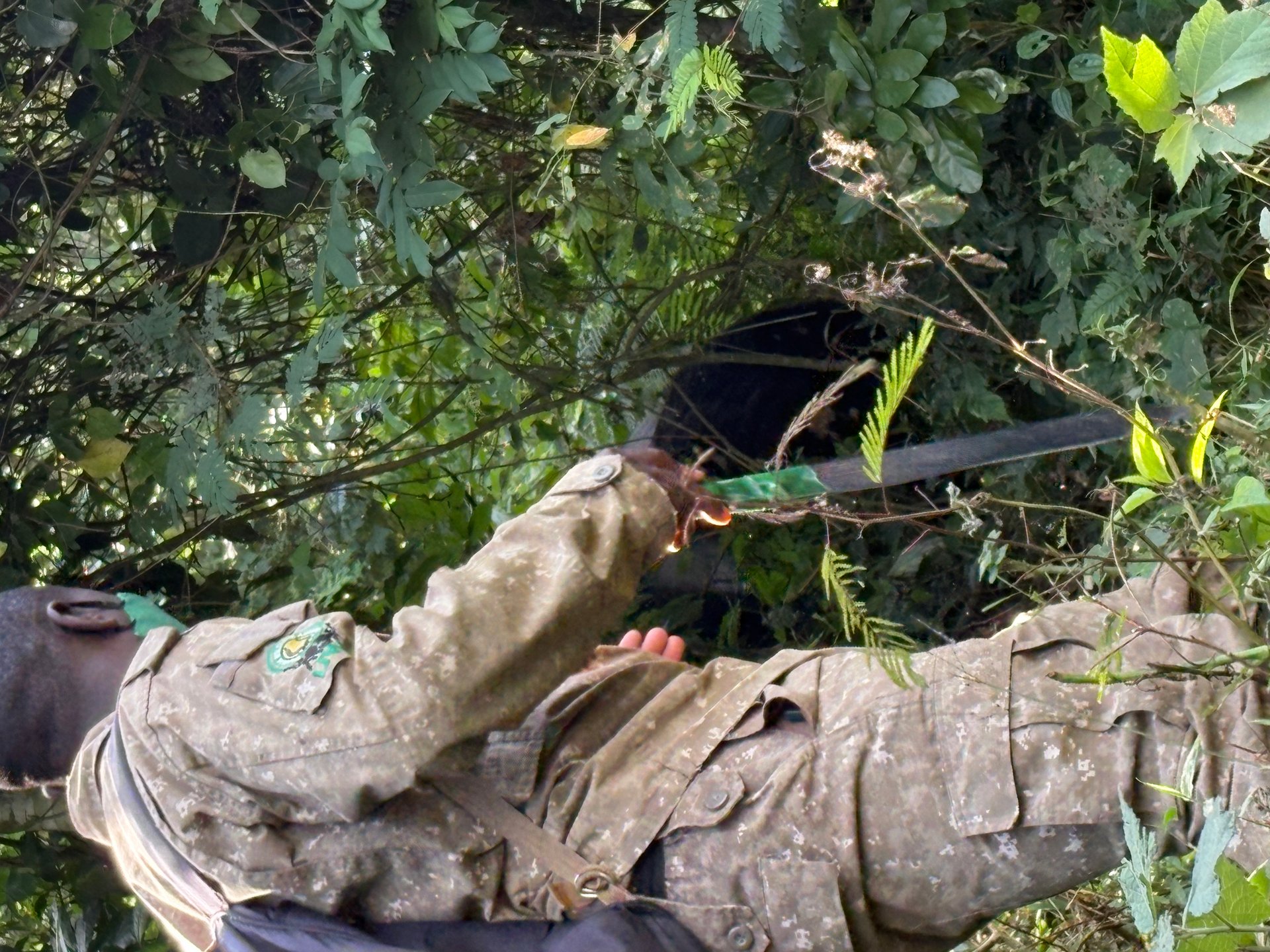
Each trekking group in Buhoma is accompanied by one guide and two armed rangers. The rangers carry rifles. When I first saw this on our trek I found it slightly disorienting — this is not the kind of wildlife experience most people associate with firearms. Within about twenty minutes it stopped registering. By the end of the day I was grateful for their presence, though not for the reason I would have anticipated.
The armed rangers are not there primarily for the visitors. They are there for the gorillas. Bwindi borders the Democratic Republic of Congo, and while the security situation in Uganda itself is stable, the broader region has a history of poaching and cross-border tension. The rangers represent the state's commitment to protecting a critically endangered species. The rifles signal that the government treats gorilla conservation seriously enough to deploy armed personnel to enforce it.
In practice, the rangers' most visible role during our trek had nothing to do with security in that sense. They used machetes to clear a path through dense undergrowth and were invaluable during the steeper sections of the climb — offering a hand, directing foot placement, and managing the pace so that the group stayed together. One of our rangers took my camera bag on the hardest section of the ascent without being asked. They are experienced forest staff, not guards standing at attention.
The permit system itself is part of the safety and conservation framework. At $800 USD per person, issued by the Uganda Wildlife Authority, the permit funds ranger salaries, anti-poaching patrols, habitat monitoring, and community benefit programmes in the villages around the park. There is a cap on daily permits per gorilla family — typically eight visitors — which limits human contact with each family and reduces disease transmission risk. Mountain gorillas are highly susceptible to human respiratory illnesses. Visitors showing cold or flu symptoms on the day of the trek are not permitted to enter the forest. This rule is enforced.
The International Gorilla Conservation Programme (IGCP), which operates across Uganda, Rwanda, and the Democratic Republic of Congo, coordinates transboundary protection for mountain gorillas. The work done at the ranger level in Bwindi connects to a broader regional system. The 2018–2020 census recorded 459 mountain gorillas in Uganda — part of a total wild population of just over 1,000. That number, while an improvement on previous decades, makes the caution around disease transmission and human contact understandable.
The gorilla families in Buhoma are habituated — meaning they have been gradually accustomed to human presence over a period of years, typically two or more. Habituation is a slow process managed by UWA researchers and rangers. It does not mean the gorillas are tame. A habituated family tolerates a small group of quiet, slow-moving humans at a defined distance. Behaviour outside those parameters can still trigger a defensive response from the silverback.
The Encounter: Distance, Rules, and What It Is Like
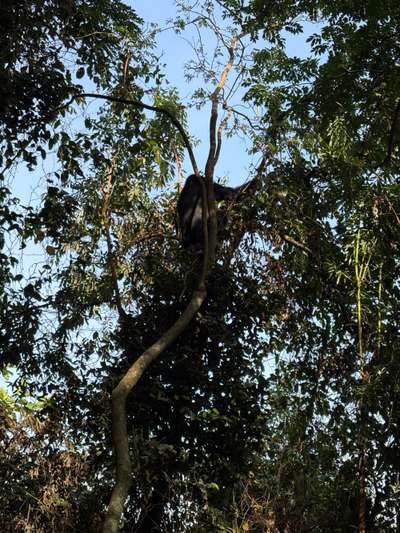
In January 2026, the first gorilla we saw was sitting in a tree at the edge of a small clearing, eating leaves. It was large and completely unhurried. The guide pointed — most of the group had walked right past it. From there the family spread out in the vegetation around us: adults feeding on the ground, younger animals moving through the understorey, a silverback visible through the trees at a distance.
The hour passes quickly. The guide manages the group's movement to keep everyone at a safe distance, which means there is often a slow shuffle — step forward a few metres, wait, step back when a gorilla moves closer. The rangers watch the silverback continuously. Communication between the guide and rangers is quiet and mostly gestural.
Photography is permitted but not with flash. This is worth thinking about before you go: the forest canopy is dense, light is variable, and most of the best opportunities are at close range in low-light conditions. A camera with strong low-light performance and a fast lens will serve you better than a long zoom. Phone cameras perform reasonably well if you are within five to eight metres of a gorilla in reasonable light. If you only have one lens, a moderate wide is more useful than a telephoto.
Noise discipline matters. The briefing tells you to speak quietly and move slowly. In practice, most people self-regulate quickly once they are close to the animals. The forest is not silent — there is wind, birdcall, and the sound of the gorillas themselves moving through vegetation — but the human group tends to go quiet instinctively.
The seven-metre rule is the one that requires the most active management. During our encounter, a juvenile approached well within that distance. The ranger moved between the juvenile and our group, spoke a few low words, and the animal redirected. No panic, no drama. The rangers handle these moments with the ease of people who have seen it hundreds of times.
When the hour is up, the guide signals the group to move out. There is no lingering. You follow the same route back to the trailhead, which usually feels longer on the return due to fatigue. The descent is where most injuries happen — people rush, their knees are tired, and the forest floor is uneven. Take your time.
Buhoma as a Base: The Village, Gorilla Bluff Lodge, and Daily Life
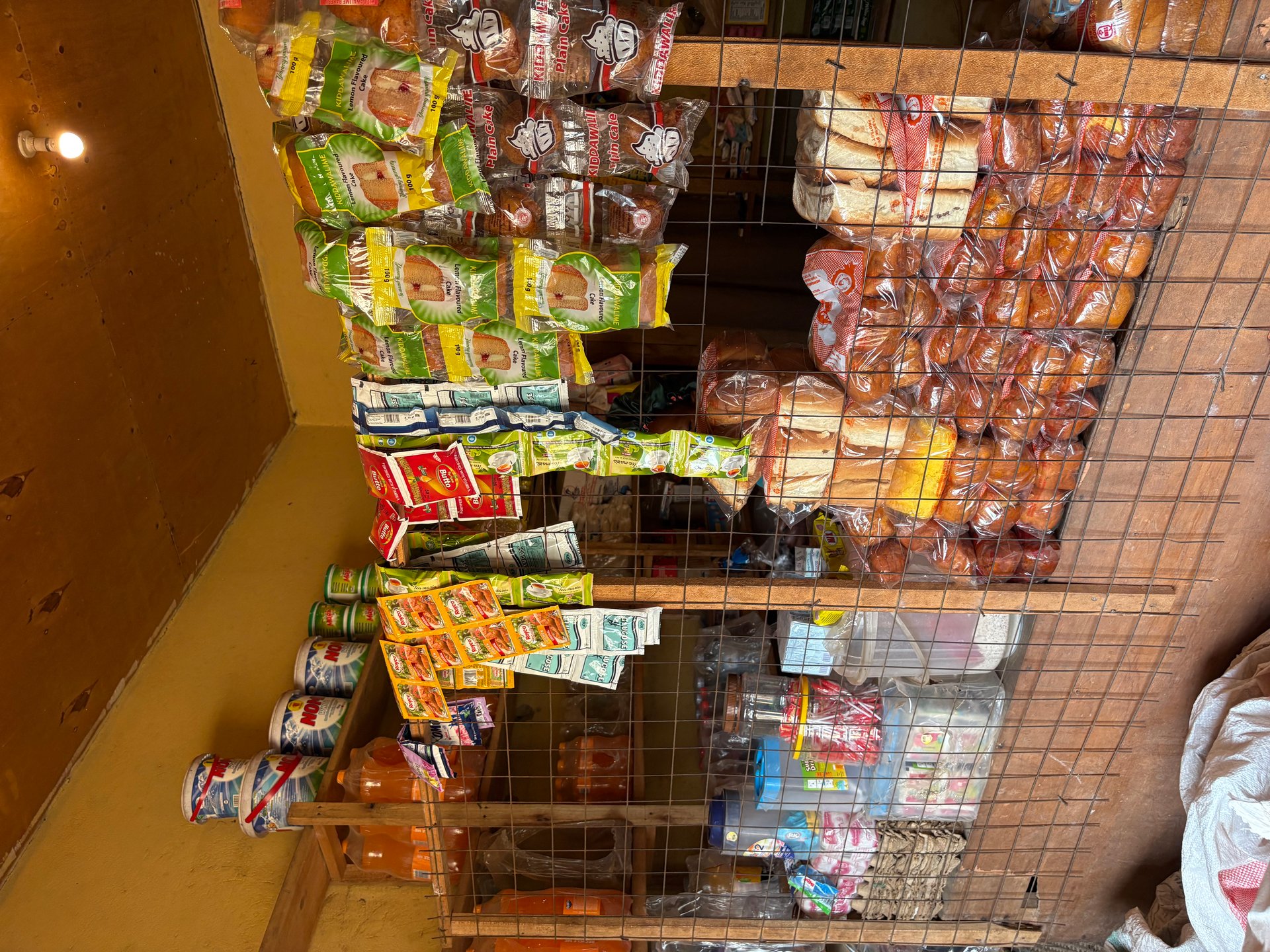
Buhoma village sits at the northern edge of the park. It is small — a cluster of shops, a few guesthouses, a health centre, and the UWA headquarters. The shops are modest: roughly twenty square metres of floor space, goods stacked floor to ceiling, women at the counter. We bought water and some sweets for the children outside. Prices are reasonable. The commercial infrastructure is not built for prolonged browsing, but it covers the basics.
We stayed at Gorilla Bluff Lodge, which is built on the hillside above the village. The positioning gives it a view over the valley and the forest beyond, but it means the paths between buildings involve serious elevation changes. The stairs from our room to the main lodge were steep enough to earn a mention here. After a full day of trekking, they required attention. The lodge provided coffee and African tea every morning on the terrace, which was a reasonable way to ease into a day that started at 7:30am. Breakfast began with fresh fruit — banana, melon, mango — served before the cooked portion arrived.
Buhoma does not feel remote in the way that some national park entrances do. There are enough lodges at different price points that the logistics of accommodation are straightforward, and the UWA headquarters creates a degree of institutional presence. Staff at lodges and guesthouses in Buhoma are accustomed to handling gorilla trekking logistics — permit confirmations, transport to the briefing, packing recommendations. The routine is well-established.
Gorilla conservation in the Bwindi area generates significant international attention. The Sasamaya Takuwa, Ambassador of Japan to Uganda, has been among the diplomatic visitors to the region, reflecting the broader international investment in mountain gorilla protection. That level of attention has shaped the infrastructure around Buhoma — the park has received sustained support from conservation organisations and foreign governments for decades, which shows in the quality of ranger training and habitat management.
The forest edge around Buhoma supports plant species found nowhere else. Rotheca violacea subsp. kigeziensis, a flowering shrub endemic to the Kigezi highlands, is listed as Critically Endangered in the State of Wildlife Resources Uganda 2026. This kind of botanical specificity — species found only in a few square kilometres of a single forest — underscores what the conservation work here is protecting. The gorillas are the headline, but the ecosystem they inhabit is its own argument for preservation.
In the evenings, Buhoma is quiet. There is no nightlife to speak of. After dinner at the lodge, most trekkers are in bed by nine or ten. The early briefing time shapes the rhythm of the stay. If you are travelling with a group, the shared experience of the trek tends to generate enough conversation to fill dinner without any additional entertainment.
Practical Planning: Permits, Fitness, and Timing
Gorilla permits for Buhoma are issued by Uganda Wildlife Authority and cost $800 USD per person. They must be booked in advance — typically months ahead for peak season — and are non-refundable. Most visitors book through a licensed Ugandan tour operator, which handles permit acquisition as part of a broader itinerary. It is possible to book directly through UWA, though the process requires coordination and advance planning.
If you are ill on the day of your trek — even a mild cold — you will not be permitted into the forest. This is not negotiable and it is the right policy given mountain gorillas' respiratory vulnerability. Build your itinerary with this risk in mind. Some operators offer permit transfer to another date or to another traveller in your party if you fall ill, but the terms vary. Ask explicitly before booking.
Fitness requirements are frequently discussed and frequently mischaracterised. You do not need to be an athlete. You do need to be capable of walking uphill on uneven ground for two to four hours, in conditions that may include rain and mud. People in their sixties and seventies complete treks without difficulty. People in their thirties who rarely exercise find it hard. The honest advice is: if you can walk continuously for three hours on moderate terrain, you will be fine. If you cannot, train before you go or book through an operator who can advise on easier family assignments.
The two main trekking seasons in Uganda are December to February and June to September, when rainfall is lower and trails are drier. The wetter months — March to May and October to November — bring heavier mud and more difficult conditions underfoot, but the forests are green and there are fewer visitors. Both of my visits — October 2024 and January 2026 — produced good encounters. The gorillas are present year-round.
Altitude is a minor factor at Buhoma. The park entrance sits at roughly 1,400 metres, with some trek routes climbing to around 2,000 metres. This is unlikely to cause acute altitude problems for most people but may affect pace if you have come directly from sea level. A day in the area before your trek is sensible rather than necessary.
Gear worth bringing: waterproof hiking boots with ankle support, a lightweight rain jacket, long trousers (the forest has stinging nettles), a hat, sunscreen for before and after the forest, and at least two litres of water. Gardening gloves are recommended in the briefing for handling vegetation — some people find them useful, others do not bother. Poles are available at the gate but packing your own collapsible poles is worth the luggage space if you have weak knees or are concerned about the descent.
Tipping is customary and appreciated. The standard range is $10–$20 USD per ranger per trekking day, and similar for the guide. Porters, if you hire one, are typically tipped $5–$10. Bring small bills in USD or Ugandan shillings.